Twelve Inventions That Reshaped Human Life
From the wheel and writing to vaccines, fertilizer, the transistor and the internet: twelve inventions that changed how people live, work and think.
Choosing the "most important" inventions is a game with no final answer. Should fire count, or the needle, or soap, or the toilet? Any list says as much about the person writing it as about history. But some inventions clearly changed the trajectory of human life: they altered what people ate, how long they lived, how they traveled, what they knew and who could know it.
The twelve below were chosen because each one unlocked many others. For every entry you will find when and where it emerged, how it works in a sentence or two, and the ripples it sent through society. Notice how often an invention depended on earlier ones, and how rarely a single genius did it all alone.
At a glance
| # | Invention | Approximate date | Where |
|---|---|---|---|
| 1 | The wheel | by about 3500 BCE | Mesopotamia and neighboring regions |
| 2 | Writing | about 3200 BCE | Mesopotamia (and independently elsewhere) |
| 3 | Paper | by the 2nd century BCE | China |
| 4 | Magnetic compass | by the 11th century | China |
| 5 | Movable-type printing press | about 1440s | Mainz, Germany (earlier movable type in East Asia) |
| 6 | Steam engine | 1712, improved 1760s–1770s | England and Scotland |
| 7 | Vaccination | 1796 | England |
| 8 | Electric telegraph | 1830s–1840s | Britain and the United States |
| 9 | Electric light and power systems | 1879–1880s | United States and Britain |
| 10 | Synthetic ammonia (Haber-Bosch) | 1909–1913 | Germany |
| 11 | Transistor | 1947 | United States |
| 12 | The internet | 1969 onward | United States, then worldwide |
1. The wheel
It seems obvious now, but the wheel appears surprisingly late in human history. Potter's wheels were in use in Mesopotamia by about 3500 BCE, and wheeled carts appear in the archaeological record across a broad region from Mesopotamia to Europe around the same period. The genius was not just the round disk but the axle: a fixed shaft that lets a wheel turn smoothly while carrying a load. Wheels transformed farming, trade and warfare, and the same principle later reappeared in mills, gears, pulleys and turbines.
2. Writing
Around 3200 BCE, people in the Sumerian city-states of Mesopotamia began pressing wedge-shaped marks into clay tablets to record goods and taxes. This cuneiform script gradually expanded to record laws, letters, literature and science. Writing systems also arose independently in Egypt, China and Mesoamerica. Writing let knowledge outlive the people who held it, making history, law and cumulative science possible.
3. Paper
Archaeologists have found fragments of paper in China dating to the second century BCE. According to tradition, a court official named Cai Lun improved and promoted papermaking around 105 CE, using fibers from bark, hemp and old rags pounded into pulp, then spread and dried on screens. Paper was cheaper and lighter than silk, bamboo strips or parchment. The craft spread westward through the Islamic world, where cities such as Baghdad became centers of papermaking, before reaching Europe.
4. The magnetic compass
Chinese scholars knew that lodestone, a naturally magnetic mineral, aligns itself north–south. By the eleventh century, the scientist Shen Kuo described a magnetized needle used to find direction, and by the early twelfth century Chinese writers recorded compasses being used for navigation at sea. Compasses reached Europe by the late twelfth century. A reliable sense of direction under cloudy skies helped make long ocean voyages possible, reshaping trade and, eventually, the map of the world.
5. The printing press
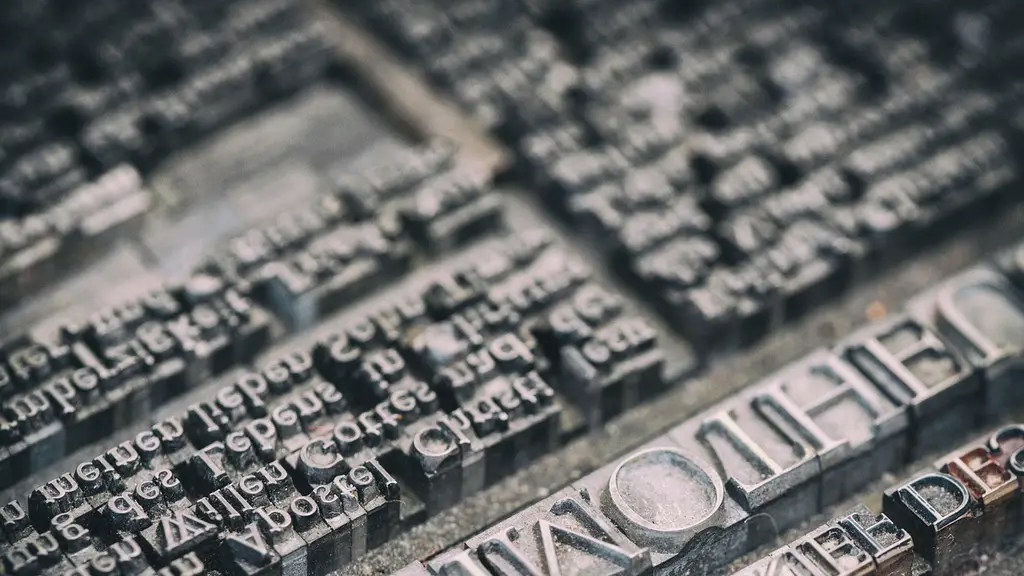
Movable type was first developed in China, where Bi Sheng made ceramic type in the 1040s, and metal movable type was used in Korea by the thirteenth and fourteenth centuries. In Europe, Johannes Gutenberg combined durable metal type, an oil-based ink and a screw press adapted from wine and paper making into an efficient system in the 1440s; his famous Bible was completed around 1455. Printing made books dramatically cheaper and more consistent. It spread new ideas rapidly and helped fuel the Reformation and the Scientific Revolution, as scientists could share accurate copies of diagrams and data.
6. The steam engine
In 1712 Thomas Newcomen built a steam engine to pump water out of mines. It worked by condensing steam inside a cylinder to create a partial vacuum, so air pressure pushed a piston. It was useful but wasteful. James Watt's separate condenser, patented in 1769, kept the main cylinder hot and greatly improved efficiency; later improvements let engines turn wheels as well as pump. Steam power drove factories, locomotives and ships, and became a symbol of the Industrial Revolution.
7. Vaccination
In 1796, the English doctor Edward Jenner inoculated a boy with material from a cowpox sore and showed that he was then protected against smallpox. The word "vaccine" comes from the Latin vacca, cow. Vaccination became one of the most powerful tools in public health. A global campaign led to the World Health Organization declaring smallpox eradicated in 1980, the first human disease to be wiped out. The fuller story is in How Vaccines Were Developed.
8. The electric telegraph
For most of history, a message could travel no faster than a horse, a ship or a runner. In the 1830s, William Cooke and Charles Wheatstone in Britain and Samuel Morse in the United States developed practical electric telegraphs. In 1844, Morse sent the message "What hath God wrought" from Washington, D.C., to Baltimore. A lasting transatlantic cable followed in 1866. Suddenly, news, prices and orders could cross continents in minutes, reshaping business, journalism, diplomacy and timekeeping.
9. Electric light and power systems
Several inventors worked on incandescent lamps, including Joseph Swan in England. In 1879, Thomas Edison's team demonstrated a long-lasting carbon-filament bulb, and in 1882 Edison's Pearl Street Station began supplying electricity to customers in Manhattan. The real invention was the whole system: generators, wires, meters and lamps. Alternating current systems, developed by Nikola Tesla, George Westinghouse and others, allowed power to be sent over long distances. Electric power reshaped homes, factories and cities. Its scientific roots are traced in the discovery of electricity.
10. Synthetic ammonia
Plants need nitrogen, and although air is mostly nitrogen gas, plants cannot use it in that form. In 1909, the chemist Fritz Haber showed how to combine nitrogen from the air with hydrogen at high pressure and temperature, using a catalyst, to make ammonia. Carl Bosch, at the chemical company BASF, scaled it into an industrial process, with the first plant operating in 1913. Both received Nobel Prizes. Ammonia-based fertilizers dramatically raised crop yields, and widely cited estimates suggest that synthetic nitrogen helps feed close to half of the world's population today. The process also has a darker side: it was used to make explosives in World War I, and fertilizer runoff pollutes rivers and coasts.
11. The transistor
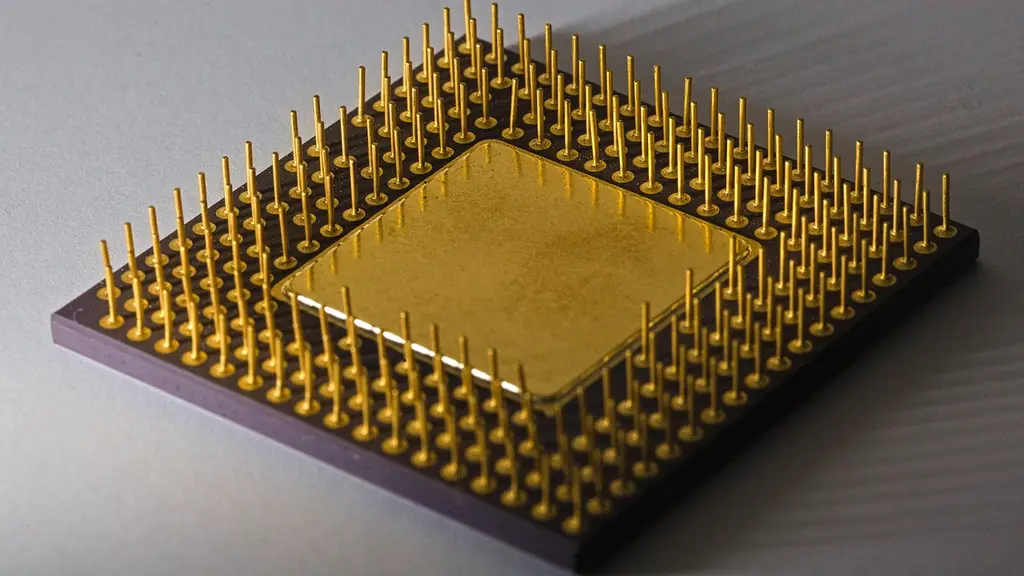
In December 1947, John Bardeen, Walter Brattain and William Shockley at Bell Labs demonstrated a semiconductor device that could amplify and switch electrical signals. Transistors replaced bulky, power-hungry vacuum tubes and could be made ever smaller. Packed by the billions onto microchips, they are the basic building block of every computer, phone and digital device. See How Computers Evolved for what came next.
12. The internet
In 1969, the ARPANET, a U.S. research network, sent its first message between computers in California. It used packet switching, breaking data into small chunks that travel independently. Common rules called TCP/IP, designed by Vinton Cerf and Robert Kahn in the 1970s, let different networks join into one "network of networks." Tim Berners-Lee's World Wide Web, created at CERN around 1989–1991, made the internet easy to navigate. Today the internet connects billions of people and devices. Our explainer How the Internet Works goes under the hood.
Patterns worth noticing
Looking across all twelve, a few themes stand out:
- Inventions build on inventions. Printing needed paper; the internet needed transistors, telegraph-era ideas about networks and much more.
- Systems matter more than single gadgets. The light bulb mattered because of the power grid around it.
- Many hands. Nearly every invention had multiple contributors, rivals and precursors, often in different countries.
- Double edges. The same technology can feed billions or arm armies, connect people or spread misinformation.
Questions to discuss
- Which invention on this list do you think changed daily life the most? Why?
- What invention would you add, and which would you remove to make room for it?
- Which inventions from your own lifetime might appear on a list like this in a hundred years?
You can explore these and many other milestones on our interactive discovery timeline.
Sources and further reading
- Smithsonian Institution, Smithsonian Institution
- Printing press, Encyclopaedia Britannica
- The Nobel Prize in Chemistry 1918: Fritz Haber, Nobel Prize Outreach
- Smallpox, World Health Organization
- Timeline of Computer History, Computer History Museum