The Scientific Revolution
How ideas about the heavens, the body and nature changed between 1543 and 1687, who drove the change, what came before, and why historians debate the name.
In 1543 a book appeared in Nuremberg arguing that the Earth spins on its axis and travels around the Sun. In 1687 another appeared in London showing that a single law of gravity governs falling apples and orbiting planets. Between those two dates, roughly a century and a half, educated Europeans changed their picture of the universe, the human body and the right way to find out about nature. Historians call this period the Scientific Revolution.
It is one of the most celebrated episodes in the history of ideas, and also one of the most debated. This article explains what changed, who was involved, what earlier scholars in the Islamic world and medieval Europe contributed, and why some historians are wary of the word "revolution" at all.
The old picture of the world
To see what changed, it helps to know what people believed before. For most of the previous two thousand years, European and Islamic scholars built on ideas from ancient Greece:
- Astronomy: Following Aristotle and the astronomer Ptolemy, the Earth sat motionless at the center of the universe. The Sun, Moon, planets and stars moved around it on nested spheres, with complex additional circles (epicycles) to explain the planets' wandering paths.
- Physics: Aristotle taught that heavy objects naturally move toward the center of the universe, that heavenly bodies are made of a perfect substance unlike anything on Earth, and that objects need a continuing push to keep moving.
- Medicine: The Greek physician Galen's ideas about anatomy and the four humors dominated medical teaching.
These were not foolish ideas. They fitted everyday experience and, in Ptolemy's case, made reasonably accurate predictions. They were also not static: scholars across the Islamic world had refined, criticized and extended them for centuries.
Foundations laid before 1543
The Scientific Revolution did not come from nowhere. Several earlier developments made it possible:
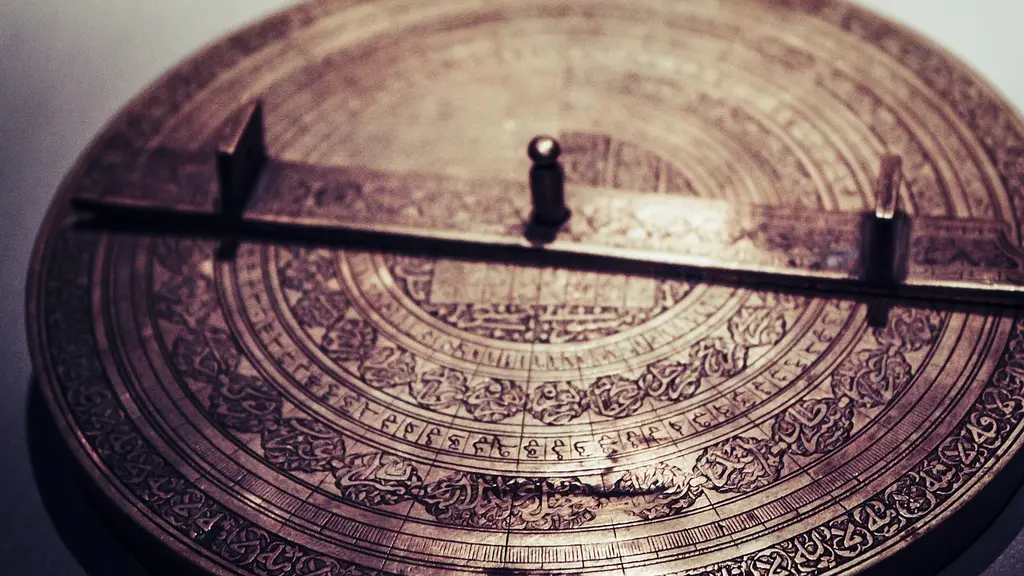
- Scholarship in the Islamic world. Between roughly the ninth and fifteenth centuries, scholars writing in Arabic and Persian translated, preserved and improved Greek science. Ibn al-Haytham's eleventh-century work on optics stressed experiment. At the Maragha observatory, founded in 1259 in what is now Iran, Nasir al-Din al-Tusi devised a geometric device, now called the Tusi couple, to produce straight-line motion from circular motions. In fourteenth-century Damascus, Ibn al-Shatir built planetary models that are mathematically very similar to some later used by Copernicus. Historians still debate whether Copernicus knew of these models and, if so, how.
- Medieval universities. From the twelfth century onward, European universities taught natural philosophy, and some scholars, such as Jean Buridan in fourteenth-century Paris, questioned Aristotle's account of motion.
- Printing. Movable-type printing, developed in Europe by Johannes Gutenberg around 1450, meant that books, diagrams and tables could be reproduced accurately and cheaply, and errors could be corrected in later editions.
- Voyages and new instruments. Ocean voyages brought plants, animals and peoples unknown to ancient authors, while better instruments for navigation and astronomy demanded more precise measurement.
Key moments, 1543–1687
| Year | Event |
|---|---|
| 1543 | Nicolaus Copernicus publishes De revolutionibus orbium coelestium, placing the Sun near the center |
| 1543 | Andreas Vesalius publishes De humani corporis fabrica, an illustrated anatomy based on dissection |
| 1572 | Tycho Brahe observes a "new star" (a supernova), challenging the idea that the heavens never change |
| 1600 | William Gilbert publishes De Magnete on magnetism |
| 1609 | Johannes Kepler publishes Astronomia Nova with his first two laws: planets move in ellipses |
| 1610 | Galileo Galilei publishes Sidereus Nuncius, reporting moons orbiting Jupiter |
| 1620 | Francis Bacon publishes Novum Organum, promoting systematic, experimental inquiry |
| 1628 | William Harvey publishes his account of the circulation of the blood |
| 1633 | Galileo is tried by the Roman Inquisition |
| 1637 | René Descartes publishes his Discourse on Method |
| 1660 | The Royal Society is founded in London |
| 1662 | Robert Boyle publishes the relationship between gas pressure and volume |
| 1665 | Robert Hooke publishes Micrographia |
| 1666 | The Académie des Sciences is founded in Paris |
| 1676 | Antonie van Leeuwenhoek reports microscopic "animalcules" to the Royal Society |
| 1687 | Isaac Newton publishes the Principia |
You can see these events alongside earlier and later discoveries on our interactive Discovery Timeline.
The heavens rearranged
Copernicus, a church administrator and astronomer in Poland, did not have new observations to prove his Sun-centered system. Its appeal was that it explained some puzzling features, such as why planets sometimes appear to move backward, more naturally. He still used circles and epicycles, and his system was not much more accurate than Ptolemy's.
Better data came from the Danish nobleman Tycho Brahe, who built an observatory on the island of Hven and recorded planetary positions with unprecedented precision, all without a telescope. His assistant Johannes Kepler spent years trying to fit Tycho's observations of Mars. He eventually concluded that planets move in ellipses, not circles, and sweep out equal areas in equal times. His third law, relating a planet's orbital period to its distance from the Sun, followed in 1619.
Then came the telescope. After reports of a Dutch spyglass in 1608, Galileo built his own and turned it to the sky. He saw mountains on the Moon, countless stars invisible to the naked eye, four moons circling Jupiter and the phases of Venus. The last observation was especially hard to reconcile with Ptolemy's arrangement. Our article on the history of the telescope tells the story of the instrument itself.
Galileo's forceful advocacy of Copernicus, especially in his 1632 Dialogue Concerning the Two Chief World Systems, brought him before the Inquisition. In 1633 he was forced to recant and spent the rest of his life under house arrest. The relationship between science and religion in this period was more complicated than a simple conflict, however. Many leading natural philosophers, including Kepler, Boyle and Newton, were deeply religious and saw their work as revealing the order of creation.
The body and the microscope
Change was not limited to astronomy. Vesalius, teaching at Padua, based his anatomy on careful human dissection and corrected a number of Galen's errors. William Harvey, an English physician, used experiments and calculation to show that the heart pumps blood around the body in a circuit, rather than blood being continually made and consumed as Galen had taught.
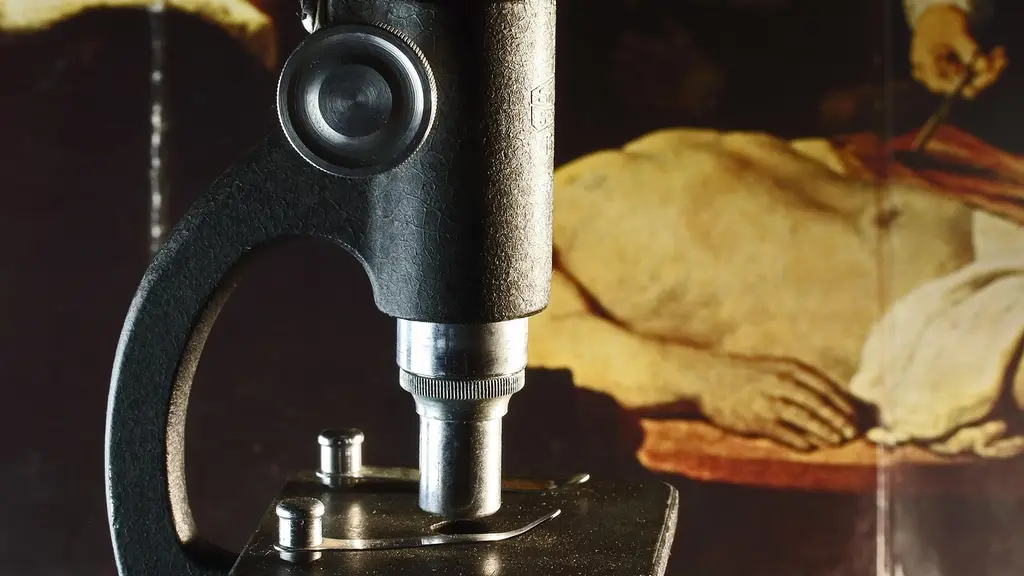
The microscope opened another new world. Hooke's Micrographia (1665) contained detailed engravings of a flea, a fly's eye and thin slices of cork, in which he named the tiny compartments "cells". In Delft, the cloth merchant Antonie van Leeuwenhoek ground tiny, powerful single lenses and became the first person to describe bacteria and other single-celled organisms. Our article on the history of the microscope follows that thread.
A new way of knowing
Perhaps the most lasting change was in method. Bacon argued that knowledge should be built from careful observation and experiment rather than from ancient authority. Descartes championed reasoning from clear first principles and a mechanical view of nature. In practice, scientists combined both: mathematics, measurement and experiment.
New institutions made science a shared, public enterprise. The Royal Society, founded in London in November 1660, adopted the motto Nullius in verba, roughly "take nobody's word for it". Members witnessed experiments, debated results and published reports, and from 1665 the Society's Philosophical Transactions became one of the world's first scientific journals. Similar academies followed in Paris and elsewhere.
Women were largely excluded from universities and societies, but not entirely absent. The Silesian astronomer Maria Cunitz published Urania Propitia in 1650, a simplified and corrected version of Kepler's planetary tables. In 1667 the writer and natural philosopher Margaret Cavendish, Duchess of Newcastle, attended a meeting of the Royal Society to watch demonstrations, the first woman known to have done so.
Newton's synthesis
Isaac Newton's Philosophiæ Naturalis Principia Mathematica (1687) drew the threads together. His three laws of motion and his law of universal gravitation explained Galileo's falling bodies and Kepler's planetary orbits with the same mathematics. The heavens and the Earth, separated since Aristotle, now obeyed the same rules. Our explainer on gravity shows how Newton's ideas still underpin much of physics today.
Was it really a revolution?
The phrase "Scientific Revolution" became widespread in the mid-twentieth century, popularized by historians including Alexandre Koyré and Herbert Butterfield. Many historians now use it with caution, for several reasons:
- It was slow. A process lasting nearly 150 years is not a sudden overthrow.
- Old and new mixed. Kepler practiced astrology; Newton wrote extensively on alchemy and biblical interpretation.
- It had deep roots. Medieval European and Islamic scholarship laid essential groundwork.
- It was uneven. Astronomy and mechanics changed dramatically; chemistry and biology changed more slowly, with major shifts coming later.
- It was not only European. Knowledge, instruments and specimens moved along trade routes, and the story is increasingly told as part of a global exchange.
Even so, something profound did change. By 1700 many educated people expected nature to follow mathematical laws that could be discovered through observation and experiment, and they had institutions dedicated to finding them.
Summary of key ideas
- Between 1543 and 1687, the Earth-centered universe gave way to a Sun-centered one governed by universal laws.
- Anatomy and microscopy transformed understanding of living things.
- Experiment, measurement and mathematics became central to natural philosophy.
- Scientific societies and journals made knowledge public and open to challenge.
- The changes built on earlier work, especially from the Islamic world, and historians continue to debate how revolutionary they were.
To meet more of the people involved, and those who came after, see our profiles of famous scientists and their discoveries.
Sources and further reading
- Scientific Revolution, Encyclopaedia Britannica
- History of the Royal Society, The Royal Society
- Museo Galileo, Museo Galileo, Institute and Museum of the History of Science, Florence
- Robert Boyle, Science History Institute
- History of Science Museum, University of Oxford, University of Oxford