The Discovery of Electricity
From rubbed amber and electric fish to Franklin, Volta, Faraday and Maxwell: how people over many centuries worked out what electricity is and how to use it.
Nobody "discovered" electricity in a single moment. Lightning, static sparks and the shock of certain fish were known for thousands of years before anyone understood them. What changed, mostly between 1600 and 1900, was that people learned to produce electricity on demand, store it, measure it, send it along wires, and finally explain it as a fundamental feature of matter.
The story is often told through a few famous names: Franklin and his kite, Edison and his light bulb. The real history is richer and more collaborative. It includes instrument makers, lecturers, a bookbinder's apprentice, rival professors who disagreed about frogs, and a long line of experimenters across Europe, North America and Asia. Here is how the pieces came together.
Ancient clues: amber, fish and lodestone
The word electricity comes from ēlektron, the ancient Greek word for amber. Later Greek writers credited the philosopher Thales of Miletus, who lived in the sixth century BCE, with noticing that amber rubbed with fur attracts light objects such as straw. No writings by Thales survive, so the attribution comes to us secondhand, but the effect itself is easy to reproduce with a plastic comb and small scraps of paper.
People also knew about electric animals. Ancient Egyptian art depicts the electric catfish of the Nile, and in the first century CE the Roman physician Scribonius Largus recommended the shock of a torpedo ray as a treatment for headaches. Nobody connected these shocks with rubbed amber until much later.
Magnetism had its own long history. Lodestone, a naturally magnetic rock, was known in ancient Greece and China. In 1088 the Chinese scholar Shen Kuo described a magnetized needle used as a compass and noted that it did not point exactly north, an early record of what we now call magnetic declination. The deep link between magnetism and electricity would not be discovered for another seven centuries.
You may also read about the "Baghdad battery", a set of ancient clay jars containing a copper cylinder and an iron rod. Claims that they were used as batteries are speculative, and there is no good evidence that anyone in the ancient world generated electric current.
1600–1750: naming, rubbing and storing
In 1600 the English physician William Gilbert published De Magnete, a book about magnets and the Earth's magnetism. In it he showed that many substances besides amber, including glass and sulfur, attract light objects when rubbed. He coined the Latin word electricus ("like amber") for this property, and the English word electricity followed within a few decades.
Experimenters soon built machines to make static electricity more easily. In the mid-1600s Otto von Guericke in Magdeburg used a spinning ball of sulfur, rubbed by hand, to generate charge. Later machines used glass globes or cylinders.
Three discoveries in quick succession transformed the subject:
- Conduction (1729). Stephen Gray in England showed that "electric virtue" could travel along a thread for long distances, but only through some materials. He distinguished what we now call conductors from insulators.
- Two kinds of electricity (1733). Charles François de Cisternay du Fay in France found that charged objects sometimes attract and sometimes repel, and proposed two kinds of electricity, which he called vitreous and resinous.
- The Leyden jar (1745–1746). Ewald Georg von Kleist in Pomerania and Pieter van Musschenbroek in Leiden independently found that a glass jar coated with metal could store a large charge and deliver a powerful shock. The Leyden jar was the first capacitor, and it made dramatic public demonstrations possible.
Franklin and the lightning question
Benjamin Franklin of Philadelphia began experimenting with electricity in the 1740s. He proposed that electricity was a single "fluid" and that objects could have an excess or a deficit of it, which he called positive and negative. Those terms are still used today.
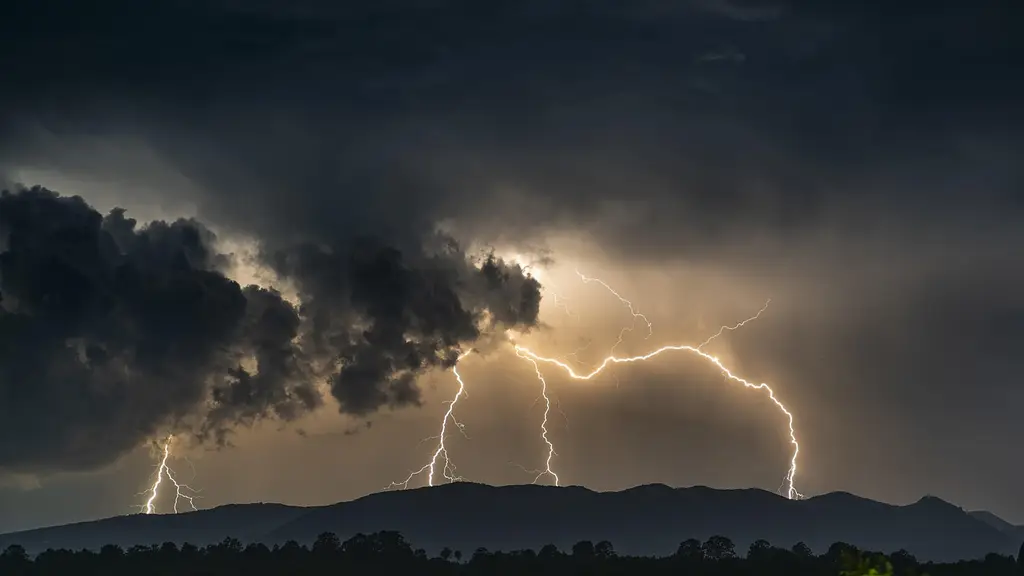
Franklin suspected that lightning was a giant electric spark. In 1750 he proposed an experiment using a tall metal rod to draw electricity from a storm cloud. In May 1752 Thomas-François Dalibard carried out a version of it near Paris and drew sparks from an iron rod during a storm. Franklin's own kite experiment is traditionally dated to June 1752; his written account appeared that October. The popular image of lightning striking the kite is misleading. The kite collected charge from the electrified air, enough to produce sparks from a key tied to the string. A direct strike would very likely have killed him. The danger was real: in 1753 Georg Wilhelm Richmann was killed in St Petersburg while attempting a similar experiment.
Franklin's practical outcome was the lightning rod, which protects buildings by giving lightning a safe path to the ground.
Frogs, piles and a steady current
In 1791 the Italian anatomist Luigi Galvani published his observations that dissected frogs' legs twitched when touched with two different metals. He believed the electricity came from the animal itself, which he called "animal electricity".
His countryman Alessandro Volta disagreed. Volta argued that the electricity arose from the contact between two different metals, with the frog's moist tissue simply acting as a conductor and detector. To prove it, he stacked discs of zinc and copper (or silver) separated by cloth or card soaked in salt water. The result, announced in 1800 in a letter to Joseph Banks, President of the Royal Society, was the voltaic pile: the first battery, and the first source of a steady electric current. The unit of electrical potential, the volt, is named after him. Both men were partly right, as later work showed that nerves and muscles do use electrical signals.
The battery opened a new world. Within weeks, William Nicholson and Anthony Carlisle used one to split water into hydrogen and oxygen. In 1807 Humphry Davy at the Royal Institution in London used a large battery to isolate potassium and sodium for the first time, and soon other elements followed. If you want to know how a modern battery does the same job, our explainer on how batteries work picks up the story.
Electricity meets magnetism
In 1820 the Danish physicist Hans Christian Ørsted noticed that a wire carrying an electric current made a nearby compass needle swing. Electricity and magnetism, long treated as separate, were connected. Within months André-Marie Ampère in Paris had worked out how currents in wires attract and repel each other.
Michael Faraday took the next great step. The son of a blacksmith, he had little formal schooling and began as a bookbinder's apprentice, reading the books he bound. He became Davy's assistant at the Royal Institution and went on to become one of the most important experimental scientists of the century. In 1821 he built a device in which a current-carrying wire rotated around a magnet, the ancestor of the electric motor. In 1831 he discovered electromagnetic induction: moving a magnet near a coil of wire, or changing the current in a nearby coil, produces a current. The American scientist Joseph Henry made similar discoveries independently around the same time.
Induction is the principle behind generators and transformers, and so behind almost all the electricity we use today. Our article on how magnets work explains the physics of magnetic fields in more detail.
Maxwell, waves and the electron
Faraday pictured invisible "lines of force" filling the space around magnets and currents. The Scottish physicist James Clerk Maxwell turned that picture into mathematics. In 1865 he published a theory showing that electric and magnetic fields are linked and that changing fields travel through space as waves at the speed of light. Light, he concluded, is an electromagnetic wave.
In 1887 the German physicist Heinrich Hertz generated and detected electromagnetic waves in his laboratory: the radio waves Maxwell's equations predicted. Then in 1897 J. J. Thomson at the Cavendish Laboratory in Cambridge showed that cathode rays are made of tiny negatively charged particles, much lighter than atoms. These became known as electrons, and Thomson received the 1906 Nobel Prize in Physics. Electric current in a metal wire, it turned out, is a flow of electrons.
From laboratory to living room
The late 1800s turned electrical science into electrical engineering. A few highlights:
- In 1882 Thomas Edison's company opened the Pearl Street power station in New York, supplying electricity to nearby customers.
- Lewis Latimer, an African American draftsman and inventor, patented an improved method of making the carbon filaments used in early light bulbs in 1882 and later worked for Edison's company.
- Nikola Tesla patented alternating-current motors in 1888, and alternating current, promoted by George Westinghouse, became the standard for long-distance power distribution.
- Hertha Ayrton in London carried out careful research on the electric arc, used in early street lighting and searchlights. In 1899 she became the first woman elected a member of the Institution of Electrical Engineers.
A timeline of key moments
| Date | Event |
|---|---|
| 6th century BCE | Thales later credited with observing rubbed amber attract light objects |
| 1088 | Shen Kuo describes a magnetic needle compass and magnetic declination |
| 1600 | William Gilbert publishes De Magnete |
| 1729 | Stephen Gray demonstrates electrical conduction |
| 1745–1746 | Leyden jar invented by von Kleist and van Musschenbroek |
| 1752 | Dalibard's sentry-box experiment; Franklin's kite experiment |
| 1791 | Galvani publishes on "animal electricity" |
| 1800 | Volta announces the voltaic pile |
| 1820 | Ørsted links electricity and magnetism |
| 1831 | Faraday discovers electromagnetic induction |
| 1865 | Maxwell publishes his electromagnetic theory |
| 1887 | Hertz detects radio waves |
| 1897 | J. J. Thomson identifies the electron |
You can explore many of these events alongside other breakthroughs on our interactive Discovery Timeline.
What this history teaches
The discovery of electricity is a story of patient, incremental work. Gilbert needed instrument makers; Volta needed Galvani's puzzling frogs; Maxwell needed Faraday's experiments; Edison needed generators that Faraday's discoveries made possible. Ideas that seemed separate, such as amber, lightning, magnets, light and chemistry, turned out to be aspects of one phenomenon.
Try this at home: Recreate the oldest experiment of all. Rub a balloon on a wool sweater and hold it near small pieces of tissue paper, or near a thin stream of water from a tap. Then, to follow the path from static to current electricity, try our guide to building a simple electric circuit, and read more about how electrical energy fits with other kinds in our explainer on energy and its forms.
Sources and further reading
- Benjamin Franklin's Kite and Key Experiment, The Franklin Institute
- Milestones: Volta's Electrical Battery Invention, 1799, IEEE / Engineering and Technology History Wiki
- Michael Faraday, Science History Institute
- Humphry Davy, Science History Institute
- Electricity, Encyclopaedia Britannica
- J. J. Thomson, Nobel Prize in Physics 1906: Facts, Nobel Prize Outreach