Biomaterials: How Engineered Materials Work Inside the Body
What biomaterials are and how the body reacts to them: metals, ceramics, polymers and natural materials, from titanium implants and hip joints to hydrogels.
Millions of people walk around with engineering inside them. A grandparent's new hip, a child's dissolving stitches, a soft contact lens, a dental implant, a stent holding open a blood vessel: each is made of a material that has been chosen, and often specially designed, to sit in or against living tissue and do a job without causing harm. These are biomaterials.
Putting a foreign material into the body is a bold thing to do. The body is warm, wet, salty and chemically active, and it has an immune system whose whole purpose is to notice things that do not belong. A good biomaterial has to survive that environment, and the body has to tolerate it. This article explains the main families of biomaterials, what "biocompatible" really means, and a few landmark stories: titanium that bonds to bone, the modern hip replacement, water-loving gels and stitches designed to disappear.
What counts as a biomaterial?
A biomaterial is any material engineered to interact with living systems for a medical purpose, whether to replace a part of the body, support healing, deliver a drug or help diagnose disease. The definition is about the job, not the substance: the same polymer might be a biomaterial in a heart valve and an ordinary plastic in a drinks bottle.
Biomaterials are usually grouped by what they are made of.
| Class | Examples | Typical uses | Strengths and weaknesses |
|---|---|---|---|
| Metals | Titanium and its alloys, cobalt-chromium alloys, stainless steel | Joint replacements, bone plates and screws, dental implants, stents | Strong and tough; can corrode or release ions; much stiffer than bone |
| Ceramics and glasses | Alumina, zirconia, hydroxyapatite, bioactive glasses | Hip-joint balls, bone grafts, coatings, dental crowns | Hard and wear-resistant; some bond to bone; brittle |
| Polymers | Polyethylene, silicone, acrylic bone cement, polylactic and polyglycolic acids, hydrogels | Joint-bearing surfaces, catheters, lenses, sutures, drug-delivery capsules | Versatile and easy to shape; softer and weaker than metals; can wear |
| Composites | Fiber-reinforced polymers, polymer-ceramic mixes | Dental fillings, some bone substitutes | Combine properties of their ingredients |
| Natural materials | Collagen, alginate from seaweed, chitosan, processed animal tissue | Wound dressings, tissue scaffolds, some heart valves | Familiar to the body; harder to standardize |
Biocompatibility: getting along with the body
People often imagine a biocompatible material as one the body simply ignores. In reality, nothing placed in the body goes unnoticed. Within seconds of implantation, proteins from blood and tissue fluid coat the surface. Immune cells called macrophages arrive and inspect it. If the material is stable and harmless, the body usually walls it off with a thin capsule of fibrous tissue and settles down. If it releases toxic substances, sheds particles or carries bacteria, the response can turn into chronic inflammation, infection or rejection of the device.
So biocompatibility is better thought of as a material producing the right response for its particular job. A heart valve should not trigger blood clots. A hip stem should encourage bone to grow tightly against it. A dissolving stitch should break down at a predictable rate into substances the body can clear. Our article on how the immune system defends the body explains the cells involved in this response.
Engineers also have to think about mechanics. Bone is living tissue that strengthens where it is loaded and thins where it is not. A metal implant that is far stiffer than the surrounding bone can carry too much of the load itself, leaving nearby bone under-used, which can weaken it over time. Choosing a material is always a balancing act between strength, stiffness, wear, chemistry and how the body will react.
How new biomaterials are tested: Before a material is used in patients, it typically goes through laboratory tests on cells, studies of how it wears and breaks down, and animal studies, followed by carefully monitored clinical trials. International standards set out which biological tests are needed for each kind of device, and regulators such as the U.S. Food and Drug Administration review the evidence.
Titanium and the bone that would not let go
One of the most famous discoveries in biomaterials began as a frustration. In 1952, the Swedish researcher Per-Ingvar Brånemark was studying blood flow and healing in bone at Lund University. He placed small optical chambers made of titanium into the leg bones of rabbits so he could watch the living tissue under a microscope. When the experiments ended, he found he could not remove the chambers: the bone had grown so closely onto the titanium that the two were effectively joined.
Brånemark later called this direct bond between living bone and an implant surface osseointegration. Titanium works so well partly because its surface instantly forms a thin, very stable layer of titanium oxide, which resists corrosion and allows bone cells to attach and grow right up against it.
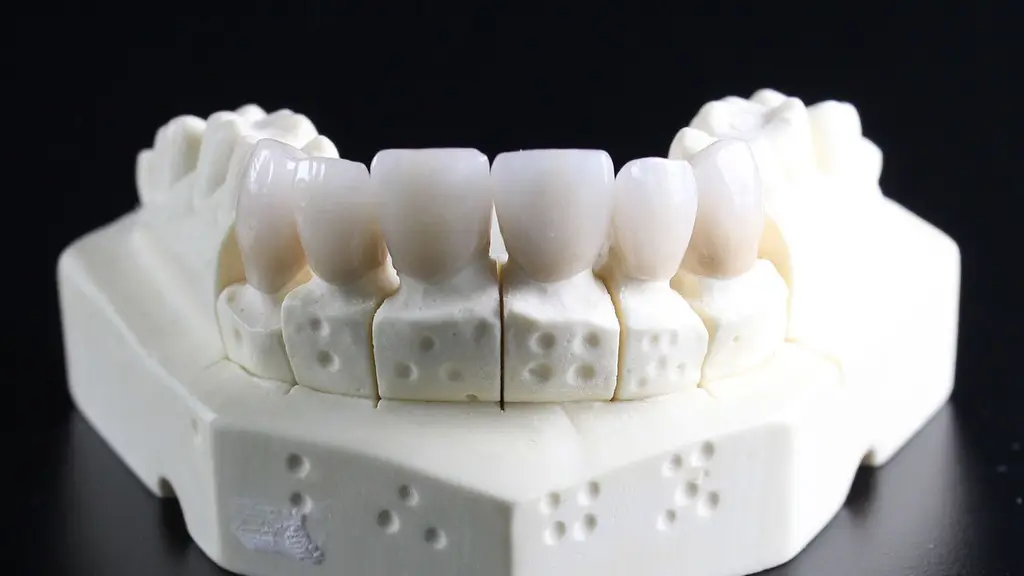
After years of further research, in 1965 Brånemark placed titanium implants in the jaw of his first human patient, a Swedish man named Gösta Larsson, to support replacement teeth. The implants reportedly served him for about four decades. Titanium dental implants are now a routine treatment worldwide, and the same principle is used to anchor some hearing devices and artificial limbs directly to bone.
Hip joints: a lesson in wear
A hip replacement shows how biomaterials must work as a team. The natural hip is a ball-and-socket joint. In a total hip replacement, surgeons replace the ball at the top of the thigh bone with a metal or ceramic head on a stem, and line the socket in the pelvis with a cup.
The modern operation owes much to the British surgeon John Charnley, who in the early 1960s developed his "low-friction arthroplasty." His first choice for the socket, a slippery plastic called PTFE, wore away quickly and caused severe reactions. He switched to a high-molecular-weight polyethylene, which proved far more durable, and he fixed the parts in place with acrylic bone cement. His design, with a small metal head turning in a polyethylene cup, became the template for hip replacements around the world.
Charnley's experience also exposed the central challenge for joint implants: wear. Over years of walking, microscopic particles rub off the bearing surfaces. The body's immune cells try to digest them, and the resulting inflammation can dissolve bone around the implant, loosening it. Much later research has focused on tougher, highly cross-linked polyethylene and very hard ceramic heads that shed fewer particles.
Water-loving gels and disappearing stitches
Not all biomaterials are hard. Hydrogels are networks of polymer chains that soak up large amounts of water while holding their shape, making them soft and slippery like many body tissues. In 1960 the Czech chemists Otto Wichterle and Drahoslav Lím described a hydrogel made from a polymer known as poly(HEMA) and suggested it for use in the body. Wichterle went on to develop the first soft contact lenses from it. Hydrogels are now used in lenses, wound dressings, drug-delivery systems and as scaffolds for growing cells.
Resorbable sutures solve a different problem: stitches deep inside the body that nobody wants to remove. For centuries surgeons used "catgut," which was actually made from purified animal intestine and is broken down by the body's enzymes. From around 1970, synthetic polymers such as polyglycolic acid offered a more predictable alternative. Water slowly breaks the bonds in their long chains, a reaction called hydrolysis, and the small molecules that result are processed by the body's normal metabolism. By adjusting the polymer's chemistry, manufacturers can make sutures that keep their strength for days or for months.
Tissue engineering: helping the body rebuild itself
The newest frontier aims beyond replacing tissue with an inert substitute. Tissue engineering combines three ingredients: a scaffold, living cells and biological signals that tell those cells how to behave. The scaffold, often a porous, biodegradable polymer or a natural material such as collagen, gives cells a framework to grow on. As new tissue forms, the scaffold gradually dissolves, ideally leaving only the patient's own tissue behind.
Engineered skin substitutes for burns and chronic wounds are already in clinical use, and researchers have grown simpler structures such as cartilage and tubes for blood vessels and airways. Building complex organs with many cell types and their own blood supply remains a major unsolved challenge. Techniques such as bioprinting, related to the methods in our article on how 3D printing works, are one route scientists are exploring. To understand what these engineers are trying to rebuild, it helps to start with cells, the building blocks of life.
Ideas to explore further
- A biomaterial is defined by its medical job, and it can be a metal, ceramic, polymer, composite or natural material.
- Biocompatibility does not mean the body ignores a material; it means the body's response suits the purpose.
- Titanium's oxide surface lets bone bond to it directly, the process Brånemark called osseointegration.
- Wear particles, not sudden breakage, are the main long-term enemy of joint replacements.
- Hydrogels, resorbable polymers and tissue scaffolds show a shift from materials that simply last to materials that work with the body and then step aside.
A good discussion question for older students: if you were designing a stitch that should vanish after six weeks, what properties would you need to measure, and how would you test them safely? More stories of engineering ideas are collected in our technology and inventions section.
Sources and further reading
- Biomaterial Technologies, National Institute of Biomedical Imaging and Bioengineering (NIH)
- Tissue Engineering and Regenerative Medicine (fact sheet), National Institute of Biomedical Imaging and Bioengineering (NIH)
- Materials science: General requirements of biomaterials, Encyclopaedia Britannica
- The Per-Ingvar Brånemark Era (1929–2014): Evolution of a No Compromise Prosthetic Dental Replacement, PubMed Central (peer-reviewed review)
- Per-Ingvar Brånemark: Osseointegrated Dental Implants, National Inventors Hall of Fame
- Hydrophilic Gels for Biological Use (Wichterle and Lím, 1960), Nature