How Vaccines Were Developed: From Smallpox to mRNA
Trace vaccines from folk inoculation and Jenner's cowpox to polio, hepatitis B and mRNA, and see how each new method trains the immune system safely.
For most of human history, smallpox was simply part of life and death. It killed a large share of the people it infected and left many survivors scarred or blind. Today it exists only in a few tightly guarded laboratory freezers. The disease was wiped out by a medical idea that began as folk practice, was tested by a country doctor with a milkmaid's help, and has been reinvented again and again ever since.
Every vaccine, old or new, works on the same principle: show the immune system a harmless preview of a germ so that it is ready when the real thing arrives. What has changed over 300 years is how scientists make that preview. This article follows the major steps, from scratches in the skin to genetic instructions wrapped in tiny fat bubbles.
Before vaccines: deliberate infection
People noticed long ago that survivors of smallpox rarely caught it twice. In China, India, parts of Africa and the Ottoman Empire, healers practiced variolation: taking material from a smallpox sore and introducing it into a scratch or the nose of a healthy person. The resulting illness was usually milder than natural smallpox, though it could still kill, and the inoculated person could spread the disease.
The practice reached Britain in the 1720s, promoted by Lady Mary Wortley Montagu, who had seen it in Constantinople. In Boston, an enslaved African man named Onesimus described the method to the minister Cotton Mather, and during a 1721 epidemic the physician Zabdiel Boylston inoculated hundreds of people. Variolation was risky, but the record showed that the inoculated died far less often than those who caught smallpox naturally.
Jenner and the cow
In the English countryside, it was widely said that milkmaids who caught cowpox, a mild disease of cattle, were protected from smallpox. The physician Edward Jenner decided to test it.
On May 14, 1796, Jenner took material from a cowpox sore on the hand of a milkmaid, Sarah Nelmes, and introduced it into the arm of an eight-year-old boy, James Phipps. Weeks later he exposed the boy to smallpox material, and the boy did not develop the disease. Jenner tested more cases and published his findings in 1798. The word "vaccine" comes from vacca, Latin for cow.
Jenner's method spread across the world within a few years. Nobody yet knew what germs were, let alone how immunity worked. That understanding came later in the nineteenth century, with the rise of germ theory.
Pasteur and the weakened germ
The French chemist Louis Pasteur took the next leap. Around 1879 he found that cultures of chicken cholera bacteria left to age lost their power to cause disease, yet still protected the birds that received them. He had discovered attenuation: weakening a germ so it trains the body without causing serious illness. In honor of Jenner, Pasteur proposed calling all such preparations vaccines.
Pasteur applied the idea to anthrax in livestock, then to rabies, a virus he could not see. In July 1885 he and his colleagues treated a nine-year-old boy, Joseph Meister, who had been bitten by a rabid dog. The boy survived. Rabies vaccination after a bite remains standard practice today.
The twentieth century: growing viruses in a dish
Making vaccines against viruses was slow while viruses could only be grown in living animals. In 1949 John Enders, Thomas Weller and Frederick Robbins showed that poliovirus could be grown in cultures of human tissue. They received the 1954 Nobel Prize in Physiology or Medicine, and their technique opened the door to a wave of new vaccines.
Jonas Salk used it to make an inactivated (killed) polio vaccine, tested in a huge 1954 field trial involving more than a million American children. On April 12, 1955, the results were announced: the vaccine was safe and effective. Albert Sabin then developed an oral vaccine using weakened live virus, licensed in the United States in the early 1960s. Vaccines against measles, mumps and rubella followed in the 1960s.
The same century saw the world's greatest public health victory. A global campaign coordinated by the World Health Organization tracked down every outbreak of smallpox and vaccinated everyone around each case, a strategy called ring vaccination. The last naturally acquired case occurred in Somalia in 1977, and in May 1980 the World Health Assembly declared smallpox eradicated.
Vaccines from pieces and from genes
Not every vaccine needs a whole germ. Some use only the part the immune system needs to recognize.
Hepatitis B is the landmark example. In the 1960s Baruch Blumberg identified an unusual protein in blood that turned out to be part of the hepatitis B virus, work that earned him a share of the 1976 Nobel Prize. The first hepatitis B vaccine, licensed in 1981, was purified from the blood of infected people. In 1986 a new version arrived, made by yeast cells carrying the gene for the viral surface protein. It was the first vaccine produced through genetic engineering. Because chronic hepatitis B infection can cause liver cancer, this was also, in effect, an anti-cancer vaccine. Our archive tells the full story in from a blood antigen to a cancer vaccine.
The mRNA era
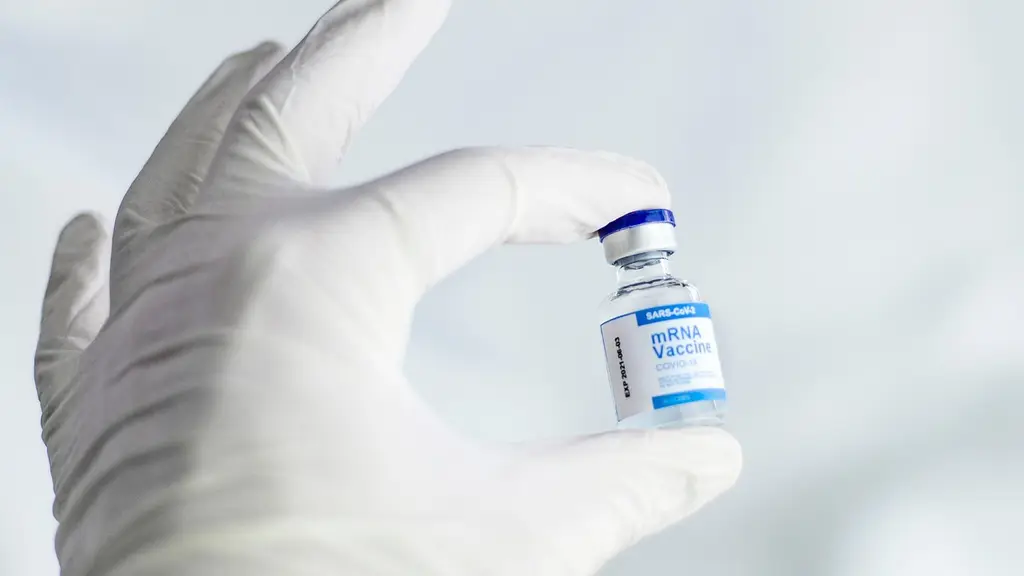
Messenger RNA is the molecule cells use to carry instructions from DNA to the machinery that builds proteins. For decades researchers hoped to inject mRNA so that a person's own cells would make a harmless piece of a virus. The trouble was that injected mRNA triggered inflammation and produced little protein.
In 2005 Katalin Karikó and Drew Weissman showed that swapping one of mRNA's chemical building blocks for a slightly modified version largely avoided that inflammatory reaction. Combined with tiny lipid (fat) particles that protect the mRNA and carry it into cells, the technique made mRNA vaccines practical. When COVID-19 emerged, mRNA vaccines were designed, tested in large trials and authorized for emergency use in late 2020, less than a year after the virus was identified. Karikó and Weissman received the 2023 Nobel Prize in Physiology or Medicine.
Comparing the main vaccine types
| Type | What is in it | Classic examples | Key trade-off |
|---|---|---|---|
| Live attenuated | Weakened living germ | Measles, mumps, rubella; oral polio | Strong, long-lasting immunity, but not suitable for some people with weakened immune systems |
| Inactivated | Killed germ | Injected polio (Salk), hepatitis A | Very stable; often needs boosters |
| Subunit / recombinant | One purified piece, often made by engineered cells | Hepatitis B, HPV | Highly targeted; may need an added ingredient to boost response |
| Toxoid | Inactivated bacterial toxin | Tetanus, diphtheria | Protects against the toxin rather than the bacterium itself |
| mRNA | Genetic instructions for one viral protein | COVID-19 vaccines | Fast to design and update; early versions needed very cold storage |
To understand what happens after any of these is injected, from antibodies to memory cells, see our guide to how the immune system defends the body.
What the long story teaches
Vaccines are sometimes compared with antibiotics, but they work in opposite ways. Antibiotics, like the penicillin discovered in 1928, kill bacteria that are already causing an infection. Vaccines prevent infection in the first place, and they work against viruses, which antibiotics cannot touch.
According to the World Health Organization, global immunization efforts have saved at least 154 million lives over the past 50 years. That number rests on a chain of discoveries stretching from village healers through Jenner, Pasteur and the polio researchers to today's molecular biologists.
Key ideas to remember:
- Every vaccine shows the immune system a safe preview of a germ.
- Methods evolved from deliberate infection, to weakened germs, to killed germs, to single proteins, to genetic instructions.
- Smallpox is the only human disease ever eradicated, achieved through vaccination and careful surveillance.
Questions to discuss: Why was Jenner's cowpox safer than variolation? What made smallpox possible to eradicate when many other diseases are not? If you were designing a vaccine for a new virus, which type would you choose, and why?
Sources and further reading
- History of Smallpox, Centers for Disease Control and Prevention
- Vaccines and immunization, World Health Organization
- The Nobel Prize in Physiology or Medicine 1954, The Nobel Prize
- Press release: The Nobel Prize in Physiology or Medicine 2023, The Nobel Prize
- History of Vaccines, The College of Physicians of Philadelphia