The Water Cycle Explained
Follow water through oceans, clouds, ice, rivers and rocks: how evaporation, condensation and precipitation work, and where Earth's water is stored.
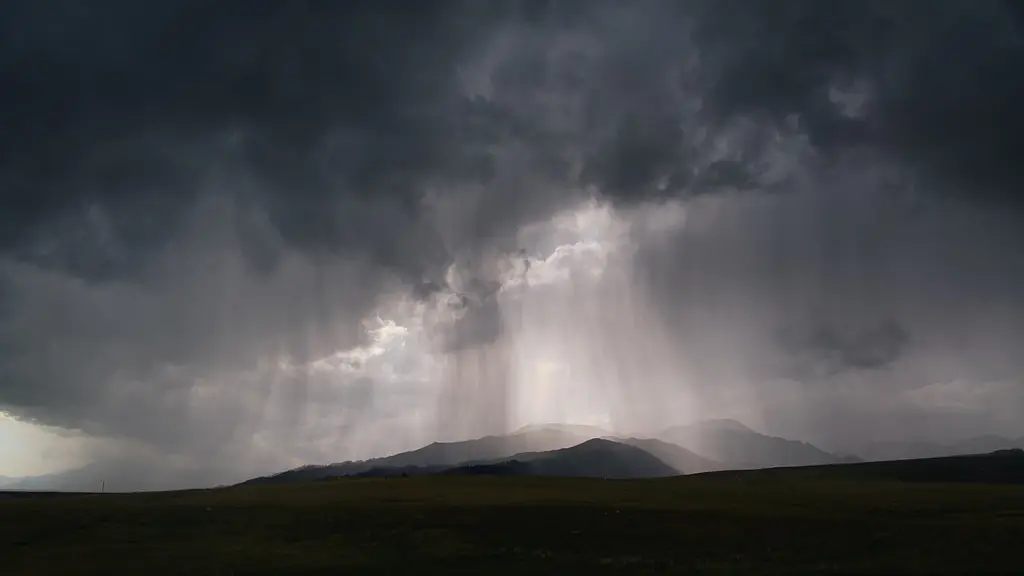
The water in your glass is old. Very old. Earth has held roughly the same amount of water for billions of years, endlessly recycled between sea, sky, ice and land. The molecules you drink this morning might once have fallen as snow on a mountain, drifted for centuries in a deep ocean current or passed through the roots and leaves of a tree.
That never-ending journey is the water cycle, also called the hydrologic cycle. It shapes the weather, carves landscapes, supplies every living thing with fresh water and moves vast amounts of heat around the planet. In this article we follow water through each stage, look at where it is stored and for how long, and see how human activity has become part of the cycle.
Where is Earth's water?
Before following the flow, it helps to know where the water sits. The U.S. Geological Survey's widely used estimates look like this:
| Where the water is | Share of all water on Earth |
|---|---|
| Oceans, seas and bays | about 96.5% |
| Ice caps, glaciers and permanent snow | about 1.7% |
| Groundwater (fresh and salty) | about 1.7% |
| Lakes, rivers, soil moisture, atmosphere and living things | well under 0.1% combined |
Only about 2.5 percent of all water is fresh, and most of that is locked in ice or hidden underground. USGS estimates that roughly 69 percent of Earth's fresh water is frozen in ice caps and glaciers, and about 30 percent is groundwater. The lakes and rivers we depend on are a tiny sliver of the whole.
The engine: sunlight and gravity
Two forces run the water cycle. Energy from the Sun lifts water: it evaporates liquid, melts ice and powers the winds that carry vapor around the globe. Gravity brings water back down: it pulls rain and snow out of clouds, drives rivers downhill and draws water down into the soil.
Every time water changes state it also moves energy. Evaporation absorbs heat, which is why sweating cools you. Condensation releases that heat again, often far away, which is one reason the water cycle is so important to weather and climate. If you want a refresher on solids, liquids and gases, see our guide to states of matter.
Stage by stage
Evaporation
When water molecules at the surface of a sea or lake gain enough energy, they escape into the air as invisible water vapor. Warm temperatures, dry air and wind all speed this up. According to USGS, about 90 percent of the moisture in the atmosphere comes from evaporation from oceans, seas, lakes and rivers, with the oceans providing by far the largest share.
Transpiration
Plants are water pumps. They draw water up through their roots and release vapor through tiny pores in their leaves called stomata. This process, transpiration, supplies most of the remaining atmospheric moisture. A large tree can move hundreds of liters of water from soil to sky on a hot day. Scientists often lump evaporation and transpiration together as evapotranspiration. Our article on how plants grow explains why plants need this flow.
Sublimation
Ice and snow can turn directly into vapor without melting first, especially in dry, sunny, windy conditions at high altitude. That is why snowbanks can shrink on cold days without leaving puddles.
Condensation
As moist air rises, it expands and cools. Cooler air cannot hold as much vapor, so once it reaches its dew point, vapor condenses onto microscopic particles of dust, salt or smoke, forming droplets or ice crystals. Billions of them together make a cloud or fog. The same process puts beads of water on a cold drink can on a summer day.
Precipitation
Cloud droplets are tiny, much too light to fall. They grow by colliding and merging, or, in cold clouds, ice crystals grow by stealing vapor from surrounding droplets. When the drops or crystals become heavy enough, they fall as rain, snow, sleet or hail. The weather side of this story is told in The Science Behind Weather.
Runoff, infiltration and storage
Once precipitation reaches the ground, it has choices:
- Runoff: water flows over the surface into streams and rivers, eventually reaching lakes or the sea. Paved cities produce far more runoff than forests.
- Infiltration: water soaks into the soil. Some is taken up by plants; some percolates deeper to recharge groundwater.
- Storage: water may stay put for a while, as snowpack, as lake water, as glacier ice or in underground layers of rock and sediment called aquifers.
Groundwater is not an underground lake. It mostly fills the tiny spaces between grains of sand and gravel or the cracks in rock, a bit like water in a sponge. It moves slowly and can eventually seep into rivers, springs or the ocean.
How long does water stay in each place?
Not every part of the cycle runs at the same speed. Scientists call the average time a water molecule spends in one reservoir its residence time. These are rough, typical values:
| Reservoir | Typical residence time |
|---|---|
| Atmosphere | about 9 to 10 days |
| Rivers | weeks to months |
| Soil moisture | weeks to months |
| Large lakes | years to decades |
| Shallow groundwater | years to centuries |
| Oceans | thousands of years |
| Deep groundwater and large ice sheets | thousands to hundreds of thousands of years |
The short time water spends in the atmosphere explains why weather changes so quickly, while the long residence times of deep groundwater explain why aquifers that are over-pumped can take a very long time to recover.
Humans are part of the cycle
Older textbook diagrams often showed a pristine landscape with no people. In 2022, USGS released an updated water cycle diagram that puts humans at the center, because we now shape the cycle in major ways:
- Pumping groundwater for drinking water and farming, sometimes faster than it is replenished.
- Building dams and reservoirs that store water and change river flows.
- Irrigating crops, which increases evaporation and transpiration in dry regions.
- Paving land, which reduces infiltration and increases flooding.
- Warming the climate, which increases evaporation and the amount of vapor the atmosphere can hold, contributing to heavier downpours in many regions while also intensifying droughts in others.
Understanding the full cycle helps communities manage water wisely, from protecting aquifers to designing cities that soak up rain.
Try this: a water cycle in a bag
This classic activity makes the invisible visible.
- Draw a sun, clouds and waves on a zip-top sandwich bag with a permanent marker.
- Pour in about a quarter cup of water. Add a drop of blue food coloring if you like.
- Seal the bag firmly and tape it to a sunny window.
- Check it every few hours over a day or two.
You should see droplets forming near the top of the bag (condensation), running down the sides (precipitation) and collecting in the "ocean" at the bottom (collection), all powered by sunlight warming the water (evaporation).
Safety: Make sure the bag is sealed well so it does not leak near electrical outlets, and have an adult help with tape and markers for young children.
Extension idea: set up a second bag in a shady spot. Which one shows condensation faster? Why?
Key ideas to remember
- Earth's water is constantly recycled; almost all of it is salty ocean water.
- The Sun lifts water up; gravity brings it down.
- The main processes are evaporation, transpiration, condensation, precipitation, runoff and infiltration.
- Water can stay in the air for days but in deep aquifers or ice sheets for many thousands of years.
- Human activity is now a major part of how water moves.
Questions to discuss with children: Where might the rain that fell on your school last week be now? Why do you think deserts have so few clouds? How could a city be designed to keep more rainwater in the ground? Water locked in ice plays a starring role in shaping landscapes, as you will discover in How Glaciers Shape the Land.
Sources and further reading
- The Water Cycle, U.S. Geological Survey Water Science School
- How Much Water is There on Earth?, U.S. Geological Survey Water Science School
- Water cycle, NOAA
- The Water Cycle, NASA Earth Observatory
- Hydrosphere: The water cycle, Encyclopaedia Britannica