Solids, Liquids, Gases and Plasma
Why does ice melt, water boil and lightning glow? Explore the four everyday states of matter, the particle model behind them and the changes between them.
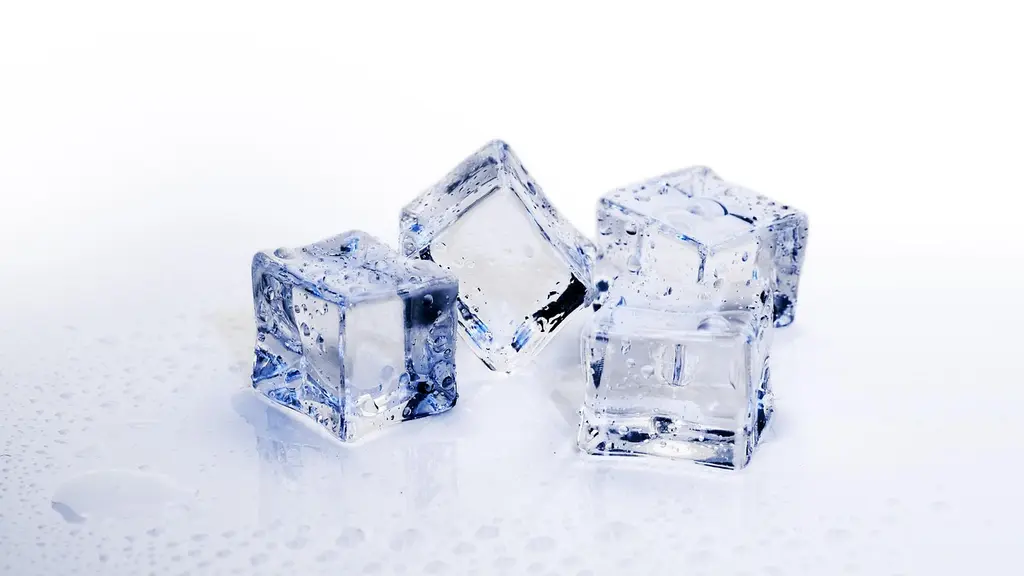
On a cold morning you might scrape frost off a car window, pour hot water into a mug and watch steam curl into the air, all within a minute. Frost, water and steam look and behave completely differently, yet they are the same substance: molecules of H₂O, each made of two hydrogen atoms and one oxygen atom. The only thing that has changed is how those molecules are moving and how tightly they hold on to one another.
These different forms are called states of matter. Most of us learn about three of them, solid, liquid and gas, but there is a fourth that is common across the universe and visible every time lightning flashes: plasma.
This guide explains the particle model that makes sense of all four states, the names for the changes between them, some surprising materials that do not fit neatly into any box, and a gloriously messy experiment that shows the boundaries can blur.
The particle model
Everything around you is made of tiny particles: atoms, molecules or ions, far too small to see. (For more on what these particles are, read Atoms and Molecules: A Beginner's Guide.) Two simple ideas explain the states of matter:
- Particles are always moving. The hotter a substance is, the faster its particles move on average. Temperature is a measure of that average energy of motion.
- Particles attract one another. The strength of that attraction varies from substance to substance.
Which state a substance is in depends on the tug-of-war between these two effects. When attractions win, particles stay locked together. When motion wins, they break free.
| Solid | Liquid | Gas | Plasma | |
|---|---|---|---|---|
| Particle arrangement | Closely packed, usually in a regular pattern | Closely packed but disordered | Far apart, random | Far apart; atoms split into ions and free electrons |
| Particle movement | Vibrate in place | Slide past one another | Move quickly in all directions | Move very quickly; respond to electric and magnetic fields |
| Shape | Fixed | Takes the shape of its container | Fills its container | Fills its container (or is shaped by magnetic fields) |
| Volume | Fixed | Fixed | Expands to fill space; easily compressed | Expands; easily compressed |
| Everyday example | Ice, wood, salt | Water, cooking oil | Air, steam | Lightning, neon signs, the Sun |
Solids, liquids and gases up close
Solids
In a solid, attractions between particles are strong enough to hold them in place. The particles still vibrate, but they do not move past each other, so a solid keeps its shape.
Many solids are crystalline: their particles are arranged in a regular, repeating pattern. Salt, sugar, ice and metals are all crystalline, and the pattern often shows up in the shape of the crystals themselves. (You can watch this happen in our guide to growing crystals at home.) Other solids, such as glass and many plastics, are amorphous: their particles are locked in place but jumbled, more like a frozen liquid.
Liquids
Warm a solid and its particles vibrate more and more until, at the melting point, they break out of their fixed positions. In a liquid, particles are still close together and attract one another, but they can slide past each other. That is why liquids flow and take the shape of their container, while keeping roughly the same volume.
Water has an unusual twist. Most substances are densest as solids, but water expands by about 9 percent when it freezes, because its molecules lock into an open, hexagonal pattern held together by hydrogen bonds. As a result, ice floats on water. This matters enormously for life: lakes freeze from the top down, and the floating ice insulates the water beneath, where fish survive the winter. Our density experiments explore why things float or sink.
Gases
Heat a liquid further and its particles move fast enough to escape their neighbors entirely. In a gas, particles are spread far apart, zooming around and colliding with each other and with the walls of their container. Gases have no fixed shape or volume and are easy to squash, which is why a bicycle pump can force a lot of air into a tire.
The pressure of a gas is the combined effect of countless particles hitting a surface. Heat a gas in a closed container and its particles move faster, hitting the walls harder and more often, so the pressure rises.
Evaporation versus boiling. Liquids can turn into gas in two ways:
- Evaporation happens at the surface of a liquid at any temperature. The fastest-moving particles escape, which is why puddles dry up on a cool day and why sweating cools you down: the most energetic molecules leave, lowering the average energy of those left behind.
- Boiling happens throughout the liquid at a particular temperature, the boiling point, when bubbles of vapor form inside it.
Boiling point depends on air pressure. At sea level, water boils at 100 °C (212 °F). In Denver, about 1.6 kilometers above sea level, the lower air pressure means it boils at about 95 °C, and near the summit of Mount Everest at around 70 °C. That is why cooking instructions sometimes include adjustments for high altitude.
Plasma: the fourth state
Heat a gas to extreme temperatures, or blast it with enough electrical energy, and something dramatic happens. Collisions become so violent that electrons are knocked off atoms entirely. The result is plasma: a hot, electrically charged soup of positive ions and free electrons.
Because its particles are charged, plasma behaves very differently from an ordinary gas. It conducts electricity, responds strongly to magnetic fields and often glows as electrons recombine with ions and release light.
On Earth, natural plasma is relatively rare, but you have almost certainly seen it:
- Lightning. A lightning bolt heats the air in its path to around 50,000 °F (roughly 28,000 °C), about five times hotter than the surface of the Sun, according to the US National Weather Service, ionizing the air along its channel.
- Auroras. Charged particles from the Sun, guided by Earth's magnetic field, collide with gases high in the atmosphere, making them glow green, red and purple.
- Neon signs and fluorescent tubes. An electric current turns the gas inside into a glowing plasma.
- Stars. The Sun and other stars are enormous balls of plasma. Because stars are made of plasma, most of the ordinary matter we can see in the universe is in this state. (See how stars are born, live and die.)
Changes of state
Every change between states has a name, and each involves energy being added or removed.
| Change | From → To | Energy | Example |
|---|---|---|---|
| Melting | Solid → liquid | Absorbed | Ice cream melting in the sun |
| Freezing | Liquid → solid | Released | Water turning to ice in a freezer |
| Evaporation / boiling | Liquid → gas | Absorbed | Water boiling in a kettle |
| Condensation | Gas → liquid | Released | Droplets forming on a cold glass |
| Sublimation | Solid → gas | Absorbed | Dry ice turning straight into gas |
| Deposition | Gas → solid | Released | Frost forming on a cold night |
| Ionization | Gas → plasma | Absorbed | Lightning |
Something surprising happens during a change of state: the temperature stops rising, even though heat is still being added. A pan of melting ice stays at 0 °C until all the ice has melted, because the energy is being used to break particles free rather than to make them move faster. The same thing happens at the boiling point. These changes drive the water cycle, as the Sun's energy evaporates water from oceans and lakes, and condensation in the cool upper air builds clouds.
Dry ice is solid carbon dioxide. At normal air pressure it cannot exist as a liquid, so it sublimes directly into gas at −78.5 °C, creating the foggy effect used on stage.
Beyond the big four
Matter can do even stranger things.
- Bose–Einstein condensates. Cool certain atoms to within a tiny fraction of a degree above absolute zero and they can merge into a single quantum state, behaving like one "super-atom". Predicted in the 1920s by Satyendra Nath Bose and Albert Einstein, the first condensates were made in 1995, earning Eric Cornell, Wolfgang Ketterle and Carl Wieman the 2001 Nobel Prize in Physics.
- Liquid crystals flow like liquids but keep some of the orderly alignment of crystals. They are the "LC" in LCD screens.
- Non-Newtonian fluids, such as a cornstarch and water mixture, change how runny they are depending on how hard you push them.
Try this: is oobleck a solid or a liquid?
You will need: a mug of cornstarch (cornflour), about half a mug of water, a large mixing bowl, a spoon, and some food coloring if you like.
- Tip the cornstarch into the bowl.
- Add the water a little at a time, stirring slowly, until the mixture is thick but still pourable. Roughly two parts cornstarch to one part water works well.
- Stir it slowly, then try stirring fast. Notice the difference.
- Punch the surface quickly with a fist, then rest your fingers on it gently.
- Scoop up a handful and squeeze it into a ball, then open your hand.
What's happening: Under sudden pressure, the cornstarch grains jam together and the mixture behaves like a solid. When the pressure is released, water flows back between the grains and it oozes like a liquid. It challenges the neat categories in the table above.
Safety and clean-up: Oobleck is non-toxic but should not be eaten. Never pour it down the sink, as it can clog drains; let it dry out and scrape it into the trash. Supervise young children and cover surfaces. Never handle dry ice without an adult and insulated gloves, and never seal it in a closed container.
Remember
- The state of a substance depends on the balance between particle motion (temperature) and the attractions between particles.
- Solids keep their shape, liquids flow but keep their volume, gases fill their container, and plasma is gas so energized that its atoms have been split into ions and electrons.
- Melting, boiling and sublimation absorb energy; freezing, condensation and deposition release it.
- Water is unusual because its solid form is less dense than its liquid form, which is why ice floats.
Questions to discuss: Why does a cold drink "sweat" on a summer day? Is a candle flame a plasma? Why does food take longer to cook in boiling water at high altitude?
Sources and further reading
- Phase (state of matter), Encyclopaedia Britannica
- Plasma (state of matter), Encyclopaedia Britannica
- How Hot Is Lightning?, NOAA National Weather Service
- Aurora, NOAA Space Weather Prediction Center
- The Nobel Prize in Physics 2001, The Nobel Prize