Renewable Energy Explained
How solar, wind, hydropower, geothermal and bioenergy turn natural flows into electricity, what each does well, and why storage and grids matter next.
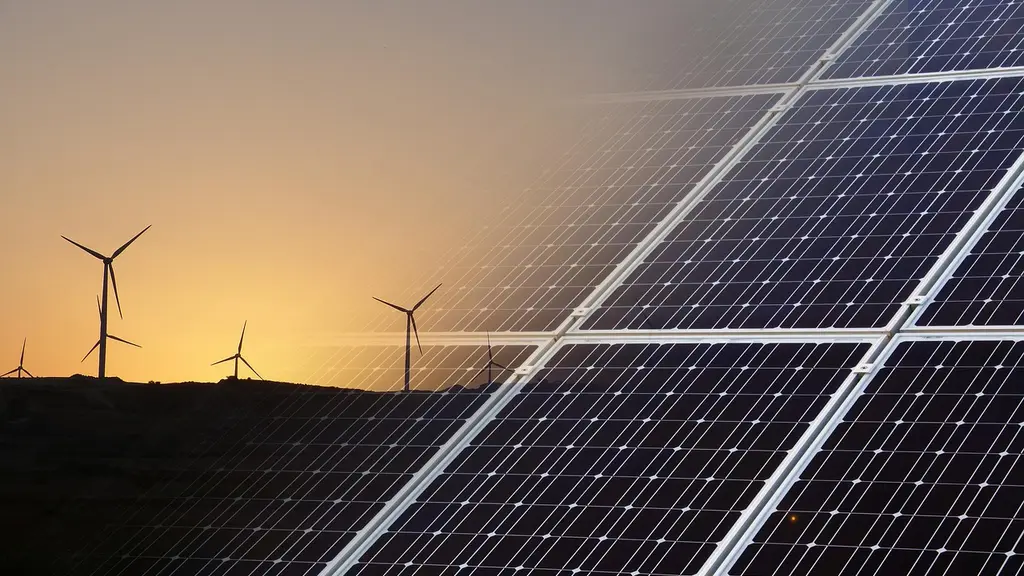
Every second, the Sun delivers a staggering amount of energy to Earth. Some of it warms the ground, some lifts water into clouds, some sets the air moving and some is captured by plants. Renewable energy is the art of tapping into those natural flows, rather than burning fuels that took millions of years to form.
"Renewable" means the source is replenished on a human timescale: tomorrow will bring more sunshine, more wind and more rain. That is different from coal, oil and natural gas, which are finite and release carbon dioxide when burned. This guide explains how each major renewable technology works, where it shines and where it struggles, and why the conversation is increasingly about grids and storage rather than just generation.
Almost everything starts with the Sun
It helps to trace each renewable source back to its origin:
| Source | Where the energy really comes from | What we capture |
|---|---|---|
| Solar | Sunlight directly | Light (photovoltaics) or heat (solar thermal) |
| Wind | Sun heating Earth unevenly, creating pressure differences | Moving air |
| Hydropower | Sun evaporating water, which falls as rain on high ground | Falling or flowing water |
| Bioenergy | Sunlight stored by photosynthesis | Chemical energy in plants and waste |
| Geothermal | Heat from Earth's interior (radioactive decay and leftover heat from the planet's formation) | Hot water and steam |
| Tidal | The gravitational pull of the Moon and Sun | Rising and falling seawater |
Geothermal and tidal energy are the exceptions that do not depend on the Sun. Everything else is sunlight in disguise. Even the plants burned for bioenergy got their energy through photosynthesis.
The common thread: spinning a generator
Most electricity, whether from a coal plant or a dam, is made the same way: something turns a turbine, and the turbine spins a generator in which magnets and coils of wire move past each other, inducing an electric current. Renewables differ mainly in what turns the turbine.
- In a hydropower plant, water falling through a pipe called a penstock pushes the turbine blades.
- In a wind turbine, the wind pushes on aerodynamic blades that work much like an airplane wing, creating lift that turns the rotor.
- In a geothermal plant, steam or hot fluid from deep underground drives the turbine.
- In a biomass plant, burning wood pellets, crop waste or captured landfill gas boils water into steam.
Solar photovoltaics are the outlier: they have no moving parts and turn light directly into electricity using semiconductors. We explain that process step by step in How Solar Panels Turn Light Into Electricity.
Hydropower: the veteran
Water wheels have powered mills for well over two thousand years, and hydroelectric plants have been generating electricity since the late nineteenth century. Hydropower remains the largest single renewable source of electricity worldwide; the International Energy Agency estimates it supplied about 14 percent of global electricity in 2024.
Its great strength is control. A reservoir is a store of energy: operators can open the gates when demand peaks and close them when it falls. Some plants, called pumped storage, even pump water uphill when electricity is cheap and plentiful, then release it later, acting like giant batteries.
The trade-offs are real. Large dams flood valleys, displace communities, block fish migration and alter river ecosystems downstream. In many regions, the best sites are already in use, and droughts can sharply reduce output.
Wind: power from moving air
A modern wind turbine has three long blades on a tall tower. Height matters because winds are generally stronger and steadier away from the ground. Inside the nacelle, the housing at the top, a gearbox or direct-drive generator converts the rotor's slow spin into electricity, and sensors turn the blades to face the wind.
Two pieces of physics shape wind power:
- The power in wind rises with the cube of wind speed. Double the wind speed and the available power increases about eightfold. That is why developers carefully survey sites, and why offshore turbines, which catch strong, steady sea breezes, are attractive.
- No turbine can capture all of it. If a turbine stopped the air completely, no more air could flow through. In 1919 the physicist Albert Betz showed that the theoretical maximum a turbine can extract is about 59 percent of the wind's kinetic energy. Real turbines get somewhat less.
According to the IEA, wind supplied around 8 percent of the world's electricity in 2024.
Solar: the fastest-growing source
Solar comes in two main forms. Photovoltaic (PV) panels convert light straight into electricity and can be installed on anything from a calculator to a rooftop to a desert-sized power plant. Concentrating solar power uses mirrors to focus sunlight and heat a fluid that drives a turbine, and can store that heat in molten salt for use after dark.
Falling costs have made PV the fastest-growing source of electricity in many countries. In 2024, the IEA estimates solar PV produced about 7 percent of global electricity, up from a tiny fraction a decade earlier.
Geothermal and bioenergy: steady but site-dependent
Geothermal energy taps heat stored in hot rock and water below the surface. The first geothermal power generation took place at Larderello, Italy, in 1904, and the site still produces electricity today. Geothermal plants run around the clock regardless of weather, but conventional ones need hot rock close to the surface, which is concentrated in volcanic regions such as Iceland, New Zealand and parts of the western United States. At a smaller scale, geothermal heat pumps use the steady temperature a few meters underground to heat and cool buildings almost anywhere.
Bioenergy includes burning wood and crop residues, capturing methane from landfills and making liquid fuels such as ethanol. It can be dispatched on demand, but it is only low-carbon if the biomass is regrown and harvested sustainably, and growing energy crops competes with food and natural habitats for land.
The real challenge: matching supply with demand
Electricity has to be produced at the very moment it is used. That is easy with a fuel you can burn on demand and harder with a source that depends on the weather. Engineers describe this using a few key ideas:
- Variability: the Sun sets and the wind drops. Solar output follows a daily and seasonal rhythm; wind can lull for days.
- Capacity factor: the actual energy a plant produces compared with what it would make running flat out all year. A solar farm's capacity factor is limited by night and clouds; a geothermal plant's can be very high.
- Flexibility: the ability of the rest of the grid to fill the gaps.
There are several complementary solutions:
- Storage. Batteries can shift solar energy from afternoon to evening; pumped hydro can store energy for longer. See How Batteries Store Energy for the chemistry.
- Bigger, better-connected grids. The wind is usually blowing somewhere. Long transmission lines let regions share surpluses.
- A diverse mix. Solar and wind often complement each other, since wind is frequently stronger in winter and at night.
- Smarter demand. Charging electric cars or running water heaters when power is plentiful smooths out the peaks.
Are renewables really clean?
No energy source is impact-free. Making solar panels, turbines and batteries requires mining, manufacturing and transport, and disposal at end of life raises recycling questions. Wind farms can affect birds and bats, and large solar farms occupy land. Researchers who compare technologies over their full life cycle, from mining to decommissioning, consistently find that wind, solar, hydro and geothermal emit far less carbon dioxide per unit of electricity than coal or gas. Reducing their remaining impacts, through recycling, careful siting and better materials, is an active area of research.
Key ideas and questions to explore
- Most renewable energy is sunlight in another form; geothermal and tidal are the main exceptions.
- Most power plants, renewable or not, spin a generator; solar PV is the exception.
- Hydropower is the largest renewable source today; solar and wind are growing fastest.
- The central engineering challenge is matching variable supply to demand, using storage, grids and flexibility.
Questions to discuss with children: Which renewable sources would work best where you live, and why? What could a town do on a still, cloudy winter evening? Why might a hill be a better place for a wind turbine than a valley? For a broader look at how scientists study our planet, see Environmental Science for Young Learners.
Sources and further reading
- Renewables, International Energy Agency
- Renewable Energy Explained, U.S. Energy Information Administration
- How a Wind Turbine Works, U.S. Department of Energy
- Geothermal Basics, U.S. Department of Energy
- Global Energy Review 2025: Electricity, International Energy Agency