Environmental Science for Young Learners
A guide for parents and teachers to the big ideas of environmental science for ages 5 to 11, with simple outdoor investigations and safety notes.
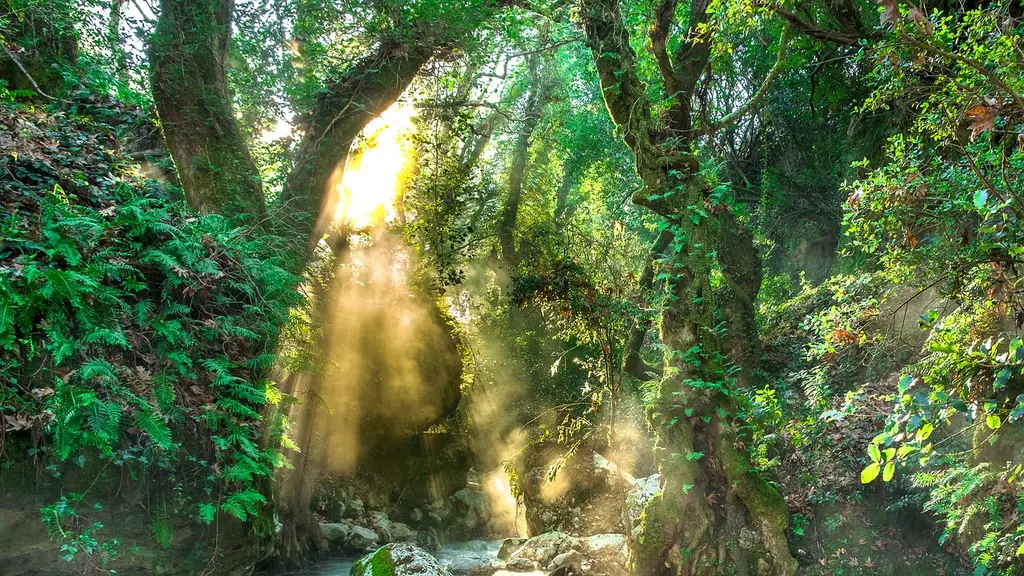
Children are natural environmental scientists. Turn over a log with a six-year-old and you will hear questions that professional ecologists still ask: Who lives here? What do they eat? Why is it damp under here and dry on top? What happens if we leave the log turned over?
Environmental science is the study of how living things, including people, interact with air, water, soil and each other. For young learners it is less about memorizing facts and more about noticing connections. This guide sets out the big ideas that suit children aged roughly 5 to 11, explains the science behind each one in plain language for the adults, and suggests simple, safe investigations you can do in a garden, park or schoolyard.
Why start young?
Young children learn best through direct experience: touching, watching, collecting and talking about what they find. Environmental topics are perfect for this because the "laboratory" is right outside the door. Regular time outdoors builds observation skills, vocabulary and patience, all of which carry over into every other kind of science. It also helps children see themselves as part of nature rather than separate from it.
You do not need to be an expert. The most useful thing an adult can do is model curiosity: "I wonder why…" is more powerful than any fact you could supply. Our guide to how children develop scientific curiosity explores this in more depth.
Big idea 1: Everything is connected
An ecosystem is a community of living things together with the nonliving parts of their environment: sunlight, water, air, rocks and soil. A pond, a hedgerow, a rotting log and a whole forest are all ecosystems at different scales.
Within an ecosystem, energy flows through food chains. Plants capture sunlight to make food (producers). Animals that eat plants are primary consumers; animals that eat those animals are secondary consumers. Real ecosystems are tangled food webs, because most animals eat more than one thing.
Talk about it: Draw a simple chain together: sun → grass → rabbit → fox. Then ask, "What would happen to the fox if all the grass disappeared?" Children quickly grasp that a change in one place ripples through the whole web.
Big idea 2: Nothing is really wasted in nature
When leaves fall or an animal dies, decomposers go to work. Fungi, bacteria, earthworms, woodlice and many other organisms break down dead material, releasing nutrients back into the soil where plants can use them again. This recycling is why forests do not bury themselves in fallen leaves.
It is also a natural bridge to talking about human waste, composting and why plastic is a problem: it does not break down the same way. Older children can explore that further in The Science Behind Recycling.
Big idea 3: Water and air move around the planet
The water in a puddle today might have been in the ocean last month and a cloud last week. Water moves through evaporation, condensation, precipitation and runoff in a never-ending loop. Children can watch pieces of this happen: puddles shrinking in the sun, condensation on a cold glass, rain running down a slope. Our article on the water cycle explains the full journey.
Air connects everything too. Plants, algae and some bacteria release oxygen through photosynthesis. A surprising fact for many adults: scientists estimate that roughly half of the oxygen produced on Earth comes from the ocean, mostly from tiny drifting organisms called phytoplankton.
Big idea 4: Living things are adapted to their habitats
A habitat is the place where an organism finds the food, water, shelter and space it needs. Adaptations are features that help a living thing survive there: thick fur, webbed feet, waxy leaves, camouflage colors. Comparing the creatures found in two contrasting spots, such as a shady damp corner and a sunny dry patch, shows children that different places suit different life.
Big idea 5: People change environments, and can help them
Humans reshape environments more than any other species: we build, farm, pave, pollute and also protect, restore and plant. For young children, keep the focus on positive, concrete actions they can take and see, such as planting flowers for pollinators, putting out water for birds or picking up litter (with gloves). Big global problems presented without any sense of agency can leave children anxious; small local successes build confidence and care.
Six investigations to try
The following activities need little equipment. Each takes 20 to 45 minutes and can be repeated across seasons to compare results.
| Activity | What children do | Big idea | Best age |
|---|---|---|---|
| Minibeast hunt | Gently search under stones and logs, record what they find, then replace everything | Habitats, food webs | 5+ |
| Square-meter survey | Mark a square with string and count plant and animal types inside | Biodiversity | 7+ |
| Leaf-litter detectives | Sift a tray of leaf litter and sort decomposers by number of legs | Decomposition | 6+ |
| Rain gauge and weather log | Measure daily rainfall in a straight-sided jar | Water cycle | 5+ |
| Shady vs. sunny | Compare temperature, soil dampness and life in two spots | Adaptation | 7+ |
| Bird feeder watch | Observe a feeder for 10 minutes a day and tally visitors | Food webs, seasons | 5+ |
How to run a square-meter survey
- Choose a patch of lawn, meadow or schoolyard edge.
- Mark out a 1 m × 1 m square using four sticks and string.
- Count how many different kinds of plants you can see. Children do not need names: "spiky leaf," "tiny yellow flower" works fine.
- Look closely for animals: ants, beetles, spiders, snails. A magnifying glass helps.
- Record results with drawings or tally marks.
- Repeat in a different place, such as a mowed lawn versus an unmown edge, and compare. Which square had more variety? Why might that be?
This simple method is a child-sized version of the quadrat sampling that ecologists use in real field studies.
Safety: An adult should supervise all outdoor investigations. Wear gloves when handling soil or leaf litter, and wash hands thoroughly afterward. Do not touch fungi, unknown berries or animal droppings. Keep well back from deep or fast-flowing water. Handle small creatures gently, keep them out of direct sun, and return them to exactly where they were found.
Making observations count
Encourage children to record what they notice, as scientists do. A simple nature journal might include:
- Date, time and weather. These help explain differences between visits.
- Drawings with labels. Drawing forces close observation far more than a photo does.
- Counts. Tallies turn impressions into data.
- Questions. Write down every "I wonder…" even if you cannot answer it yet.
Over a school year, a journal becomes a record of seasonal change: the first buds, the arrival and departure of birds, the timing of leaves changing color. Comparing one month with another is a natural introduction to looking for patterns in data.
Adapting for different ages
- Ages 5–7: Focus on noticing, naming and sorting. Use senses (safely), simple counts and lots of conversation. Keep sessions short.
- Ages 7–9: Introduce fair comparisons, tables and simple bar charts. Ask children to predict before they look.
- Ages 9–11: Encourage children to design their own questions, repeat measurements and explain their results using ideas like food webs and adaptation.
For more structured lesson ideas, see our collection of outdoor science lessons.
Questions to keep the conversation going
- Where do you think the rain goes after it soaks into the ground?
- What would a bee need to live in our garden?
- Why do you think more creatures live under the log than on top of it?
- What is one thing our family or class could do to make our area better for wildlife?
Environmental science starts with a single good question asked outdoors. Keep asking, keep looking and keep a record, and young learners will build the habits of mind that real scientists rely on.
Sources and further reading
- Learning and Teaching About the Environment, U.S. Environmental Protection Agency
- How much oxygen comes from the ocean?, NOAA National Ocean Service
- Water Science School, U.S. Geological Survey
- Ecosystem, Encyclopaedia Britannica
- Kids, U.S. National Park Service