The Science Behind Recycling
What happens after the recycling truck leaves: how magnets, eddy currents and light sensors sort waste, and why metals, glass, paper and plastics differ.
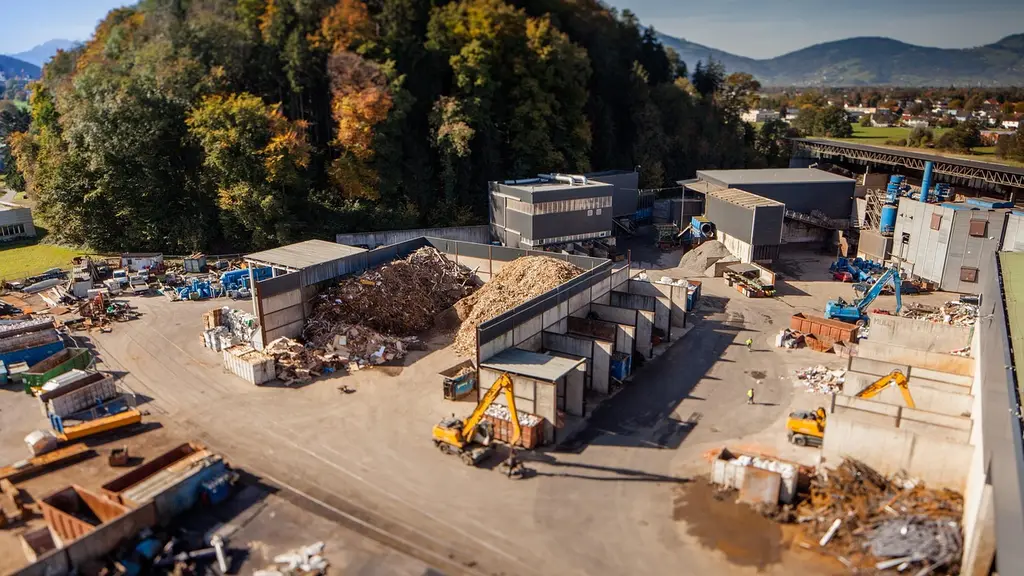
You rinse a yogurt pot, drop a soda can in the blue bin and wheel it to the curb. A truck takes it away, and for most of us that is where the story ends. In fact, it is where the interesting science begins. Somewhere, a building full of conveyor belts, spinning screens, magnets and infrared cameras is about to pull your mixed-up bin apart, piece by piece.
Recycling is really applied chemistry and physics. Whether a material can be recycled, and how many times, depends on what it is made of at the molecular level. This article follows a bin through a sorting facility, explains why an aluminum can and a plastic bottle have very different futures, and shows where recycling fits among other ways to cut waste.
Inside a materials recovery facility
In many places, recyclables are collected "single stream," meaning everything goes in one bin. The job of separating it falls to a materials recovery facility, or MRF (pronounced "murf"). Each machine exploits a different physical property: size, shape, weight, magnetism, electrical conductivity or the way a material reflects light.
Here is a simplified journey through a typical MRF:
- Tipping and pre-sort. Trucks unload onto a tipping floor. Workers pull out large items and things that should never be there, such as hoses, cables and bags, which tangle machinery.
- Screens. Rotating disc screens let small, heavy items fall through while flat cardboard rides over the top. Paper and cardboard are separated by size.
- Magnets. A powerful overhead magnet lifts steel and tin-plated cans away. Iron is ferromagnetic, so this step is simple and very effective. (Curious why? See How Magnets Work.)
- Eddy current separator. Aluminum is not magnetic, but it conducts electricity well. A rapidly spinning drum of magnets induces swirling electrical currents in each can, and those currents create their own magnetic field that opposes the drum's. The result: aluminum cans are flung forward off the belt while plastics and glass simply drop.
- Optical sorters. Near-infrared cameras identify plastics by the specific wavelengths of light their molecules absorb. When the sensor spots, say, a PET bottle, a precisely timed puff of compressed air knocks it into the right chute.
- Glass processing. Glass often breaks during collection. It is separated, cleaned and sometimes sorted by color.
- Baling. Sorted materials are compressed into dense bales and sold to mills and manufacturers who turn them into new products.
Anything that slips through or is too dirty to sell becomes "residue" and is usually sent to landfill. That is why contamination matters so much.
Why metals are recycling champions
Metals are held together by metallic bonds, which do not wear out when a can is crushed, melted and recast. In principle, aluminum and steel can be recycled again and again without losing their essential properties.
The energy savings are dramatic. Making new aluminum means mining bauxite ore, refining it into alumina and then splitting aluminum from oxygen with enormous amounts of electricity. Remelting old aluminum skips nearly all of that; the Aluminum Association estimates that recycled aluminum takes about 95 percent less energy to produce than primary aluminum. That economic value is a big reason aluminum cans have one of the highest recycling rates of any packaging: the U.S. Environmental Protection Agency reported that about half of aluminum beverage cans were recycled in 2018.
Glass: melt, reform, repeat
Glass is made mainly from silica sand, soda ash and limestone, melted together at high temperature. Crushed recycled glass, called cullet, melts at a lower temperature than the raw ingredients, saving energy and reducing wear on furnaces. Glass containers can be recycled repeatedly without losing quality.
There are catches. Colors must often be kept apart, because a little green glass tints a batch of clear. Ceramics, mirrors and heat-resistant cookware have different chemistry and melting points, and even a small piece can create flaws in new bottles. And because glass is heavy, transporting it long distances can eat into the benefits.
Paper: a limited number of lives
Paper is a mat of cellulose fibers from wood. To recycle it, mills mix it with water to make a slurry called pulp, screen out staples and plastic, remove inks with soap-like chemicals and air bubbles, and then spread the fibers into new sheets.
Every trip through the process shortens and weakens the fibers. After a handful of cycles, commonly estimated at five to seven, they become too short to bond into strong paper and wash out as sludge. That is why recycled paper usually contains some fresh fiber, and why lower-grade products such as egg cartons and tissue are often the last stop for old fibers.
Food grease is a particular problem: oil cannot be washed out of fibers in the normal process, which is why a greasy pizza box may be refused.
Plastics: the hard case
Plastics are polymers: long chain molecules made from repeating units. That chemistry explains both their usefulness and their recycling headaches. We trace how polymers were developed in our archive article on the chemistry of everyday materials.
The number inside the triangle on a container is a resin identification code. It tells you what polymer it is made of, not whether your local program accepts it.
| Code | Polymer | Common uses | Recycling notes |
|---|---|---|---|
| 1 | PET (polyethylene terephthalate) | Drink bottles, food trays | Widely recycled into fibers and new bottles |
| 2 | HDPE (high-density polyethylene) | Milk jugs, detergent bottles | Widely recycled |
| 3 | PVC (polyvinyl chloride) | Pipes, some packaging | Rarely accepted curbside |
| 4 | LDPE (low-density polyethylene) | Bags, films | Often collected separately, not curbside |
| 5 | PP (polypropylene) | Tubs, caps, straws | Increasingly accepted |
| 6 | PS (polystyrene) | Foam cups, clamshells | Rarely accepted |
| 7 | Other or mixed | Multilayer packaging, some bioplastics | Usually not recyclable curbside |
Why are plastics difficult?
- Different polymers do not mix well. Melted together, they separate into weak layers, a bit like oil and water. So plastics must be sorted carefully by type.
- Chains break. Each time a plastic is melted and reprocessed, some polymer chains snap, reducing strength. Mechanically recycled plastic is often "downcycled" into products such as fleece fabric, carpet or lumber substitutes.
- Additives and colors. Dyes, fillers and multilayer laminates complicate the recipe.
- Economics. New plastic made from oil and gas is often cheap, so recycled plastic must compete on price.
Researchers are developing chemical recycling methods that break polymers back down into their building blocks, as well as plastics designed from the start to be easier to recycle. These approaches are promising but still being scaled up and evaluated.
The bigger picture
The EPA estimates that in 2018 the United States generated about 292 million tons of municipal solid waste. About 32 percent was recycled or composted; recycling alone accounted for about 24 percent. The rest was burned for energy or sent to landfills.
Recycling is valuable, but it is not the only tool. Waste experts often use a hierarchy:
- Reduce: the most effective step is not creating waste in the first place.
- Reuse: refillable bottles, repairable products and secondhand goods keep items in use without reprocessing.
- Recycle: recover materials to make new products.
- Recover: compost food and yard waste; capture energy where appropriate.
- Dispose: landfill whatever is left, safely.
Composting deserves a special mention. Food scraps in a landfill break down without oxygen and release methane, a potent greenhouse gas. In a well-managed compost pile, microbes with plenty of oxygen turn the same scraps into a rich soil conditioner.
Try this: a kitchen-table sorting challenge
Imagine a class or family emptying a (clean) recycling bin onto a tray. Can you sort it using only physical properties, as an MRF does?
- Test each item with a fridge magnet: which are steel?
- Look for resin codes on plastics and group them.
- Compare how cardboard, a foil tray and a plastic tub float or sink in a bowl of water.
Safety: An adult should check the items first. Remove broken glass and any can with sharp edges, wear gloves, and wash hands afterward.
Talk about which items would be easy for a machine to sort and which would confuse it. For more on what materials are made of, explore atoms and molecules and the states of matter.
Key ideas
- Sorting facilities separate materials using magnetism, conductivity, size, weight and light.
- Metals and glass can be recycled many times; paper fibers wear out after several cycles; plastics are the most complicated.
- Contamination can send recyclable material to landfill, so clean, correctly sorted items matter.
- Reducing and reusing generally save more resources than recycling alone.
Questions to discuss: Why might a town accept number 1 and 2 plastics but not number 6? What happens to the energy saved when we recycle a can instead of making a new one? Check your own local program's rules and see how they compare with what you have learned here.
Sources and further reading
- National Overview: Facts and Figures on Materials, Wastes and Recycling, U.S. Environmental Protection Agency
- Recycling Basics and Benefits, U.S. Environmental Protection Agency
- Aluminum: Material-Specific Data, U.S. Environmental Protection Agency
- Recycling, The Aluminum Association
- Recycling, Encyclopaedia Britannica