How Plants Grow: Light, Water and Hormones
How a seed becomes a plant: where its mass really comes from, how water climbs a tree without a pump, and how hormones steer growth toward the light.
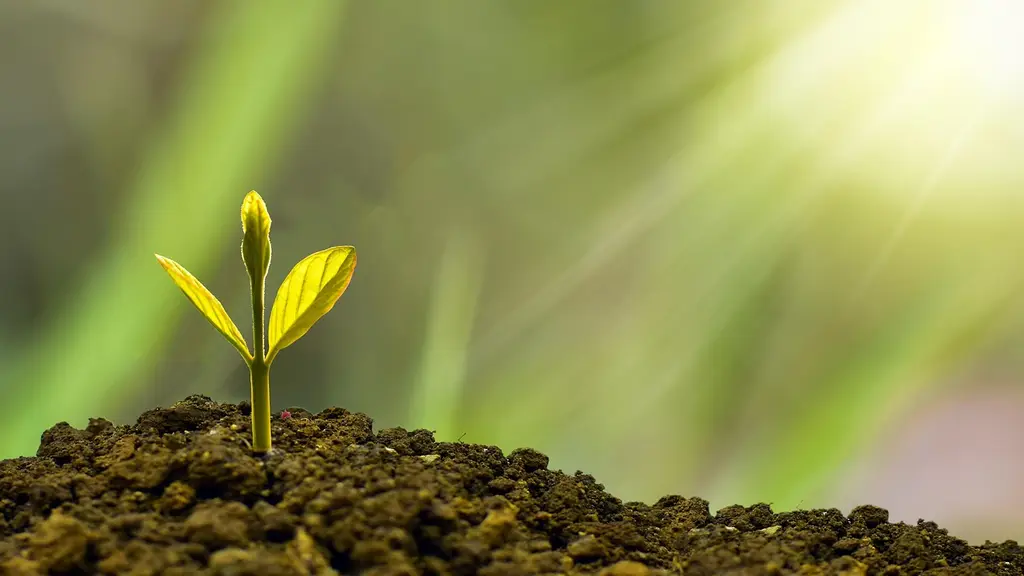
An acorn weighs a few grams. The oak it can become may weigh many tons. Where does all that extra stuff come from? Most people's first guess is "the soil," and for a long time scientists thought so too. The real answer is far stranger and more elegant: most of a tree is built out of thin air.
Plants have no brains, no muscles and no way to walk toward food. Yet they sense light, gravity, touch and the seasons, and they reshape their bodies in response. In this article you'll learn how a seed comes to life, where a plant's mass really comes from, how water climbs to the top of a tall tree without any pump, and how a handful of chemical messengers called hormones steer the whole process.
From seed to seedling
A seed is a baby plant in a protective coat, packed with a lunch box of stored food. It can wait, dry and dormant, for months or even years. To wake up (germinate), most seeds need water, oxygen and a suitable temperature; some also need light, darkness, cold, or even fire or smoke before they'll sprout.
Germination usually goes like this:
- The seed soaks up water and swells, often splitting its coat. Water reactivates enzymes inside.
- Stored food is broken down to fuel growth, since the seedling can't yet make its own.
- The root emerges first. It grows downward, anchoring the seedling and starting to absorb water.
- The shoot pushes upward, often bent into a hook that protects its delicate tip as it pushes through soil.
- The first leaves open and turn green, and the young plant begins to feed itself by photosynthesis.
Where plants actually grow
Animals grow all over their bodies. Plants are different: they grow from special zones of constantly dividing cells called meristems. Meristems at the tips of shoots and roots make plants longer. In trees and shrubs, a thin ring of meristem under the bark, the cambium, adds a new layer of wood each year, making the trunk thicker. That's where tree rings come from.
New cells made in a meristem then do something remarkable: they absorb water and expand, sometimes to many times their original length. Much of a plant's visible growth is this cell stretching, pushed by water pressure inside the cells. It's also why a plant that runs short of water droops: its cells lose the pressure that keeps them firm.
(Plant cells have stiff walls, large water-filled vacuoles and green chloroplasts that animal cells lack; see cells: the building blocks of life for the full comparison.)
The willow that weighed the air
In the first half of the 1600s, the Flemish scientist Jan Baptist van Helmont ran one of the first quantitative experiments in biology. He planted a willow sapling weighing about 5 pounds in a pot holding 200 pounds of dried soil, covered the pot, and gave it nothing but water for five years. At the end, the tree weighed about 169 pounds. The soil, dried and weighed again, had lost only about 2 ounces.
Van Helmont concluded that the tree was made from water. He was partly right. We now know that most of a plant's dry mass is built from carbon dioxide taken from the air. In photosynthesis, a plant uses the energy of sunlight to combine carbon dioxide with water, making sugar and releasing oxygen. That sugar is the raw material for cellulose, wood, starch and nearly everything else in the plant. Soil supplies water and small but essential amounts of mineral nutrients.
What plants need
| Need | Why it matters | What you see if it's lacking |
|---|---|---|
| Light | Powers photosynthesis; also acts as a signal for direction and season | Pale, tall, spindly growth |
| Water | Raw material for photosynthesis; keeps cells firm; carries nutrients | Wilting, then browning |
| Carbon dioxide | The carbon source for building the plant's body | Slower growth (rarely limiting outdoors) |
| Nitrogen | Needed for proteins, DNA and chlorophyll | Yellowing older leaves, stunted growth |
| Phosphorus | Needed for DNA and energy-carrying molecules | Poor root growth, sometimes purplish leaves |
| Potassium | Helps control water balance and the opening of leaf pores | Scorched or yellow leaf edges |
| Magnesium | Sits at the center of every chlorophyll molecule | Yellowing between leaf veins |
The "N-P-K" numbers on a bag of fertilizer refer to nitrogen, phosphorus and potassium, the three nutrients plants need in the largest quantities from soil.
How water climbs a tree
Some redwoods are taller than a 30-story building, and every leaf at the top needs water from the roots. Trees have no heart and no pump. So how does water get up there?
The answer begins in the leaves. Leaves are dotted with tiny pores called stomata, which open to let carbon dioxide in. When they open, water vapor escapes. This evaporation, called transpiration, pulls on the column of water in the leaf's plumbing. Because water molecules cling tightly to each other, that pull is passed all the way down through narrow tubes called xylem to the roots, drawing more water up behind it, like sucking a drink through a very long, very thin straw.
The vast majority of the water a plant absorbs, often well over 90 percent, is lost to the air this way rather than used to build tissue. That's a big part of how plants help drive the water cycle; you can follow the rest of that journey in the water cycle explained. Sugars made in the leaves travel the other way, to roots, fruits and growing tips, through a second set of tubes called phloem.
Hormones: the plant's chemical messengers
Plants coordinate growth with hormones, chemicals made in one place that affect cells somewhere else. Five classic groups do most of the work.
| Hormone | Main jobs | Everyday example |
|---|---|---|
| Auxin | Cell stretching; bending toward light; keeps the main shoot dominant | Pinching off a shoot tip makes a plant bushier |
| Gibberellins | Stem lengthening; seed germination | Used to grow larger seedless grapes |
| Cytokinins | Cell division; delays leaf aging | Used with auxin to grow plants from tiny tissue samples |
| Ethylene | Ripening fruit; leaf and flower drop | One ripe banana speeds up ripening of other fruit in a bag |
| Abscisic acid | Closes stomata in drought; keeps seeds dormant | Helps plants survive dry spells |
Ethylene is unusual: it's a gas. A ripening fruit releases it, and nearby fruits respond by ripening faster, which is the truth behind the saying that one bad apple spoils the barrel.
Gibberellins were discovered thanks to a disease. Rice farmers in Japan noticed "foolish seedlings" that grew absurdly tall, then toppled over. Researchers traced the problem to a fungus that produces gibberellins.
Turning toward the light
Put a houseplant on a windowsill and within days it leans toward the glass. This bending toward light is called phototropism, and its explanation is a classic detective story.
In 1880, Charles Darwin and his son Francis published experiments on grass seedlings. When they covered just the very tip of a seedling with a tiny cap, it no longer bent toward light, even though the bending happened lower down. They concluded that the tip senses light and sends some "influence" downward. In the 1920s, the Dutch botanist Frits Went collected that influence from seedling tips in small blocks of gelatin-like agar, and showed it could make seedlings bend on its own. It was named auxin.
Here's how it works. When light comes from one side, auxin moves to the shaded side of the shoot. Cells on the shaded side stretch more than those on the lit side, so the shoot curves toward the light, like a line of marchers turning a corner: the outside of the line has to travel farther.
Plants also sense gravity (gravitropism). Special cells in root tips contain dense, starch-filled grains that settle to the bottom, telling the plant which way is down. Turn a potted seedling on its side and within a day or two its root will curve downward and its shoot upward.
Light also acts as a signal. Seedlings grown in darkness become tall, pale and spindly, spending their stored food racing upward in search of light. Pigments called phytochromes detect red and far-red light, helping plants judge whether they're shaded by neighbors and, by measuring night length, when to flower.
Try this: a shoebox maze. Cut a hole in one end of a shoebox. Inside, tape two or three cardboard flaps that partly block the path, making a simple maze. Put a sprouted bean or potato with a shoot in a small pot at the far end, close the lid and keep it watered. Over a week or two, the shoot will snake around the flaps toward the light. For more classroom-tested ideas, see our guide to plant growth experiments.
Safety: an adult should do any cutting with a craft knife. Raw kidney beans and potato sprouts are toxic if eaten, so keep them away from young children and wash hands afterward.
What to remember
- Plants grow from meristems at their tips and, in woody plants, in a ring under the bark; much of their growth comes from cells expanding with water.
- Most of a plant's dry mass comes from carbon dioxide in the air, captured by photosynthesis.
- Transpiration pulls water up from roots to leaves through the xylem; no pump is needed.
- Hormones such as auxin, gibberellins, cytokinins, ethylene and abscisic acid coordinate growth, ripening and stress responses.
- Shoots bend toward light because auxin builds up on the shaded side.
Discussion questions: Why might a plant in a dark corner grow taller than the same plant in sunlight, yet look less healthy? If most of a tree comes from the air, what happens to that carbon when the tree burns or rots? For more on living things and how they work, browse our biology and life sciences collection.
Sources and further reading
- Hormone (including plant hormones), Encyclopaedia Britannica
- Tropism, Encyclopaedia Britannica
- Evapotranspiration and the Water Cycle, U.S. Geological Survey
- Photosynthesis, Encyclopaedia Britannica