Acids and Bases Explained
What makes lemon juice sour and soap slippery? A clear guide to acids, bases, the pH scale and neutralization, with a red cabbage indicator to make at home.
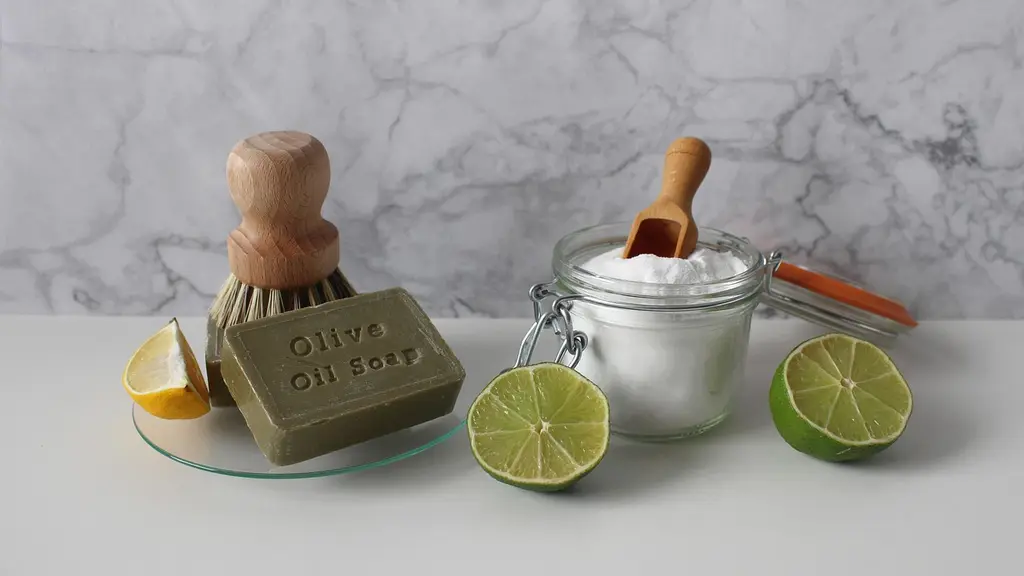
Bite into a lemon and your face puckers. Rub a drop of soapy water between your fingers and it feels slippery. Drop an antacid tablet into a glass of water and it fizzes. These everyday sensations are clues to two of the most important families of chemicals: acids and bases.
Acids and bases are everywhere. They are in your stomach and your blood, in the soil that determines whether hydrangeas bloom blue or pink, in batteries, in baking and in the oceans. Chemists have studied them for centuries, and the ideas behind them connect cooking, medicine, gardening and climate science.
This guide explains what acids and bases are, how the pH scale measures them, what happens when they meet, and how to make a color-changing indicator from red cabbage that turns your kitchen into a chemistry lab.
Sour, slippery and reactive
Long before anyone understood their chemistry, people recognized acids and bases by their properties. (Never test unknown chemicals by taste or touch; strong acids and bases can cause serious burns.)
| Property | Acids | Bases |
|---|---|---|
| Taste (of safe, dilute food examples) | Sour, like lemon juice or vinegar | Bitter; many bitter compounds, such as caffeine and the quinine in tonic water, are bases |
| Feel | Strong acids sting and burn | Feel slippery; strong bases can cause severe burns |
| Effect on litmus paper | Turns blue litmus red | Turns red litmus blue |
| Reaction with some metals | Many react to produce hydrogen gas | Most do not |
| Everyday examples | Citrus juice, vinegar, cola, stomach acid | Baking soda, soap, ammonia cleaner, oven cleaner |
Bases that dissolve in water are called alkalis, so solutions of bases are often described as alkaline.
What makes an acid an acid?
The Arrhenius idea
In 1884, the Swedish chemist Svante Arrhenius proposed that when certain substances dissolve in water, they split into electrically charged particles called ions. This idea, which helped earn him the 1903 Nobel Prize in Chemistry, led to a simple definition:
- An acid releases hydrogen ions (H⁺) in water.
- A base releases hydroxide ions (OH⁻) in water.
Hydrochloric acid, for example, splits into H⁺ and Cl⁻ ions in water, while sodium hydroxide splits into Na⁺ and OH⁻.
In reality, a bare hydrogen ion is just a proton, and it never floats around alone in water. It immediately attaches to a water molecule, forming a hydronium ion (H₃O⁺). Chemists often still write H⁺ as shorthand.
The Brønsted–Lowry idea
In 1923, the Danish chemist Johannes Brønsted and the English chemist Thomas Lowry independently proposed a broader definition that is still widely taught:
- An acid is a proton donor.
- A base is a proton acceptor.
This explains why substances such as ammonia (NH₃) are bases even though they contain no hydroxide: ammonia accepts a proton from water to form NH₄⁺, leaving OH⁻ behind. It also shows that acids and bases always work in pairs. One cannot give away a proton unless the other takes it.
Strong and weak
Strength is not the same as concentration. A strong acid, such as hydrochloric acid, gives up nearly all its protons in water. A weak acid, such as the acetic acid in vinegar or the citric acid in lemons, gives up only a small fraction of them. That is part of why we can safely eat vinegar and lemon juice but must treat hydrochloric acid with great care. Concentration, by contrast, describes how much acid is dissolved in a given amount of water. A concentrated weak acid can still be harmful, and a very dilute strong acid can be relatively mild.
The pH scale
How do you compare the acidity of lemon juice and coffee? In 1909, the Danish chemist Søren Sørensen, working at the Carlsberg Laboratory in Copenhagen, introduced the pH scale as a convenient way to express the concentration of hydrogen ions in a solution.
For water-based solutions at room temperature, the scale usually runs from 0 to 14:
- pH 7 is neutral. Pure water at 25 °C has a pH of 7.
- Below 7 is acidic. The lower the number, the more acidic.
- Above 7 is basic (alkaline). The higher the number, the more basic.
The crucial detail is that the scale is logarithmic. Each step of one pH unit represents a tenfold change in hydrogen ion concentration. Lemon juice at pH 2 has about 100,000 times the hydrogen ion concentration of pure water at pH 7.
| Approximate pH | Substance |
|---|---|
| 1–3.5 | Stomach acid |
| About 2 | Lemon juice |
| About 2.5–3 | Vinegar |
| About 5 | Black coffee |
| About 5.6 | Clean rainwater (slightly acidic from dissolved carbon dioxide) |
| About 6.5–6.8 | Milk |
| 7 | Pure water |
| 7.35–7.45 | Human blood |
| About 8.1 | Seawater |
| About 8.3 | Baking soda dissolved in water |
| About 11–12 | Household ammonia |
| About 12–13 | Bleach |
Values vary between brands and samples, so treat these as rough guides.
When acids meet bases: neutralization
Mix an acid with a base and they cancel each other out in a neutralization reaction. The hydrogen ions from the acid combine with hydroxide ions from the base to form water, and the remaining ions form a salt:
acid + base → salt + water
For example, hydrochloric acid and sodium hydroxide produce sodium chloride (ordinary table salt) and water. In chemistry, "salt" means any compound made this way, not just the one on the dinner table.
Neutralization is useful in everyday life:
- Indigestion remedies contain bases such as calcium carbonate or magnesium hydroxide that neutralize some excess stomach acid.
- Farmers and gardeners spread lime (calcium compounds) on fields to make acidic soils less acidic for crops.
- Baking soda reacts with acidic ingredients in batter to release carbon dioxide, which makes cakes rise; see Chemical Reactions in the Kitchen.
Acids and bases in the wider world
In your body, the stomach produces hydrochloric acid to help digest food and kill many microbes, and its lining is protected by mucus. Blood, on the other hand, is kept in a narrow, slightly alkaline range; buffer systems in the blood resist changes in pH.
In the garden, soil pH affects which nutrients plants can absorb. Bigleaf hydrangeas famously produce blue flowers in acidic soils, where aluminum is more available to the plant, and pink flowers in more alkaline soils.
In the oceans, seawater is slightly basic. As the oceans absorb carbon dioxide from the atmosphere, some of it forms carbonic acid. According to NOAA, the average pH of surface ocean water has fallen from about 8.2 to about 8.1 since the start of the industrial era. Because the scale is logarithmic, that small-looking change represents roughly a 30 percent increase in acidity, which makes it harder for corals, oysters and some plankton to build their shells and skeletons.
In cleaning, many soaps and cleaners are alkaline, which helps them break down grease. Our article on how soap works explains the chemistry.
Try this: a red cabbage pH indicator
Red cabbage contains pigments called anthocyanins that change color depending on pH, making it a natural indicator.
You will need: a quarter of a red cabbage, hot (not boiling) water from a kettle, a sieve, a jug, several clear glasses or jars, and test liquids such as lemon juice, vinegar, water, milk, baking soda dissolved in water, and a little dissolved laundry powder or soap.
- An adult chops the cabbage into small pieces, places them in a bowl and covers them with hot water.
- Leave it for about 15–20 minutes, stirring now and then, until the water turns deep purple.
- Strain the liquid into a jug and let it cool. This is your indicator.
- Pour a little indicator into each glass, about a third full.
- Add a spoonful of a different test liquid to each glass and watch the color change.
- Arrange the glasses from red to green-yellow to make your own pH scale.
What to expect: Strongly acidic liquids such as lemon juice turn the indicator red or pink. Neutral liquids leave it purple. Mild bases such as baking soda solution turn it blue, and stronger bases turn it green or even yellow. Try adding vinegar to the green glass a little at a time and watch it neutralize back toward purple.
Safety: An adult should handle the knife and hot water. Use only food-grade or very mild household substances. Never use bleach, drain cleaner, oven cleaner or other strong chemicals, and never mix cleaning products: bleach combined with acids or with ammonia releases toxic gases. Do not drink the test mixtures, and wash hands afterward.
Indicators are also behind many color changes in nature and food. The same family of pigments colors blueberries, red onions and purple flowers; read more in The Chemistry of Colour. For even more cupboard chemistry, see our kitchen chemistry experiments.
The essentials
- Acids donate protons (hydrogen ions); bases accept them.
- The pH scale measures acidity: 7 is neutral, lower is acidic, higher is basic, and each step is a factor of ten.
- Acids and bases neutralize each other to form a salt and water.
- Strength (how fully an acid gives up protons) is different from concentration (how much is dissolved).
Questions to explore: Why might rain be slightly acidic even in a place with no pollution? Why might a gardener test the soil before planting blueberries, which prefer acidic ground? What do you think would happen to a seashell left in vinegar overnight?
Sources and further reading
- pH and Water, U.S. Geological Survey Water Science School
- Ocean Acidification, National Oceanic and Atmospheric Administration
- Svante Arrhenius: Facts (Nobel Prize in Chemistry 1903), The Nobel Prize
- Søren Sørensen, Science History Institute
- Acid–base reaction, Encyclopaedia Britannica