How Stars Are Born, Live and Die
Follow a star's life from a cold gas cloud to fusion, red giant, white dwarf or supernova, and learn how dying stars made the elements in your body.
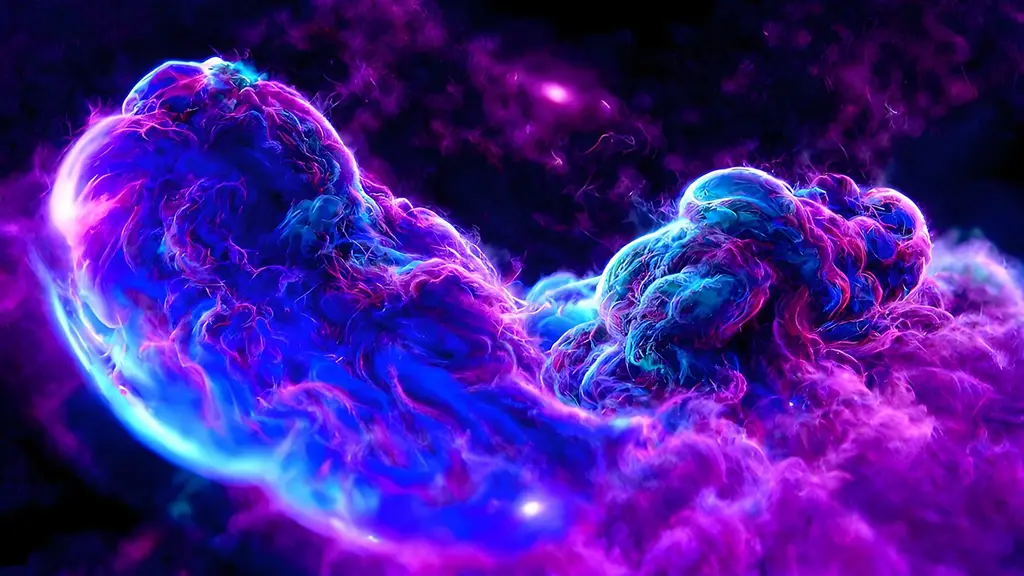
Every star you see at night is a gigantic ball of hot gas, held together by its own gravity and powered by nuclear reactions in its core. None of them is permanent. Each one formed at a particular time, is gradually using up its fuel, and will eventually die, some quietly, some in explosions bright enough to outshine an entire galaxy.
Stars live far too long for anyone to watch one from start to finish. Astronomers have pieced together their life stories the way you might work out how trees grow by walking through a forest: by looking at huge numbers of stars at different stages. In this article you'll follow that story from a cold, dark cloud to a glowing star, and on to the three very different ways stars end. Along the way you'll see why the iron in your blood and the calcium in your bones were made inside stars.
Stage 1: a cold cloud collapses
Space between the stars is not completely empty. Drifting through our galaxy are vast clouds of gas, mostly hydrogen and helium, laced with dust. The densest, coldest parts, called molecular clouds, are where stars are born. The Orion Nebula, around 1,350 light-years away and visible as a fuzzy patch in Orion's "sword," is one of the nearest star-forming regions.
A cloud can sit in balance for a long time. But if something squeezes part of it, perhaps the shock wave from a nearby exploding star or a collision between clouds, gravity can take over. A dense clump starts to collapse. As it shrinks, it heats up, and like a spinning ice skater pulling in her arms, it spins faster. The collapsing clump flattens into a disk with a hot, dense ball at the center: a protostar. Planets can later form in the leftover disk, as they did around our own Sun (see the solar system explained).
Stage 2: the furnace switches on
The protostar keeps contracting and heating. When the temperature at its core reaches roughly 10 million degrees Celsius, something remarkable happens: hydrogen nuclei begin slamming together hard enough to fuse into helium.
At those temperatures, matter exists as plasma, the fourth state of matter, in which electrons are stripped away from atomic nuclei (our article on solids, liquids, gases and plasma explains the difference). Fusing four hydrogen nuclei into one helium nucleus leaves the product very slightly lighter than the ingredients. That missing mass is converted into energy, following Einstein's famous equation E = mc². Our Sun converts about four million metric tons of matter into energy every second, and it has enough hydrogen to keep doing so for billions of years.
Not every collapsing clump makes it this far. Objects with less than about 8 percent of the Sun's mass never get hot enough for sustained hydrogen fusion. They become brown dwarfs, sometimes called failed stars, which glow faintly as they slowly cool.
Stage 3: a long, stable middle age
Once fusion begins, a star settles into a long balancing act. Gravity pulls all its gas inward; the heat and pressure from fusion push outward. While the two are matched, the star stays a steady size and brightness. Astronomers call this phase the main sequence, and stars spend most of their lives on it.
Here is a fact that surprises many people: bigger stars die younger. A massive star has more fuel, but its core is so hot and dense that it burns through that fuel at a ferocious rate.
| Type of star | Mass compared with the Sun | Surface color and temperature | Approximate main-sequence lifetime |
|---|---|---|---|
| Red dwarf | About 0.08 to 0.5 | Red, below about 3,500 °C | Hundreds of billions to trillions of years |
| Sun-like star | About 1 | Yellow-white, about 5,500 °C | About 10 billion years |
| Massive star | About 20 | Blue-white, tens of thousands of degrees | Less than 10 million years |
Red dwarfs are the most common stars in our galaxy, though they are so dim that none is easily visible to the naked eye. The smallest of them burn so slowly that none has yet reached the end of its life; the universe, at about 13.8 billion years old, simply isn't old enough.
Our Sun is about 4.6 billion years old, roughly halfway through its main-sequence life.
How do we know what stars are made of? Through their light. When starlight is spread into a spectrum, dark lines appear at colors that match specific elements. In 1925 the astronomer Cecilia Payne used such spectra to show that stars are made overwhelmingly of hydrogen and helium, a conclusion that at first met resistance but is now fundamental. (Our guide to what light is explains how spectra work.)
Stage 4: running low on fuel
Eventually the core runs out of hydrogen. Fusion there falters, gravity squeezes the core, and it heats up. Hydrogen keeps fusing in a shell around the core, and the extra energy pushes the star's outer layers far outward. The star swells into a red giant, hundreds of times wider than before, with a cooler, redder surface.
In about 5 billion years, our Sun will become a red giant. It will grow large enough to swallow Mercury and Venus; whether it reaches Earth's orbit is still debated, but either way Earth's surface will be baked long before then.
Inside a red giant, the core eventually reaches around 100 million degrees, hot enough to fuse helium into carbon and oxygen. From here, the story splits depending on mass.
Ending 1: a gentle fade (stars like the Sun)
A star like the Sun can't get hot enough to fuse carbon. Its outer layers drift away into space, forming a glowing shell of gas called a planetary nebula. (The name is a historical accident: through early telescopes, these round glowing shells looked a bit like planets. They have nothing to do with planets.)
What remains is the exposed core: a white dwarf, roughly the size of Earth but with about half the mass of the Sun packed inside. No fusion happens there; it simply shines from stored heat and cools over immense spans of time. Sirius, the brightest star in the night sky, has a faint white dwarf companion. A white dwarf can't be more massive than about 1.4 times the Sun, a limit worked out by Subrahmanyan Chandrasekhar in the early 1930s.
Ending 2: a supernova (massive stars)
Stars more than about eight times the Sun's mass live faster and die far more violently. Their cores fuse heavier and heavier elements in a series of layers like an onion: carbon, neon, oxygen, silicon and finally iron.
Iron is the end of the line. Fusing iron absorbs energy rather than releasing it, so the core can no longer support itself. In less than a second it collapses, then rebounds, sending a shock wave that blasts the rest of the star apart in a supernova. For a few weeks, a single supernova can outshine billions of ordinary stars. Chinese astronomers recorded a "guest star" in the year 1054 that was visible in daylight; its debris is the Crab Nebula we see today.
What's left behind: neutron stars and black holes
A supernova leaves behind an ultra-dense core. Often it becomes a neutron star, a ball only about 20 kilometers across containing more mass than the Sun. A sugar-cube-sized piece of it would weigh about as much as a mountain on Earth. Some neutron stars spin many times a second and sweep beams of radio waves across space; we detect them as pulsars.
If the remaining core is massive enough, not even neutron pressure can stop the collapse, and it becomes a black hole, an object whose gravity is so strong that nothing, not even light, can escape from within its boundary.
You are made of star stuff
The Big Bang produced almost entirely hydrogen and helium, with a trace of lithium. Nearly every other element was made later by stars. Carbon, oxygen and nitrogen are forged in stellar cores and scattered by dying stars. Many elements heavier than iron are made during supernovae and in collisions between neutron stars; in 2017, astronomers watched the aftermath of one such collision and detected signs of freshly made heavy elements.
That means the carbon in your cells, the oxygen you breathe and the calcium in your teeth were once inside stars that died before the Sun was born. Explore where each of those elements sits on our interactive periodic table, or read more about how they combine in atoms and molecules.
A star's life at a glance
- A cold cloud of gas and dust collapses under gravity.
- A protostar forms and heats up; at about 10 million °C, hydrogen fusion begins.
- The star spends most of its life on the main sequence, balancing gravity against fusion.
- When core hydrogen runs out, the star swells into a red giant or supergiant.
- Sun-like stars shed their outer layers and leave white dwarfs.
- Massive stars explode as supernovae, leaving neutron stars or black holes and seeding space with new elements.
Things to try and discuss: On a winter evening in the Northern Hemisphere (summer in the Southern), find Orion. Compare reddish Betelgeuse at one shoulder with blue-white Rigel at the opposite foot; their colors reveal their surface temperatures. Ask: why might the biggest, brightest stars be the ones that live the shortest? And use our Solar System Explorer to see how the Sun, an ordinary middle-aged star, dominates its own planetary family.
Sources and further reading
- Stars, NASA Science
- The Sun, NASA Science
- Star (astronomy), Encyclopaedia Britannica
- Hubble Space Telescope, NASA Science