From the archive
The Chemistry of Everyday Materials: A Short History of Polymers
From vulcanized rubber and Bakelite to nylon, polypropylene and dissolving implants: how the science of long-chain molecules reshaped daily life and medicine.
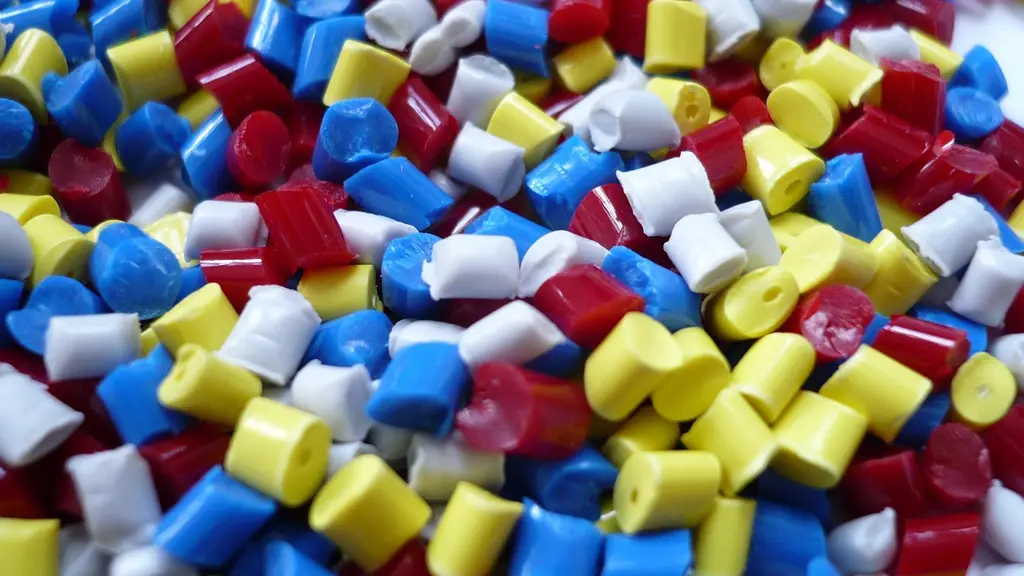
Look around the room you are in. The fibers in your clothes, the case of your phone, the paint on the walls, the insulation on electrical wires, perhaps even the stitches from a past operation: almost all are made of polymers, enormous molecules built from thousands of small repeating units. So are the wood in your table, the proteins in your muscles and the DNA in your cells.
A century ago, many leading chemists did not believe such giant molecules existed. This article tells how polymer science grew from trial-and-error tinkering into a theory-driven field, how that understanding unleashed nylon, synthetic rubber and modern plastics, and how polymers moved into medicine, delivering drugs and helping grow new tissue. It ends with the field's biggest current challenge: what to do with plastic once we are finished with it.
Learning by trial and error
People used natural polymers long before anyone understood them. Mesoamerican cultures made bouncing balls from latex rubber thousands of years ago. Raw rubber, though, turns sticky in summer heat and brittle in winter cold. In 1839 the American inventor Charles Goodyear found that heating rubber with sulfur produced a tough, elastic material that kept its properties across a wide range of temperatures. Vulcanization, as it was called, made rubber useful for everything from boots to, eventually, tires. Nobody knew why it worked.
Chemists were beginning to build the necessary concepts. In 1858 August Kekulé, and independently Archibald Couper, proposed that carbon atoms form four bonds and can link to one another in chains. In 1874 Jacobus van 't Hoff and Joseph Le Bel showed that those four bonds point toward the corners of a tetrahedron, giving molecules real three-dimensional shapes.
The first plastics
Inventors forged ahead without waiting for theory. In 1870 John Wesley Hyatt patented celluloid, made by treating cellulose nitrate with camphor, partly in response to a shortage of ivory for billiard balls. Celluloid went on to become the basis of photographic and movie film.
The first fully synthetic plastic came from Leo Baekeland, a Belgian-born chemist working in New York. In 1907 he found how to control the reaction of phenol with formaldehyde to produce a hard, heat-resistant, electrically insulating material. He announced Bakelite in 1909, and it soon appeared in telephones, radios and electrical fittings. Bakelite was a triumph of chemical craft, but chemists still argued about what it actually was at the molecular level.
Do giant molecules exist?
In the early twentieth century, the dominant view held that materials such as rubber and cellulose were loose clusters of small molecules held together by weak forces. In 1920 the German chemist Hermann Staudinger argued instead that they were genuine macromolecules: very long chains of atoms joined by ordinary chemical bonds. Many colleagues found the idea absurd.
Evidence gradually accumulated. In the late 1920s Kurt Meyer and Herman Mark used X-ray crystallography to show that cellulose fibers contain long, orderly chains. The Swedish chemist The Svedberg's ultracentrifuge, which spins solutions so fast that large molecules settle out, showed that proteins have huge, well-defined molecular weights. Staudinger's view prevailed, and he received the 1953 Nobel Prize in Chemistry for his discoveries in macromolecular chemistry.
Why does this matter? Because once chemists accepted that polymers are chains, they could understand that the length of a chain, how branched it is, and how chains pack together determine whether a material is soft or rigid, stretchy or strong. Polymer properties became something to design.
Nylon and the age of designed materials
In 1928 the chemical company DuPont hired a young Harvard chemist, Wallace Carothers, to do fundamental research with no requirement to produce products. Carothers set out to prove Staudinger right by building long chains step by step from known small molecules. His group made polyesters and helped develop neoprene, an early synthetic rubber. In 1935 they produced a polyamide that could be drawn into strong, silky fibers: nylon.
Carothers died in 1937, before nylon reached the public. Nylon stockings were showcased at the 1939 New York World's Fair and went on general sale in 1940, causing a sensation. During World War II nylon was diverted to parachutes, ropes and tents.
The war also created an emergency that polymer science helped solve. When Japan took control of Southeast Asia's rubber plantations in 1942, the United States lost most of its natural rubber supply. A government program, begun with the Rubber Reserve Company in 1940, brought together companies and university scientists to mass-produce a synthetic rubber made from styrene and butadiene. Basic research went hand in hand with production: Peter Debye developed a way to measure polymer molecular weights by how solutions scatter light, and Paul Flory, who later won the 1974 Nobel Prize in Chemistry, built theories of how polymer chains behave.
Catalysts and the plastics boom
After the war, cheap petroleum supplied the small molecules polymers are made from. Polyethylene had been discovered in Britain in 1933 but required very high pressures. In 1953 Karl Ziegler in Germany found catalysts made from titanium and aluminum compounds that made polyethylene at low pressure and with straighter, stronger chains. Giulio Natta in Italy used similar catalysts to make polypropylene in which every side group pointed the same way, producing a strong, useful plastic. The two shared the 1963 Nobel Prize in Chemistry. Polyethylene and polypropylene remain the most-produced plastics in the world.
| Year | Milestone |
|---|---|
| 1839 | Goodyear discovers vulcanization of rubber |
| 1858 | Kekulé and Couper describe carbon chains |
| 1870 | Hyatt patents celluloid |
| 1909 | Baekeland announces Bakelite |
| 1920 | Staudinger proposes that polymers are long-chain molecules |
| 1935 | Carothers's group makes nylon at DuPont |
| 1940–45 | U.S. synthetic rubber program |
| 1953–54 | Ziegler and Natta catalysts for polyethylene and polypropylene |
| 1970 | Absorbable synthetic sutures marketed |
| 1996 | FDA approves polymer wafers that release chemotherapy in the brain |
Polymers inside the body
Polymers that break down safely in the body opened a new frontier in medicine. In the 1960s chemists at American Cyanamid developed sutures made from polyglycolic acid, which the body gradually breaks down into harmless products; they were marketed from 1970, so patients no longer needed many stitches removed.
In the 1970s the chemical engineer Robert Langer, working in surgeon Judah Folkman's laboratory in Boston, showed that large molecules such as proteins could be released slowly and steadily from polymer materials, something many experts thought impossible. Controlled-release technology now delivers medicines over weeks or months from implants, injections and drug-coated heart stents. One application came from Langer's collaboration with neurosurgeon Henry Brem: a dissolving polymer wafer, placed in the brain after a tumor is removed, that releases a chemotherapy drug directly at the site. The U.S. Food and Drug Administration approved it in 1996.
Scaffolds for growing tissue
Langer and the surgeon Joseph Vacanti then asked whether biodegradable polymers could serve as scaffolds on which living cells grow into new tissue, with the scaffold dissolving as the tissue matures. Their work helped found the field of tissue engineering, which they described in a widely cited 1993 article. Engineered skin substitutes built from living cells on polymer or protein supports were approved in the late 1990s and early 2000s for treating hard-to-heal wounds, including diabetic foot ulcers.
Polymers keep finding new roles. The 2000 Nobel Prize in Chemistry honored Alan Heeger, Alan MacDiarmid and Hideki Shirakawa for discovering that some polymers can conduct electricity, work that underlies flexible electronics and some display technologies. Polymer chemistry is also part of the lipid nanoparticles used to deliver mRNA vaccines.
The problem of permanence
The durability that makes plastics so useful also makes them a lasting pollutant. The OECD estimated that global plastics production roughly doubled between 2000 and 2019, to about 460 million tonnes a year, and that less than a tenth of plastic waste was recycled. Plastic litter fills rivers and oceans, and tiny fragments called microplastics have been found from mountaintops to the deep sea.
Chemists are attacking the problem from several directions: designing polymers that can be easily broken back into their building blocks and remade, developing plant-based and biodegradable plastics, and studying microbes and enzymes that digest plastics. In 2016 Japanese researchers described a bacterium that can break down PET, the plastic in many drinks bottles. Governments, meanwhile, began negotiating a global plastics treaty in 2022; talks in 2024 and 2025 ended without a final agreement.
Things to think about
- Why did it matter that Staudinger was right about long chains, if inventors were already making useful plastics?
- Carothers was hired to do basic research with no product in mind. What came of it?
- What would an ideal plastic of the future need to do, both in use and afterward?
To review the chemistry underneath, read Atoms and Molecules: A Beginner's Guide and our guide to the states of matter. For what happens to plastic after we throw it away, see The Science Behind Recycling, and for polymers designed to work inside the body, Biomaterials: How Engineered Materials Work Inside the Body.
Sources and further reading
- The Nobel Prize in Chemistry 1953 (Hermann Staudinger), Nobel Prize Outreach
- The Nobel Prize in Chemistry 1963 (Karl Ziegler and Giulio Natta), Nobel Prize Outreach
- Wallace Hume Carothers, Science History Institute
- Bakelite: The World's First Synthetic Plastic (National Historic Chemical Landmark), American Chemical Society
- The Nobel Prize in Chemistry 2000 (conductive polymers), Nobel Prize Outreach
- Original Beyond Discovery article (PDF), brucealberts.org