Why the Moon Has Phases
Why the Moon seems to change shape over 29.5 days, why it isn't Earth's shadow, how to tell waxing from waning, and a simple lamp-and-ball model to try at home.
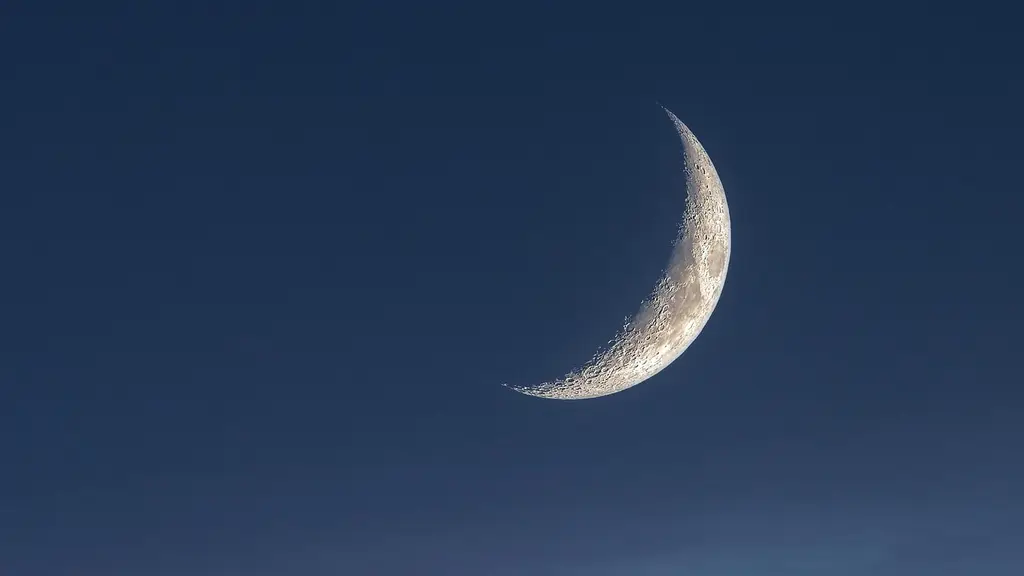
Look at the Moon a few evenings in a row and you'll catch it changing: a fingernail sliver one night, a fat half-disk a week later, a brilliant full circle a week after that. People have watched this cycle for as long as there have been people, and many calendars, including the word "month" itself, are built around it.
Yet ask a room of adults why the Moon has phases, and many will say it's Earth's shadow falling across it. That's a perfectly reasonable guess, and it's wrong. In this article you'll learn what really causes the phases, how long the cycle takes and why there are two different answers, how to tell a growing Moon from a shrinking one, and how to model the whole thing with a lamp and a ball.
Half lit, always
Start with one simple fact: the Moon makes no light of its own. It shines because it reflects sunlight, the same way a white wall glows when a flashlight beam hits it.
At any moment, the Sun lights up exactly half of the Moon, the half facing the Sun. The other half is in darkness. That's true every single day of the month (except during the brief hours of a lunar eclipse).
What changes is how much of that sunlit half we can see from Earth. As the Moon travels around Earth, our viewing angle on its lit half shifts. When the Moon is roughly between Earth and the Sun, its lit side faces away from us and we see almost nothing. When the Moon is on the far side of Earth from the Sun, its whole lit face points toward us and we see a full Moon. Everything else is in between.
Why it isn't Earth's shadow
The shadow idea fails a simple test. For Earth's shadow to fall on the Moon, Earth has to be directly between the Sun and the Moon. That happens only near full Moon, when the Moon is on the opposite side of Earth from the Sun. Crescents and half Moons occur when the Moon is off to the side, nowhere near Earth's shadow.
Earth's shadow does sometimes fall on the Moon, and when it does we call it a lunar eclipse. A lunar eclipse can only happen at full Moon, and it looks quite different from a phase: the edge of the shadow is curved and fuzzy, and a totally eclipsed Moon often glows a coppery red from sunlight bent through Earth's atmosphere.
Why don't we get an eclipse every full Moon? Because the Moon's orbit is tilted by about 5 degrees relative to Earth's orbit around the Sun. Most months, the full Moon passes a little above or below Earth's shadow and misses it entirely.
The eight phases, step by step
Astronomers usually describe eight phases. "Waxing" means the visible lit part is growing; "waning" means it is shrinking. "Gibbous" (from a Latin word for hump) means more than half lit.
| Phase | Where the Moon is | When you can see it |
|---|---|---|
| New moon | Roughly between Earth and Sun | Essentially invisible, lost in the Sun's glare |
| Waxing crescent | A little east of the Sun | Low in the west after sunset |
| First quarter | 90 degrees from the Sun | Rises around midday; high in the south at sunset (from northern mid-latitudes) |
| Waxing gibbous | Between first quarter and full | Afternoon and evening, setting after midnight |
| Full moon | Opposite the Sun | Rises around sunset, sets around sunrise; up all night |
| Waning gibbous | Past full | Rises in mid-evening, visible into the morning |
| Third quarter | 90 degrees from the Sun, on the other side | Rises around midnight; high at dawn |
| Waning crescent | Approaching the Sun again | Low in the east before sunrise |
"First quarter" and "third quarter" often confuse people because the Moon looks half lit. The name refers to the Moon being a quarter of the way (and three quarters of the way) through its cycle, not to how much of it we see.
A useful side effect of all this: the Moon rises about 50 minutes later each day, on average. That's why a crescent you spot at dusk one week becomes a Moon you see in the morning sky two weeks later.
How long is a month? Two answers
The Moon takes about 27.3 days to circle Earth once relative to the distant stars. This is called the sidereal month.
But a full cycle of phases, from one new Moon to the next, takes about 29.5 days, the synodic month. The difference comes from Earth's own motion. While the Moon is going around Earth, Earth is moving along its orbit around the Sun, so the direction to the Sun keeps shifting. The Moon needs roughly two extra days to catch up and line up with the Sun again.
The Moon also spins on its axis exactly once per orbit. Because its rotation and orbit are locked together, the same face always points toward Earth. The "far side" is sometimes called the dark side, but that's misleading: it gets just as much sunlight as the near side. During a new Moon, in fact, the far side is fully lit.
Telling waxing from waning
In the Northern Hemisphere, a handy rule is that a waxing Moon is lit on the right, and a waning Moon is lit on the left. Some people remember "DOC": as it waxes, the Moon fills out toward a "D" shape (lit on the right), becomes the "O" of a full Moon, then shrinks as a "C" (lit on the left) while it wanes.
In the Southern Hemisphere, observers are effectively upside down compared with northern observers, so the pattern flips: a waxing Moon is lit on the left. Near the equator, crescents often lie on their backs, like a smile or a boat.
A dependable rule that works everywhere: the lit side of the Moon always points toward the Sun. An evening crescent near the western horizon is lit on the side facing the just-set Sun.
Look for earthshine. A few days before or after new Moon, look closely at a thin crescent. You may see the "dark" part faintly glowing. That's sunlight reflected off Earth onto the Moon and back again. Leonardo da Vinci recorded the correct explanation in his notebooks more than 500 years ago.
Try this: model the phases with a lamp and a ball
This is one of the best hands-on demonstrations in all of astronomy, and it needs almost nothing.
You need: a lamp with the shade removed (or a bright flashlight on a table), a darkened room, and a light-colored ball on a stick, such as a polystyrene ball pushed onto a pencil.
- Place the lamp on one side of the room at about head height. It is the Sun.
- Stand a few steps away facing the lamp. Your head is Earth.
- Hold the ball at arm's length, slightly above your head, between you and the lamp. You'll see only its dark side: new Moon.
- Slowly turn to your left (counterclockwise), keeping the ball at arm's length in front of you. Watch a thin crescent of light appear on the ball's right edge.
- Keep turning. With the lamp at your right side, you'll see a half-lit ball: first quarter.
- With your back to the lamp (hold the ball just above your head's shadow), the ball appears fully lit: full Moon. Dip it into your head's shadow and you've made a lunar eclipse.
- Continue around to watch the phases wane back to new.
Safety: Bare bulbs can get hot, so an adult should set up the lamp, and children should avoid touching it. An LED bulb or flashlight stays cooler. Clear the floor so nobody trips while turning in the dark.
The point to notice: the ball is always half lit by the lamp. Only your viewing angle changed.
Keep exploring
- Keep a Moon diary for one month. Each clear evening, sketch the Moon's shape, note the time and where it is in the sky. Many families find this an easy, rewarding project; our guide to science at home for homeschooling families has more ideas like it.
- Use our Solar System Explorer to compare our Moon with the moons of other planets.
- Discuss: if you stood on the Moon, would Earth have phases too? (Yes, and they would be opposite to the Moon's: when we see a new Moon, an astronaut on the near side would see a "full Earth.")
- Learn how light reflects and scatters in what is light?, and see where the Moon fits among its neighbors in the solar system explained.
Key ideas: The Moon is always half lit by the Sun; phases come from our changing view of that lit half as the Moon orbits Earth; a full cycle of phases takes about 29.5 days; and Earth's shadow causes eclipses, not phases.
Sources and further reading
- Moon Phases, NASA Science
- Earth's Moon, NASA Science
- Phase (astronomy), Encyclopaedia Britannica