How Scientific Discoveries Change Everyday Life
From atomic clocks to MRI scanners, follow the long and surprising path from curious lab results to the tools and habits that shape an ordinary day.
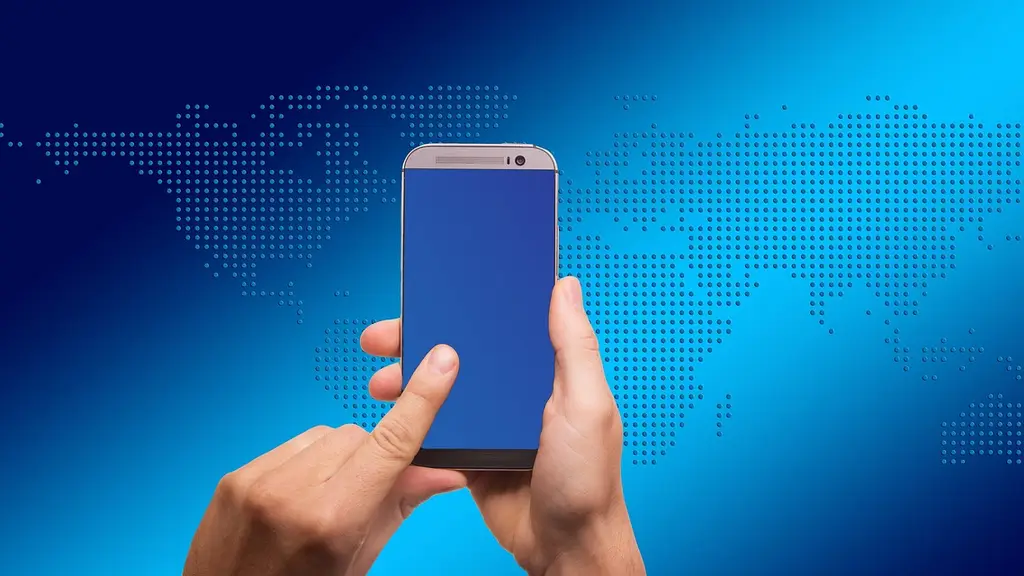
Think about the first hour of a typical morning. A phone alarm goes off at exactly the right time. A weather app predicts rain. A map shows the fastest route to school, and the barcode on a carton of milk beeps at the checkout. None of this feels like science. It feels like ordinary life.
Yet almost every one of those moments rests on a discovery that, when it was made, had nothing to do with alarms, maps or milk. Physicists studying how atoms wobble in a magnetic field did not set out to help anyone find a café. Chemists measuring obscure reactions high in the atmosphere were not trying to change what goes into a fridge.
This article follows a handful of those journeys from laboratory curiosity to everyday object. Along the way it explains why the gap between "discovery" and "use" is so often measured in decades, and why that gap is a feature of science rather than a failure.
The long fuse between a result and a product
Scientists sometimes describe basic research as lighting a long fuse. A result appears in a journal, a few specialists get excited, and then, often for years, nothing visible happens. Meanwhile other researchers build on the idea, engineers find ways to make it cheaper or smaller, and eventually it reaches people who have never heard of the original work.
The pattern repeats so often that it is worth seeing several examples side by side.
| Original discovery | Approximate date | Everyday result | When it reached ordinary people |
|---|---|---|---|
| Magnetic resonance of atomic nuclei in molecular beams (I. I. Rabi) | late 1930s | Atomic clocks, GPS timing, MRI | 1980s–1990s onward |
| Stimulated emission of light (predicted by Albert Einstein) | 1917 | Lasers, barcode scanners, fiber-optic internet | 1970s onward |
| Chlorine and bromine atoms destroying ozone (Rowland and Molina) | 1974 | Ozone-safe refrigerators, sprays and air conditioners | late 1980s–1990s |
| Microbes cause infection (germ theory) | 1860s–1880s | Handwashing, clean water, pasteurized milk | late 1800s–early 1900s |
Nobody in the left-hand column could have predicted the right-hand column. That is the heart of the story.
Wobbling atoms and the map in your pocket
In the 1930s the physicist Isidor Isaac Rabi developed a way to measure how atomic nuclei respond to magnetic fields, flipping them with radio waves of exactly the right frequency. The work earned him the Nobel Prize in Physics in 1944. It was beautiful, precise and, to most people, completely abstract.
Rabi's method showed that atoms "ring" at extraordinarily steady frequencies, and researchers soon realized that a steady frequency is exactly what you need for a clock. The first atomic clocks followed in the late 1940s and 1950s. By 1967 the international definition of the second itself was rewritten in terms of a caesium atom: one second is 9,192,631,770 oscillations of a particular transition in caesium-133.
Why does that matter to someone using a map app? GPS works by timing. Each satellite carries atomic clocks and broadcasts the time its signal left. Your phone compares arrival times from several satellites and works out its distance from each one. Because radio signals travel at the speed of light, roughly 30 centimeters per nanosecond, a clock error of just one millionth of a second would throw a position off by around 300 meters.
There is an even stranger twist. The satellites move fast and sit higher in Earth's gravity than we do, so, as Einstein's theories of relativity predict, their clocks tick at a slightly different rate from clocks on the ground. The difference adds up to about 38 microseconds per day, and the system is designed to correct for it. Without relativity, GPS would drift by kilometers within a day. The full story, from Rabi's beams to satellite navigation, is told in our archive piece on why GPS needs atomic clocks.
A theory of light that became a supermarket beep
In 1917 Einstein worked out that an atom already holding extra energy could be nudged by a passing particle of light into releasing an identical one. He called the process stimulated emission. For decades it was a curiosity of theoretical physics.
In the 1950s researchers used the idea to amplify microwaves, and on May 16, 1960, Theodore Maiman at Hughes Research Laboratories produced the first working laser, using a small ruby crystal. Even one of Maiman's own colleagues joked that it was a solution looking for a problem.
The problems arrived. Lasers now read barcodes, cut metal, correct vision and carry most of the world's long-distance internet traffic as pulses of light inside hair-thin glass fibers. Our archive article on how lasers and optical fiber rewired communication traces the thread from Einstein's equations to the cables under the ocean.
Spinning nuclei inside a hospital scanner
The same family of physics that gave us atomic clocks also gave medicine one of its most important tools. Nuclear magnetic resonance, the way nuclei absorb and re-emit radio waves in a magnetic field, became a standard laboratory technique for identifying chemicals after the 1940s.
In the 1970s Paul Lauterbur and Peter Mansfield showed how to turn those signals into pictures by adding magnetic fields that vary across space, so that each position in the body "sings" at a slightly different frequency. They shared the 2003 Nobel Prize in Physiology or Medicine. Today MRI scanners image brains, joints and hearts without the ionizing radiation used in X-rays. Our archive feature on the physics behind MRI walks through how the signal becomes an image.
Atmospheric chemistry and the fridge in your kitchen
Not every discovery changes life by creating a new gadget. Some change life by warning us to stop doing something.
In 1974 the chemists F. Sherwood Rowland and Mario Molina published calculations showing that chlorofluorocarbons (CFCs), then widely used in refrigerators, aerosol cans and foam, could drift into the stratosphere, break apart in ultraviolet light, and release chlorine atoms that destroy ozone. Ozone high in the atmosphere absorbs much of the Sun's harmful ultraviolet radiation.
In 1985 scientists of the British Antarctic Survey reported a deep seasonal thinning of ozone over Antarctica, now known as the ozone hole. Two years later, in 1987, governments agreed the Montreal Protocol to phase out ozone-depleting substances. Rowland, Molina and Paul Crutzen shared the 1995 Nobel Prize in Chemistry. Assessments supported by the United Nations now project that the ozone layer should return to 1980 levels by around 2040 over most of the world, and around 2066 over Antarctica. The appliances in your home use different chemicals because of that work, which our archive covers in how lab chemistry exposed the ozone hole.
Why the payoff is so hard to predict
Looking back, these paths seem obvious. Looking forward, they never are. A few reasons recur:
- The useful part is often a side effect. Rabi wanted to understand nuclei, not to keep time. The timekeeping was a consequence of the precision.
- Engineering has to catch up. Lasers needed better materials, power supplies and electronics before they became cheap enough for a supermarket.
- Other discoveries must arrive too. GPS needed atomic clocks, rockets, satellites, computers and relativity, all developed separately.
- Society decides what to do. The ozone story required international agreement, not just a chemical equation.
This is why many scientists argue for funding curiosity-driven research even when no application is in sight. The most valuable results are frequently the ones nobody planned. You can explore how discoveries build on one another with our interactive discovery timeline.
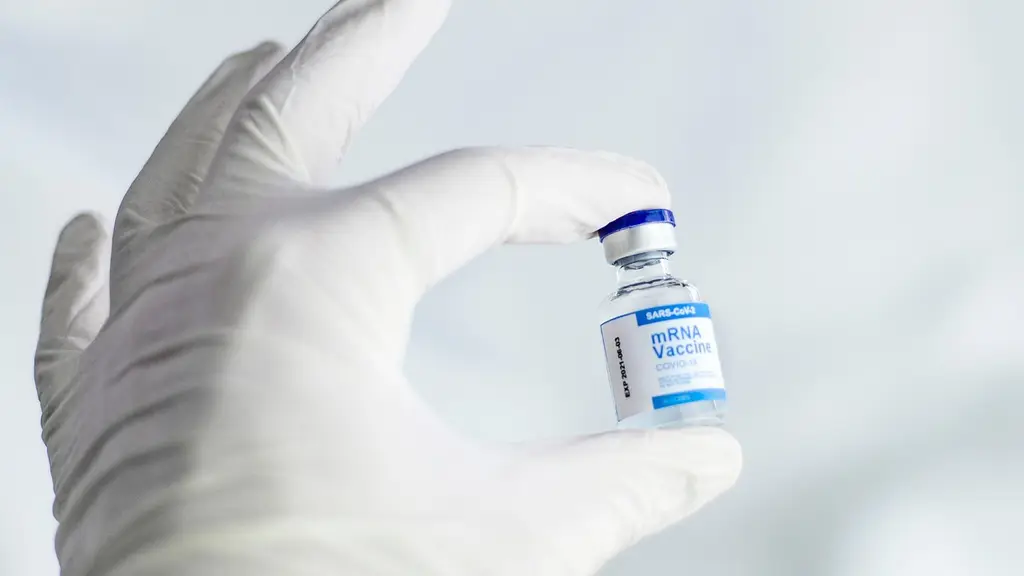
Try this: a hidden-science hunt. Walk around your home and list ten objects or habits. For each one, ask: what had to be discovered first for this to exist? A light switch leads to electricity and electromagnetism. Clean tap water leads to germ theory and chemistry. Pick one and trace it back as far as you can. Our article on how vaccines were developed is a good example of one chain that stretches back more than two centuries.
Ideas to carry with you
- Discoveries usually reach daily life slowly, often taking 20 to 50 years or more.
- The people who make a discovery rarely know what it will eventually be used for.
- Everyday technologies like GPS, lasers and MRI depend on physics that once looked purely theoretical.
- Some discoveries change behavior rather than creating products, such as handwashing or phasing out CFCs.
Questions to discuss at home or in class: Which object in your house depends on the most separate discoveries? If you could fund one area of curiosity-driven research today, what would you choose, and what surprising uses might it have in 50 years?
Sources and further reading
- Isidor Isaac Rabi: Facts, The Nobel Prize
- Atomic Clocks, National Institute of Standards and Technology
- GPS: The Global Positioning System, U.S. Government (GPS.gov)
- The Nobel Prize in Physiology or Medicine 2003, The Nobel Prize
- The Nobel Prize in Chemistry 1995, The Nobel Prize
- Ozone Secretariat, United Nations Environment Programme