Penicillin and the Accidental Birth of Antibiotics
A moldy dish in 1928 started it, but turning penicillin into a medicine took an Oxford team, a wartime factory effort and a cantaloupe from a market.
Before the 1940s, a scratch from a garden thorn or a small cut could turn deadly. Bacterial infections of the blood, lungs and wounds killed people of every age, and doctors had few weapons beyond rest, surgery and hope. Within a single generation that changed, thanks to a substance made by a common mold.
The usual version of the story is short: Alexander Fleming noticed mold killing bacteria on a dish he had left out, and the antibiotic age began. The real story is longer and more interesting. Fleming's observation sat largely unused for a decade. It took a team of scientists in Oxford, a desperate first patient, and an agricultural laboratory in Illinois to turn a curious ring on a plate into a medicine that could be manufactured by the ton.
A ring of nothing
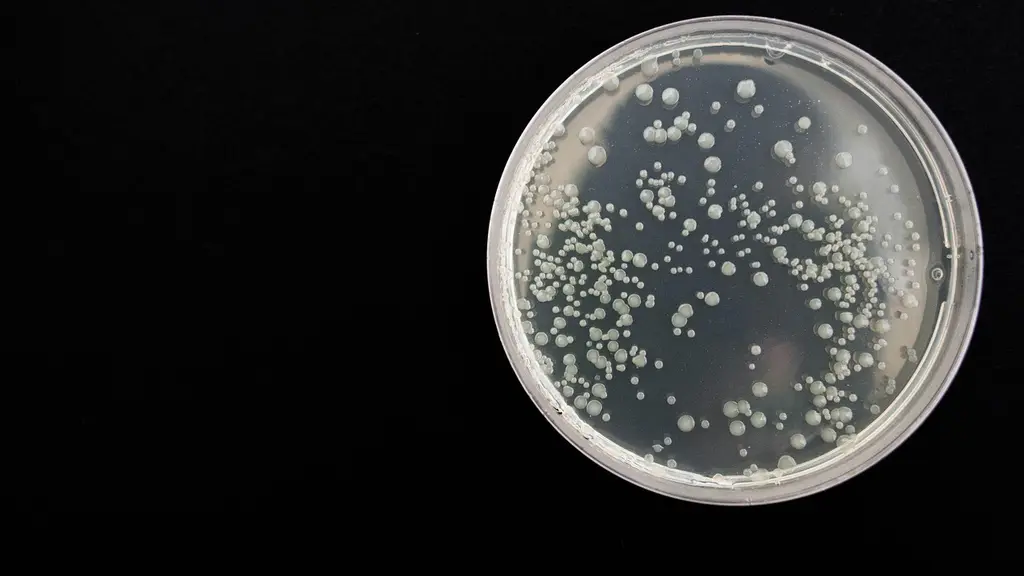
In September 1928 Fleming, a bacteriologist at St Mary's Hospital in London, returned from a summer holiday to find stacks of culture dishes he had left growing staphylococcus bacteria. One was contaminated with a blue-green mold. Around the mold was a clear zone where the bacteria had died or failed to grow.
Plenty of scientists had seen contaminated plates and thrown them away. Fleming was curious. He grew the mold, a species of Penicillium, in liquid broth and found that the broth itself could kill several kinds of disease-causing bacteria. He named the active substance penicillin and published his results in 1929.
It is fair to call the discovery accidental, but luck only explains the contamination. Recognizing what the clear ring meant took a trained, observant mind. Fleming already had a long-standing interest in substances that kill microbes; years earlier he had discovered lysozyme, an antibacterial enzyme found in tears and saliva.
Why the discovery stalled
Fleming's penicillin was unstable and present in tiny amounts. He and his assistants struggled to purify or concentrate it, and he did not carry out the animal tests that might have shown it could cure infections inside a living body. For roughly ten years penicillin was used mainly as a laboratory tool, to separate one kind of bacterium from another on culture plates.
The Oxford team
In the late 1930s, at the Sir William Dunn School of Pathology at the University of Oxford, the pathologist Howard Florey and the biochemist Ernst Chain began a systematic study of natural antibacterial substances. Penicillin was on their list.
A third scientist, Norman Heatley, proved essential. He designed ingenious equipment to grow the mold and extract penicillin, using whatever containers he could find in wartime Britain, from laboratory flasks to specially made ceramic vessels resembling bedpans.
In May 1940 the team infected eight mice with lethal doses of streptococcus bacteria and gave penicillin to four of them. The untreated mice died; the treated mice survived. The results, published later that year, showed for the first time that penicillin could cure an infection in a living animal.
The first patient
In February 1941 the Oxford team treated their first patient: Albert Alexander, a police constable with a severe, spreading infection. After a few days of penicillin injections he improved dramatically. But the supply was so small that the team even recovered penicillin from his urine to inject again. When it ran out, the infection returned, and he died in March 1941.
The tragedy proved two things at once: penicillin worked in humans, and the problem was quantity. Later patients, several of them children who needed smaller doses, recovered fully.
Scaling up: from bedpans to factories
Britain, at war, did not have the industrial capacity to mass-produce a new drug. In the summer of 1941 Florey and Heatley flew to the United States to seek help. They were directed to the U.S. Department of Agriculture's Northern Regional Research Laboratory in Peoria, Illinois, which specialized in fermentation.
The Peoria scientists made two crucial contributions:
- A better food for the mold. The microbiologist Andrew Moyer found that adding corn steep liquor, a byproduct of corn processing, greatly increased penicillin yields.
- A better mold. A worldwide search for more productive strains turned up a winner close to home: a mold growing on a cantaloupe from a Peoria market. Improved versions of that strain became the basis of much later production.
Combined with deep-tank fermentation, in which the mold grows throughout huge aerated vats rather than on the surface, these advances allowed U.S. companies to produce penicillin on an industrial scale by the later years of the Second World War. In 1945 Fleming, Chain and Florey shared the Nobel Prize in Physiology or Medicine.
| Person or group | Contribution |
|---|---|
| Alexander Fleming | Noticed the antibacterial effect of Penicillium mold (1928) |
| Howard Florey and Ernst Chain | Purified penicillin and proved it cured infections (1940–41) |
| Norman Heatley | Designed the extraction and production methods at Oxford |
| USDA laboratory, Peoria | Improved growth medium and strains for mass production |
| Dorothy Crowfoot Hodgkin | Determined penicillin's molecular structure by X-ray crystallography (1945) |
Hodgkin's work on penicillin and other molecules later earned her the 1964 Nobel Prize in Chemistry; she appears in our feature on women who changed science.
How penicillin actually works
Bacteria are surrounded by a tough cell wall made of a mesh-like material called peptidoglycan. As a bacterium grows, enzymes constantly cut and re-link this mesh. Penicillin jams those enzymes. The wall weakens, and the growing bacterium bursts under its own internal pressure.
Human and animal cells have no cell wall at all, which is why penicillin can harm bacteria while leaving our own cells largely untouched. If you want a refresher on the differences, see our guide to cells as the building blocks of life.
Penicillin does nothing against viruses, which have no cell walls and reproduce inside our cells. That is why colds and flu are not treated with antibiotics, and why preventing viral disease relies on tools like the ones described in how vaccines were developed.
Try this: watch mold grow (safely). Place a slice of bread, lightly dampened, inside a zip-top bag and seal it completely. Tape the bag shut and leave it somewhere warm. Observe through the plastic once a day for a week and sketch the colors and fuzzy patches you see.
Safety: Never open the bag once mold appears, since spores can trigger allergies and breathing problems. Anyone with asthma or mold allergies should not take part. When you finish, throw the sealed bag away without opening it, and wash hands afterward. Never taste or smell mold, and do not try to make or use homemade "penicillin."
A warning in the moment of triumph
In his Nobel lecture in 1945, Fleming cautioned that using too little penicillin, or using it carelessly, could allow bacteria to become resistant. He was right. Some bacteria produce enzymes that break apart the core ring of the penicillin molecule, and natural selection favors those survivors whenever antibiotics are used.
The World Health Organization now ranks antimicrobial resistance among the top global public health threats. Responsible use means taking antibiotics only when a doctor prescribes them for a bacterial infection, and following the instructions exactly.
Key takeaways
- Fleming's 1928 observation was a chance event noticed by a prepared mind.
- Turning penicillin into a medicine required a decade more work, led by Florey, Chain and Heatley at Oxford.
- Mass production depended on agricultural science in Peoria, Illinois.
- Penicillin works by breaking bacterial cell walls, which human cells do not have.
- Resistance was predicted from the start and is now a major global challenge.
For the deeper background on how scientists first proved that microbes cause disease, read how germ theory changed medicine.
Discussion questions: Why might other scientists have thrown away a contaminated plate like Fleming's? What does the penicillin story suggest about teamwork in science? And why does it matter that antibiotics are not used for viral infections?
Sources and further reading
- The Nobel Prize in Physiology or Medicine 1945, The Nobel Prize
- Discovery and Development of Penicillin, American Chemical Society
- Penicillin: Opening the Era of Antibiotics, USDA Agricultural Research Service
- Antimicrobial resistance fact sheet, World Health Organization