From the archive
How Lab Chemistry Exposed the Ozone Hole: From CFCs to the Montreal Protocol
How curiosity about trace gases led chemists to discover that CFCs destroy stratospheric ozone, and how that science produced the Montreal Protocol.
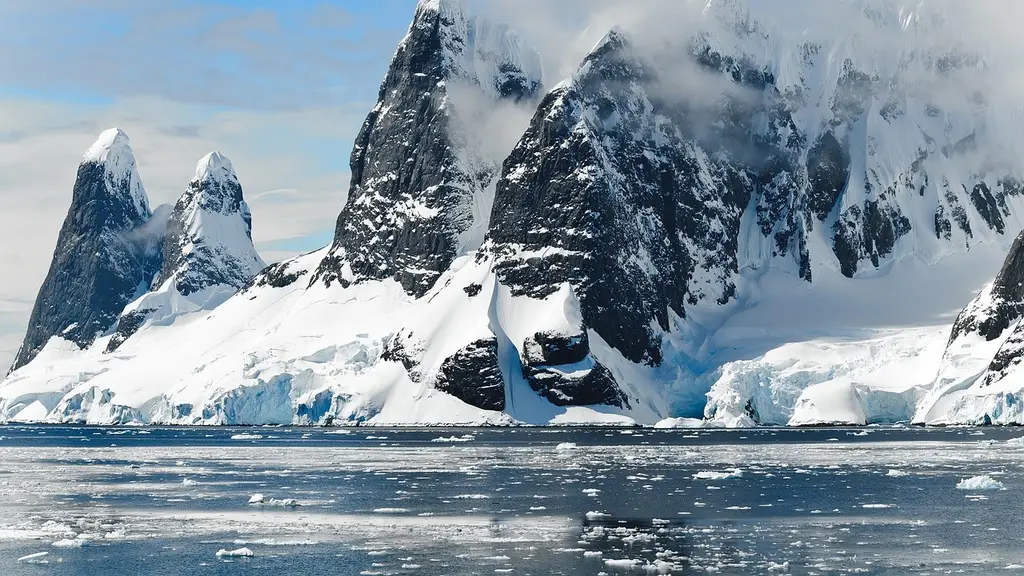
Every southern spring, a thinning appears in the ozone over Antarctica that can grow larger than North America. It is invisible to the eye, yet it matters to every living thing on Earth's surface, because ozone high in the atmosphere is what screens out much of the Sun's harmful ultraviolet light.
The story of how we learned about that hole, and why it is now slowly closing, is one of the clearest examples of basic research paying off. It began not with an alarm but with curiosity: chemists wondering what happens to trace gases in the air, physicists building better instruments, and theorists working out reaction rates nobody thought had any practical use. In this article you will learn what ozone is, how a family of "perfectly safe" chemicals turned out to be destroying it, how scientists proved it, and where the ozone layer stands today.
A shield made of an unstable gas
Ordinary oxygen molecules contain two oxygen atoms (O₂). Ozone (O₃) has three, and that third atom makes it reactive and short-lived. Near the ground ozone is a pollutant that irritates lungs. Most of the atmosphere's ozone, however, sits in the stratosphere, roughly 10 to 50 kilometers up, where it absorbs ultraviolet radiation. Without it, far more UV-B light would reach the surface, raising the risk of skin cancer and cataracts and harming crops and marine plankton.
What makes the ozone layer remarkable is that it is constantly being made and unmade. Sunlight splits O₂ into single oxygen atoms, which join other O₂ molecules to form ozone; ozone in turn absorbs UV and breaks apart again. In 1930 the British physicist Sydney Chapman described this cycle mathematically. The layer exists because production and destruction balance. Anything that speeds up the destruction side, even slightly, thins the shield.
Learning to measure the sky
You cannot protect what you cannot measure. In the 1920s the Oxford physicist G. M. B. Dobson built a spectrophotometer that compared the brightness of sunlight at wavelengths ozone absorbs with wavelengths it does not, giving the total amount of ozone overhead. His instrument became the standard for ground monitoring, and the unit used to report ozone amounts, the Dobson unit, still carries his name. A worldwide network of these instruments, set up largely for weather and atmospheric research, would decades later provide the long records that made a sudden change detectable.
Meanwhile, laboratory chemists were measuring how fast small molecules and atoms react with one another. These kinetics studies looked like pure, even dull, academic work. They became essential.
The chemicals that seemed too good to be true
Chlorofluorocarbons (CFCs) were introduced in the 1930s as refrigerants. They were non-toxic, non-flammable and chemically inert, which made them ideal for refrigerators, air conditioners, aerosol sprays and foam blowing. By the 1970s they were produced in enormous quantities.
Their stability was exactly the point. Nothing in the lower atmosphere breaks them down: they do not dissolve in rain or react with other gases. That raised a question few people had thought to ask. If CFCs do not disappear near the ground, where do they go?
The British scientist James Lovelock supplied the first clue. He had invented the electron capture detector, an instrument sensitive enough to pick out traces of certain gases at parts per trillion. During a voyage of the research ship RRS Shackleton from Britain to Antarctica in 1971–72, he found the CFC known as CFC-11 in every air sample, far from any city. His results, published in 1973, suggested that essentially all the CFC ever released was still in the atmosphere. Lovelock himself did not see a danger in this; the gas seemed harmless.
A prediction from first principles
At about the same time, other researchers were exploring how ozone could be destroyed. In 1970 the Dutch chemist Paul Crutzen showed that nitrogen oxides can destroy ozone catalytically, meaning a single molecule can take part in the reaction again and again. Richard Stolarski and Ralph Cicerone then showed that chlorine atoms in the stratosphere could do the same thing.
The decisive step came from F. Sherwood Rowland and his postdoctoral researcher Mario Molina at the University of California, Irvine. Rowland had heard about Lovelock's measurements and wanted to know the ultimate fate of CFCs. Working it through, the two realized that CFC molecules eventually drift up into the stratosphere, where hard ultraviolet light is strong enough to break them apart. That releases free chlorine atoms, which attack ozone in a chain reaction. Their paper appeared in Nature in June 1974. The detailed chemistry, including why one chlorine atom can wreck tens of thousands of ozone molecules, is explained on our companion page, How CFCs Destroy Ozone: The Rowland–Molina Chemistry.
The prediction was controversial. The CFC industry disputed it, and the effect had not yet been seen in the real atmosphere. But it rested on measured reaction rates and laboratory photochemistry, and follow-up studies kept supporting it. In 1978 the United States banned CFCs as propellants in most aerosol sprays, and Canada, Norway and Sweden took similar steps.
The surprise over Antarctica
Nobody predicted what came next. Scientists at the British Antarctic Survey had been measuring ozone with Dobson instruments at Halley station since the 1950s. In May 1985 Joseph Farman, Brian Gardiner and Jonathan Shanklin reported in Nature that springtime ozone over Antarctica had fallen dramatically since the late 1970s. NASA's Nimbus-7 satellite, which carried an ozone-mapping instrument, confirmed that the loss covered the whole continent. The "ozone hole" had arrived as a shock: the decline was far steeper than the gas-phase models had suggested.
Proving what was responsible
Was the hole caused by chlorine, or by natural changes in winds or solar activity? Several groups set out to find out. In 1986 Susan Solomon and colleagues proposed that the icy polar stratospheric clouds that form in the extreme cold of the Antarctic winter provide surfaces on which chlorine is converted from harmless "reservoir" compounds into reactive forms. When sunlight returns in spring, that stored chlorine is unleashed all at once. Solomon then led a 1986 expedition to McMurdo Station whose measurements pointed to chlorine chemistry.
In 1987 a NASA-led airborne campaign flew instruments into the polar vortex on a high-altitude ER-2 aircraft. James Anderson's team measured chlorine monoxide, the telltale product of chlorine attacking ozone. As the plane crossed into the vortex, chlorine monoxide rose sharply while ozone fell, a mirror-image pattern that tied the loss directly to chlorine from human-made compounds.
| Year | Milestone |
|---|---|
| 1920s | Dobson builds an instrument to measure total ozone overhead |
| 1930 | Chapman explains how the ozone layer forms and is destroyed |
| 1970 | Crutzen shows nitrogen oxides destroy ozone catalytically |
| 1971–73 | Lovelock finds CFC-11 throughout the atmosphere |
| 1974 | Rowland and Molina predict CFCs will release ozone-destroying chlorine in the stratosphere |
| 1978 | United States bans CFCs in most aerosol sprays |
| 1985 | British Antarctic Survey reports the Antarctic ozone hole; Vienna Convention adopted |
| 1986–87 | Field campaigns link the hole to chlorine chemistry on polar clouds |
| 1987 | Montreal Protocol signed |
| 1995 | Crutzen, Molina and Rowland share the Nobel Prize in Chemistry |
| 1996 | CFC production ends in developed countries |
| 2016 | Kigali Amendment adds climate-warming HFCs to the treaty |
From evidence to a global treaty
Science moved policy unusually quickly. The Vienna Convention for the Protection of the Ozone Layer was agreed in 1985, and the Montreal Protocol followed on September 16, 1987. It set binding limits on CFCs and related chemicals. As the evidence strengthened, amendments tightened the rules; developed countries ended CFC production at the start of 1996, and developing countries followed later. The Protocol eventually became the first United Nations treaty ratified by every member state.
In 1995 Crutzen, Molina and Rowland shared the Nobel Prize in Chemistry for their work on the formation and decomposition of ozone. It was a striking recognition of research that had begun as an attempt to understand atmospheric chemistry for its own sake.
The treaty also turned out to be one of the most effective climate measures ever taken, because CFCs are powerful greenhouse gases. The 2016 Kigali Amendment extended the Protocol to hydrofluorocarbons (HFCs), CFC substitutes that are harmless to ozone but trap heat. The 2022 international ozone assessment estimated that implementing Kigali would avoid roughly 0.3 to 0.5 °C of warming by 2100.
Where the ozone layer stands now
The atmosphere responds slowly, because CFCs already released persist for decades. Even so, the levels of ozone-depleting substances in the stratosphere are falling. The Scientific Assessment of Ozone Depletion: 2022, produced under the World Meteorological Organization and the UN Environment Programme, projected that if current policies hold, ozone will return to 1980 values by around 2040 for most of the world, around 2045 over the Arctic and around 2066 over Antarctica. The next assessment in that series is due at the end of 2026.
Year-to-year swings are large because weather controls how cold and isolated the polar vortex becomes. NASA and NOAA ranked the 2025 Antarctic hole as the fifth smallest since 1992. In 2026, an unusually strong and persistent vortex produced the seventh-largest hole in 48 years of monitoring, peaking at about 10.5 million square miles in mid-September. Scientists noted that the same weather would have produced a hole 1 to 2 million square miles larger if ozone-depleting chemicals were still at their 2000 peak, and they continue to expect recovery around the 2070s.
There have been reminders that vigilance matters. In the 2010s, atmospheric measurements revealed unexpected new emissions of CFC-11, which researchers traced largely to illegal production; after the discovery was publicized, emissions fell again. The episode showed that the same kind of sensitive monitoring that revealed the problem is still needed to keep the solution on track.
What this story teaches
- Questions without obvious uses can matter most. Rowland and Molina were asking where an inert gas ends up, not trying to save the world.
- Instruments drive discovery. Dobson's spectrophotometer, Lovelock's detector and satellite and aircraft sensors each revealed something no theory had fully anticipated.
- "Boring" data is precious. Decades of routine measurements at Halley made the ozone hole visible.
- Science and policy can work together. Clear evidence, international assessment and flexible treaty rules turned a looming hazard into a recovering one.
To understand the light the ozone layer filters, see our guide to what light is, from waves to photons. For the weather systems that set the size of each year's hole, read The Science Behind Weather, and for the building blocks behind all of this chemistry, Atoms and Molecules: A Beginner's Guide.
Questions to discuss: Why might a chemical that is completely safe to breathe still harm the environment? Why did it take measurements, not just a prediction, to convince the world to act? What other environmental problems might be solved the same way?
Sources and further reading
- The Nobel Prize in Chemistry 1995, Nobel Prize Outreach
- Scientific Assessment of Ozone Depletion: 2022, Executive Summary, WMO / UNEP / NOAA Chemical Sciences Laboratory
- 2026 Ozone Hole, NASA
- Chlorofluorocarbons and Ozone Depletion (National Historic Chemical Landmark), American Chemical Society
- The Montreal Protocol on Substances that Deplete the Ozone Layer, UNEP Ozone Secretariat
- Original Beyond Discovery article (PDF), brucealberts.org