How Children Develop Scientific Curiosity
Research on babies, toddlers and preschoolers shows how curiosity grows, why 'why?' questions matter, and simple ways adults can keep that spark alive.
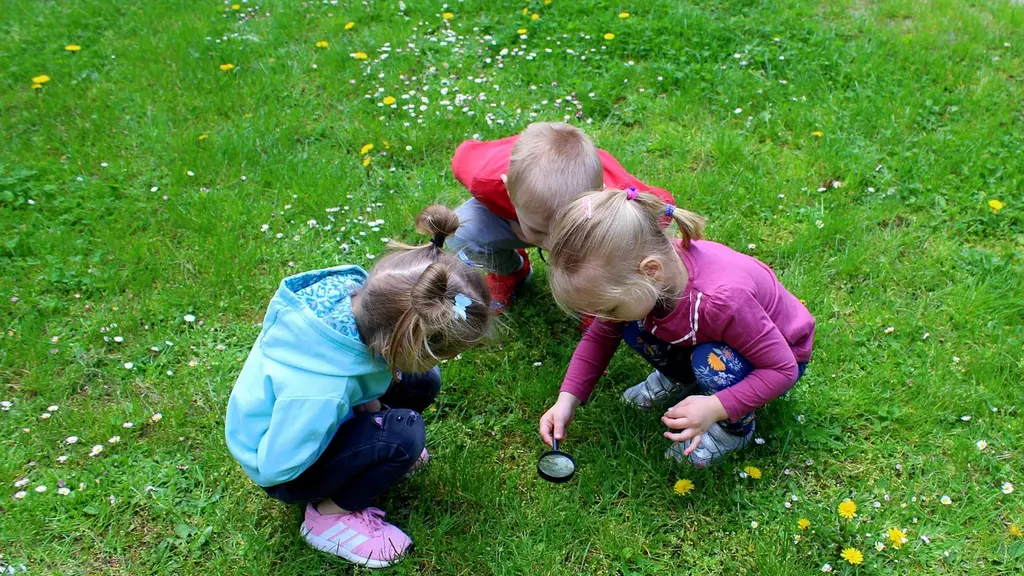
Anyone who has spent a day with a three-year-old knows the sound of curiosity. Why is the moon following us? Where does the water go when it goes down the drain? Why? But why? It can be exhausting. It is also one of the most remarkable learning engines in nature.
Developmental psychologists have spent decades studying how that curiosity works: how babies investigate surprises, why preschoolers ask so many questions, and what adults do that either feeds or quietly dampens the urge to explore. Their findings are reassuring. Children do not need to be taught to be curious. They mostly need adults who keep the door open.
This article summarizes what the research shows and turns it into practical ideas for home and the classroom.
Babies as investigators
Long before they can speak, babies behave a little like scientists. They form expectations about how objects should behave and pay close attention when something seems to break the rules.
In a well-known 2015 study published in Science, Aimee Stahl and Lisa Feigenson showed 11-month-old infants events that seemed impossible, such as a ball appearing to roll through a solid wall. Afterward, the babies learned new information about that surprising ball more readily than about an ordinary one, and they explored it in ways that looked like testing: banging the ball that had passed through a wall, as if checking its solidity, or dropping a ball that had seemed to float. Surprise, in other words, directed their learning.
Older toddlers and preschoolers do something similar. In experiments by Laura Schulz and colleagues, children played longer with a toy when the evidence about how it worked was confusing, as if they were trying to sort out the cause. Children's play is often more systematic than it looks.
The age of questions
Once children can talk, questions become their main tool. In a detailed study published in 2007, the psychologist Michelle Chouinard analyzed recorded conversations between young children and adults. The four preschoolers in her main sample asked information-seeking questions at an average rate of about 76 per hour of conversation. A separate diary study, in which parents recorded their children's questions, showed that the type of question changes with age: requests for explanations, the "why" and "how" questions, became a much larger share as children got older.
Chouinard also found that children's questions were usually useful. They tended to fill genuine gaps in knowledge, and children often followed up with related questions, building understanding step by step.
Why the answers matter
Are children asking "why?" just to keep the conversation going? Research suggests not.
In a 2009 study, Brandy Frazier, Susan Gelman and Henry Wellman looked at how preschoolers reacted to different kinds of answers. When children received a real explanation, they tended to be satisfied, agreeing or moving on to a new question. When they received a non-answer, they were more likely to repeat their question or offer their own explanation. Young children, it seems, know the difference between being answered and being brushed off, and they keep pushing until they get something that makes sense.
That does not mean adults need to know everything. "I don't know, let's find out" is a genuine answer, and it models exactly the attitude scientists rely on. Some questions, such as why the sky is blue, are perfect for looking up together.
When teaching narrows exploring
One of the most thought-provoking findings comes from a 2011 study by Elizabeth Bonawitz and colleagues at MIT. Preschoolers were given a toy with several hidden functions: it could squeak, light up, play music and more. In one condition an adult said, "Let me show you how my toy works," and demonstrated just one function. In other conditions the adult discovered the function accidentally, or did not demonstrate at all.
Children who were deliberately taught one function played with the toy for less time and discovered fewer of its other features. They seemed to reason that if a knowledgeable teacher showed them only one thing, that must be all there was.
Direct teaching is not bad; it is often the fastest way to learn something specific. The lesson is about balance. When adults always show children the "right" way first, children may stop looking for other ways.
Curiosity helps memory
Curiosity does more than spark questions. It seems to prime the brain to remember. In a 2014 study with adult volunteers, Matthias Gruber, Bernard Gelman and Charan Ranganath asked people trivia questions and measured how curious they were about each answer. People remembered answers they were curious about better, and they also remembered unrelated faces shown while they were waiting for those answers. Brain scans linked the effect to activity in reward-related regions and the hippocampus, a structure central to forming memories.
The study involved adults, so it should not be over-applied to young children, but it fits a broad picture: curious states are good learning states. You can read more about these processes in how the human brain learns.
Eight ways to feed curiosity
- Treat questions as valuable. Even a quick "That's a great question" signals that wondering is welcome.
- Answer with real explanations, at the child's level. Simple, accurate reasons beat "because that's how it is."
- Say "I don't know" without embarrassment, then investigate together. Books, a trusted website, an experiment or an expert can all help.
- Ask before you tell. "What do you think is happening?" lets children reason first.
- Leave some things undemonstrated. Offer interesting materials and let children explore before you explain.
- Make room for surprises. Activities with unexpected outcomes, such as a heavy object that floats, spark investigation.
- Notice and narrate. Point out patterns: shadows changing length, ice melting faster in the sun.
- Respond, then build. The "serve and return" idea promoted by Harvard's Center on the Developing Child describes how back-and-forth exchanges between adults and children support healthy development. A child's question is a serve; your answer and follow-up question are the return.
Try this: a family question jar. Keep a jar and slips of paper in the kitchen. Whenever someone asks a question nobody can answer, write it down and drop it in. Once a week, pull out a question and investigate it together through books, a walk, a simple experiment or a quiz like our science quiz. Children see that questions are worth saving and that answers can be found.
Things that can dampen curiosity
Curiosity rarely disappears overnight. It tends to fade under steady pressure, such as:
- Questions repeatedly dismissed or met with irritation
- Learning that is always about right answers and never about wondering
- Too little unstructured time to tinker, play and explore
- Fear of making mistakes or looking foolish
None of this requires perfect parenting or teaching. Every adult is sometimes too busy to answer the fifteenth "why" of the morning. What matters is the overall pattern: on most days, does the child learn that questions lead somewhere interesting?
Bringing it together
- Babies investigate surprising events, and preschoolers ask a great many questions, many of them aimed at explanations.
- Children can tell real answers from non-answers and keep asking until they understand.
- Demonstrating only one way can narrow children's exploration; leaving room to discover helps.
- Curiosity appears to support memory and learning.
- Adults can nurture curiosity by valuing questions, investigating together and leaving space for surprise.
For hands-on ways to channel all those questions, try our collection of safe science experiments for children, or read about what STEM education really means for a broader view.
A small challenge: for one day, count the questions your child or class asks. Pick three and follow them as far as they go. You may be surprised where they lead.
Sources and further reading
- Children's questions: a mechanism for cognitive development (Chouinard, 2007), PubMed, U.S. National Library of Medicine
- Preschoolers' search for explanatory information within adult-child conversation (Frazier, Gelman and Wellman, 2009), PubMed Central
- The double-edged sword of pedagogy (Bonawitz et al., 2011), MIT DSpace
- States of curiosity modulate hippocampus-dependent learning (Gruber, Gelman and Ranganath, 2014), PubMed Central
- Center on the Developing Child, Harvard University