Why Is the Sky Blue?
A child-friendly answer to why the sky is blue, why sunsets glow orange and why space looks black, with a safe flashlight demo and questions to discuss.
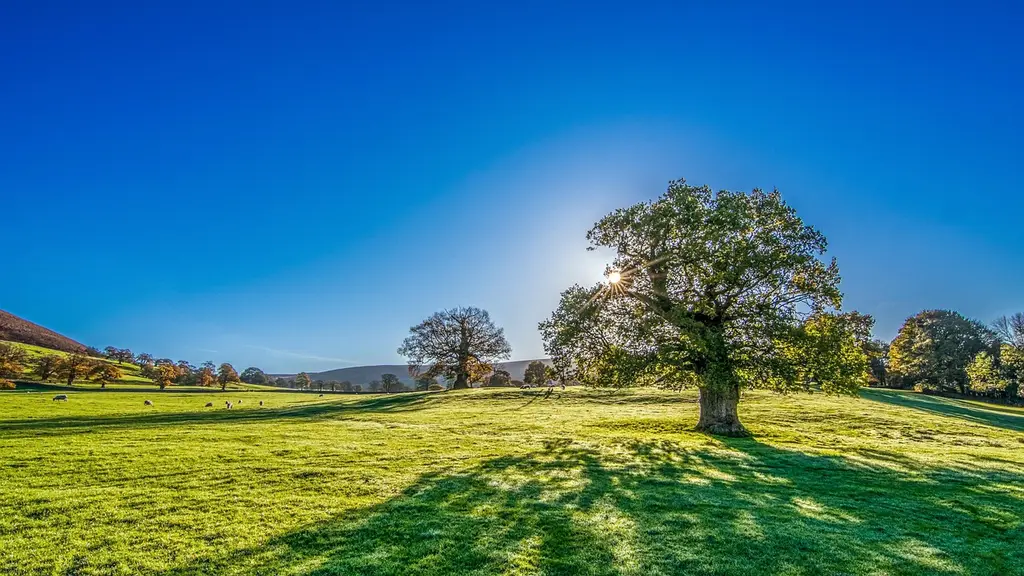
It might be the most famous question children ask. You look up on a sunny day and the whole sky is blue. But sunlight looks white, and air looks like nothing at all. So where does all that blue come from?
The answer involves a journey: light leaves the Sun, crosses space and then crashes into the air around Earth. What happens in that last part of the trip paints the sky. This article explains it step by step, so a child aged about 7 to 11 can follow along with an adult. There is also a simple experiment to try at home and some questions to talk about together.
Sunlight is secretly every color
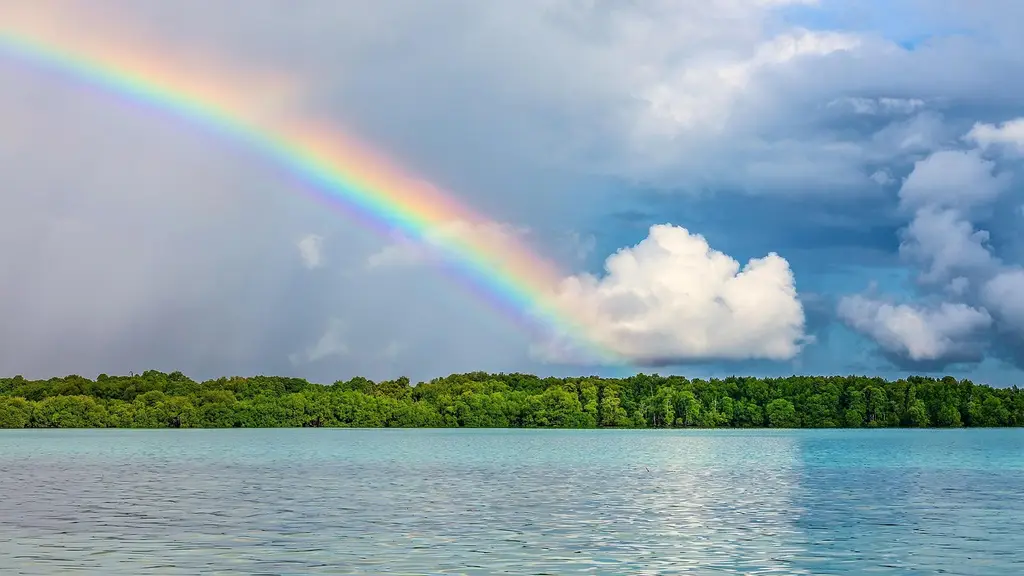
Sunlight looks white or slightly yellow, but it is really a mixture of all the colors of the rainbow: red, orange, yellow, green, blue, indigo and violet. You can see them separated when sunlight shines through a prism, or when you spot a rainbow after a rain shower.
Light travels in waves, a bit like ripples on a pond, only far, far smaller. Each color has its own wave size, called its wavelength:
| Color | Wave size |
|---|---|
| Red | Longest waves |
| Orange, yellow, green | In between |
| Blue | Short waves |
| Violet | Shortest waves |
Our guide to what light is explains these waves in more detail.
Air is not empty
Air might look invisible, but it is crowded with tiny particles called molecules, mostly nitrogen and oxygen. They are far too small to see, even with an ordinary microscope.
When sunlight enters Earth's atmosphere, it runs into these molecules. Most of the red, orange and yellow light passes straight through. But the short blue waves get bounced off the molecules and sent zooming off in all directions. Scientists call this scattering.
Here is a way to picture it. Imagine rolling a big beach ball and a small marble through a forest of thin poles. The big ball rolls straight on, but the little marble keeps bumping into poles and pinging off sideways. Blue light behaves more like the marble.
So why do we see blue everywhere?
Because blue light is scattered all over the sky, it reaches your eyes from every direction you look, not just from where the Sun is. Wherever you look up, some of that bounced-around blue light is coming toward you. That is why the whole sky glows blue.
This effect has a name: Rayleigh scattering, after the British scientist Lord Rayleigh, who worked out the math in the 1800s.
Wait, why isn't the sky violet?
Good question! Violet light has even shorter waves than blue, so it scatters even more. There are three reasons the sky still looks blue:
- Sunlight contains less violet light than blue light to begin with.
- Some violet light is absorbed high up in the atmosphere.
- Our eyes are much more sensitive to blue than to violet.
Put those together, and our eyes see a blue sky.
Why are sunsets orange and red?
When the Sun is high in the sky at midday, its light takes a fairly short path through the air to reach you. At sunrise and sunset, the Sun is low near the horizon, so its light has to travel through much more air before it gets to your eyes.
On that long journey, almost all the blue light gets scattered away before it arrives. What is left over is mostly the long-wave colors: orange, red and pink. So the sky near the setting Sun glows warm colors. Dust, smoke and tiny droplets in the air can make sunsets even more colorful.
Why are clouds white?
Clouds are made of water droplets that are much bigger than air molecules. Big droplets scatter all the colors of light roughly equally. When all the colors are mixed together, we see white. When clouds are very thick, less light gets through them, so they look gray from below.
What color is the sky in space?
Above the atmosphere, there is almost no air to scatter sunlight. So in space, the sky looks black, even when the Sun is shining. Astronauts see a black sky with a bright Sun and stars.
On other planets, the sky can be a different color. On Mars, the thin air is full of fine dust, which makes the daytime sky look a pale butterscotch color. NASA rovers have even photographed Martian sunsets that look bluish, the opposite of Earth's.
Try this: make a sunset in a glass
You will need: a clear glass or jar of water, a few drops of milk, a flashlight (or phone light) and a darkened room.
- Fill the glass with water.
- Stir in a few drops of milk, just enough to make the water slightly cloudy.
- Darken the room and shine the flashlight through the side of the glass.
- Look at the glass from the side. It should have a faint bluish tint.
- Now look through the glass straight toward the flashlight. The light should look yellowish or orange.
What's going on? The tiny bits of milk scatter the blue light sideways, just as air molecules do. Looking from the side is like looking at the daytime sky. Looking straight through the glass at the light is like looking at a sunset: the blue has been scattered away, leaving warmer colors. Add a few more drops of milk and the "sunset" gets redder.
Safety: Never look directly at the Sun, even at sunrise or sunset, and never look at it through binoculars, a telescope or a camera. It can permanently damage your eyes. Enjoy the sky colors, not the Sun itself. Do not drink the milky water from the experiment.
The big idea in one sentence
The sky is blue because air molecules scatter the short blue waves in sunlight all across the sky, while the longer red and yellow waves mostly travel straight through.
Questions to talk about together
- If the Earth had no air, what color would our sky be?
- Why do you think the sky near the horizon often looks paler than the sky straight above you?
- Have you noticed the sky looking different colors at different times of day? What did you see?
- Why might sunsets look extra red after a dusty or smoky day?
- What color might the sky be on a planet with a different kind of air?
Curious about more sky questions? Explore how air and water make our weather, find more answers on our page of science for children, or check what you remember with the Science Quiz.
Sources and further reading
- Why Is the Sky Blue?, NASA Space Place
- Rayleigh scattering, Encyclopaedia Britannica
- Why is the sky blue?, Royal Museums Greenwich