What STEM Education Really Means
STEM is more than four school subjects. Learn where the term came from, what good STEM learning looks like at each age, and how to tell real STEM from a label.
The letters appear everywhere: STEM toys, STEM camps, STEM careers, STEM schools. Stand in a toy shop and you might conclude that STEM means anything with a battery, a robot or a bright box promising to make your child "future-ready." It is no wonder many parents and even teachers feel unsure what the term actually covers.
At its simplest, STEM stands for science, technology, engineering and mathematics. But the more useful answer is that STEM describes a way of learning: asking questions about the world, designing solutions to problems, using numbers and evidence to decide what is true, and building things to see whether ideas work.
This guide explains where the term came from, what high-quality STEM learning looks like at different ages, and how to tell the real thing from a marketing label.
Where the word came from
For years, American education agencies grouped these subjects under a different acronym: SMET, for science, mathematics, engineering and technology. In 2001 Judith Ramaley, then an assistant director for education at the U.S. National Science Foundation, suggested rearranging the letters into STEM. By her account, SMET simply sounded unappealing. The new acronym caught on, first in government reports and funding programs and then far beyond.
The renaming coincided with a broader push to strengthen these subjects for all students, not just those already heading for science careers. Since then the idea has spread internationally, and many countries now have national STEM strategies of their own.
Four subjects, or one way of thinking?
There are two common ways to understand STEM.
The first treats it as a bundle of separate subjects. Science is taught in science class, math in math class, and so on. This is how most schools have long been organized.
The second, often called integrated STEM, focuses on how the subjects work together. Real problems rarely arrive labeled "math" or "engineering." Designing a bridge, tracking a disease outbreak or planning a school garden all require several disciplines at once. In integrated STEM, students might use measurement and graphing (math) to compare the strength of paper bridge designs (engineering), explain their results with ideas about forces (science), and record data in a spreadsheet (technology).
Both approaches have a place. Students need solid grounding in each subject, especially mathematics, which underpins the others. Integrated projects then give that knowledge a purpose.
In the United States, the Next Generation Science Standards, released in 2013 and adopted or adapted by many states, made this thinking explicit. They describe eight practices that students should use, rather than just facts to memorize:
- Asking questions (for science) and defining problems (for engineering)
- Developing and using models
- Planning and carrying out investigations
- Analyzing and interpreting data
- Using mathematics and computational thinking
- Constructing explanations and designing solutions
- Engaging in argument from evidence
- Obtaining, evaluating and communicating information
Notice how many of those are about doing rather than knowing. That is the heart of good STEM education. Our guide to teaching the scientific method explores several of these practices in more depth.
Myths and realities
| Common belief | A more accurate picture |
|---|---|
| STEM means coding and robots | Technology is one part. A child sorting leaves by shape or measuring rainfall is doing STEM too. |
| STEM requires expensive kits | Cardboard, string, measuring cups and a notebook go a very long way. |
| STEM is only for "math kids" | Curiosity, persistence and careful observation matter as much as early speed with numbers. |
| STEM is about getting the right answer | Much of the learning happens when a design fails and has to be improved. |
| STEM starts in high school | Young children are natural investigators; foundations are laid early. |
What good STEM looks like at different ages
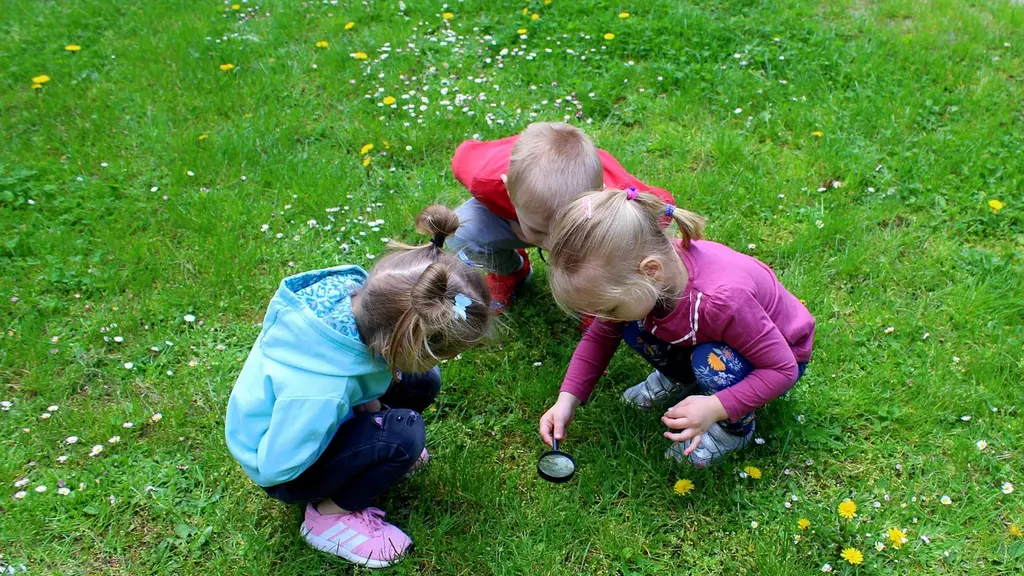
Early years (about 3–5). Play is the main route. Pouring water between containers, building towers until they fall, rolling balls down ramps, sorting objects by color or size. Adults support learning by asking open questions ("What do you think will happen if…?") and naming what children notice.
Early elementary (about 5–8). Children can follow simple investigations, make predictions, count and measure, and record what happens with drawings or tallies. Short design challenges, such as building the tallest tower from twenty sticky notes, introduce engineering. A collection of STEM activities for elementary students offers plenty of ideas.
Upper elementary and middle school (about 8–13). Students can plan fair tests, change one variable at a time, draw graphs and argue about what the evidence shows. This is a good age for longer projects where questions come from the students themselves, an approach explained in inquiry-based learning explained.
High school. Deeper subject knowledge combines with more independent research, programming, data analysis and real-world problem solving. Many students begin to connect STEM with possible careers.
STEM, STEAM and the arts
Some educators add an A for arts, making STEAM. The argument is that design, creativity and communication are central to science and engineering. Scientific illustration, architecture, product design and data visualization all blend artistic and technical skills.
Critics worry that adding letters can dilute the focus. In practice, the question is less about acronyms and more about whether activities are thoughtful. A project that asks children to design a useful object, test it and present their reasoning beautifully is valuable whether you call it STEM or STEAM.
How to tell real STEM from a label
When choosing a program, club, kit or curriculum, a few questions help separate meaningful learning from packaging:
- Do children ask questions or only follow steps? Instructions are fine as a start, but good STEM leaves room for "What if we tried…?"
- Is there a problem to solve or a phenomenon to explain? Purpose makes the learning stick.
- Is failure part of the plan? Look for chances to test, find flaws and improve.
- Are math and evidence used for real? Measuring, counting, comparing and graphing should matter to the outcome.
- Do children explain their thinking? Talking, drawing and writing about results deepens understanding.
- Is it safe and age-appropriate? Hands-on work should come with clear safety guidance and adult supervision where tools, heat or small parts are involved.
Supporting these habits at home does not require expertise. Our article on encouraging problem-solving skills in children offers practical strategies, and the experiment finder can suggest activities based on the materials you already have.
The big picture
- STEM stands for science, technology, engineering and mathematics; the term was popularized in the United States from 2001.
- The most important part of STEM is the practices: questioning, investigating, designing, measuring and arguing from evidence.
- Good STEM learning can be cheap, playful and start very young.
- Integrated projects give purpose to skills learned in separate subjects.
- The label matters less than whether children are thinking, testing and explaining.
Browse more guides for parents and teachers in our STEM education section.
A question to try this week: pick an everyday object, such as an umbrella, a zipper or a bicycle, and ask your child or class, "What problem was this designed to solve, and how could we make it better?" Then listen. That conversation is STEM.
Sources and further reading
- STEM education, Encyclopaedia Britannica
- Next Generation Science Standards, NGSS
- When Did Science Education Become STEM?, Education Week
- National Science Teaching Association, NSTA