How to Encourage Problem-Solving Skills in Children
Research-informed ways for parents and teachers to build children's problem-solving: productive struggle, better hints, useful praise and puzzles to try.
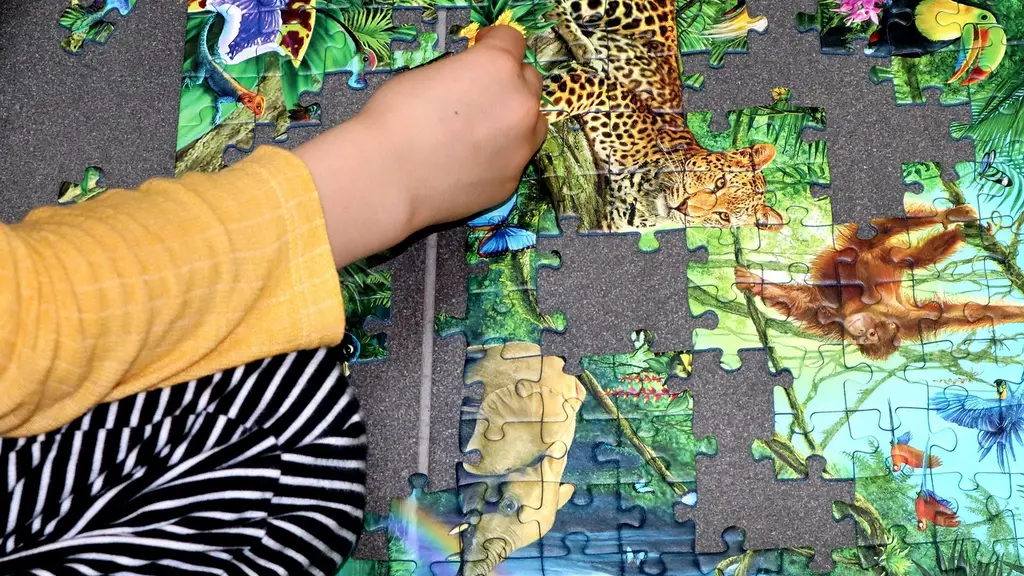
A tower of blocks keeps toppling. A jigsaw piece will not fit. A homework question looks impossible. In each of these moments, a child faces a choice: give up, ask an adult to fix it, or try something different. Which one they choose depends partly on temperament, but a great deal on habits, and habits can be learned.
Problem solving is not a single talent that some children have and others lack. It is a collection of skills: understanding what the problem is, generating ideas, testing them, noticing what happened, and keeping emotions steady enough to try again. Adults can strengthen every one of those skills, often by doing a little less rather than a little more.
This guide brings together useful ideas from mathematics teaching, developmental psychology and classroom practice, with concrete strategies for different ages.
What problem solving actually involves
In 1945 the Hungarian-born mathematician George Pólya published How to Solve It, a short book that has influenced teachers ever since. He described four broad stages that apply far beyond mathematics:
| Pólya's stage | What it looks like for a child | A question an adult can ask |
|---|---|---|
| Understand the problem | Retelling it, drawing it, noticing what is known and unknown | "Can you tell me what we're trying to figure out?" |
| Devise a plan | Thinking of strategies: guess and check, draw a picture, try a smaller version | "Have you seen something like this before?" |
| Carry out the plan | Trying the idea carefully, step by step | "What happens if you try that?" |
| Look back | Checking the answer, asking whether there is another way | "Does that make sense? How do you know?" |
Children often rush straight to the third stage, attacking a problem before understanding it. Simply slowing down the first and last stages makes a large difference.
Why some struggle is good
It is natural to want to rescue a frustrated child. Yet learning researchers increasingly emphasize the value of productive struggle: working on a challenge that is hard but within reach, with enough support to keep going. The National Council of Teachers of Mathematics lists supporting productive struggle among its recommended teaching practices.
Research by the education scientist Manu Kapur on what he calls productive failure points in the same direction. In his studies, students who first attempted challenging problems on their own, even though they usually did not solve them, often understood the underlying ideas better after the teacher's explanation than students who received the explanation first. Wrestling with the problem seemed to prepare them to understand the solution.
The key word is productive. Struggle that leads only to confusion and tears does not help. The goal is a zone where a child is stretched but not overwhelmed.
A ladder of hints
When a child is stuck, try climbing a ladder of support one rung at a time, only going higher if needed:
- Wait. Count silently to ten. Many children find their own next step if given a moment.
- Ask them to explain. "Tell me what you've tried so far." Explaining often reveals the problem.
- Ask a guiding question. "What would happen if the base were wider?"
- Suggest a strategy, not an answer. "Could you try a smaller version first?"
- Show one step. Model just the next move, then hand the problem back.
- Work through it together. If frustration is high, solve it jointly and then try a similar problem soon after.
The ladder keeps ownership with the child for as long as possible. Over time, children start asking themselves those questions.
Praise that builds persistence
How adults react to success matters as much as how they react to difficulty. In a well-known set of experiments published in 1998, the psychologists Claudia Mueller and Carol Dweck found that children praised for being smart after solving puzzles were more likely to choose easy tasks afterward and to struggle after a setback than children praised for their effort. Praise focused on fixed ability seemed to make failure feel threatening.
This line of research grew into the idea of a growth mindset: the belief that abilities can develop with effort and good strategies. Evidence on mindset programs has been mixed. A large national study in the United States, published in Nature in 2019, found that a short online mindset intervention produced modest improvements in grades, mainly among lower-achieving students, rather than dramatic changes for everyone. The practical message is sensible and low-risk: praise strategies, effort and progress rather than labeling children as naturally clever or not.
Helpful phrases include:
- "You tried three different ways. Which one worked best?"
- "That was tricky, and you kept going."
- "What did you learn from the version that fell over?"
The brain skills underneath
Psychologists use the term executive function for the mental skills that let us plan, focus, remember instructions and resist impulses. Harvard's Center on the Developing Child compares them to an air traffic control system for the brain. These skills develop gradually through childhood and adolescence, and they underpin problem solving.
Games are an enjoyable way to exercise them. Board games that require planning ahead, card games that need children to remember rules, building challenges, and movement games like "Simon Says," which require stopping an automatic response, all give executive function a workout.
Strategies by age
Ages 3–5. Offer open-ended materials: blocks, sand, water, containers, cardboard tubes. Name problems as they happen ("The bridge keeps falling. What could we change?"). Praise attempts and ideas, not just results.
Ages 6–9. Introduce simple strategies explicitly: draw a picture, act it out, make a list, try a smaller number. Talk aloud while you solve your own everyday problems, such as rearranging furniture or planning a route, so children can hear an adult's thinking. Low-pressure games of logic and number help too, and keeping math enjoyable matters; see our guide to easing math anxiety.
Ages 10–13. Offer problems with more than one solution and ask children to compare approaches. Encourage them to evaluate their own work: "How confident are you, and why?" Give real responsibilities, such as planning a family meal within a budget or designing a garden layout.
Problems worth trying
Try this: three problems for the kitchen table.
The river crossing (ages 7+). A farmer must take a wolf, a goat and a cabbage across a river in a boat that holds only the farmer and one item. The wolf cannot be left alone with the goat, nor the goat with the cabbage. How does everyone get across? Use toys or paper cutouts to act it out.
The paper tower (ages 5+). Using ten sheets of paper and 50 centimeters of tape, build the tallest freestanding tower you can. Test, then improve. Measure each version.
Light the bulb (ages 8+). With one AA battery, one small flashlight bulb and one wire, find every arrangement that makes the bulb light. Our guide to building a simple electric circuit explains the science afterward.
Safety: For circuit activities, use only standard AA or AAA batteries, never button or coin batteries, which are extremely dangerous if swallowed. Do not connect a wire directly from one end of a battery to the other for more than a moment, as it can get hot. Keep small parts away from young children, and supervise any use of scissors.
Bringing it home
- Problem solving is a set of learnable skills, not a fixed talent.
- Pólya's four stages, understand, plan, try and look back, work for problems of all kinds.
- Some struggle is productive; support with a ladder of hints rather than immediate rescue.
- Praise effort and strategies more than "being smart."
- Games and open-ended materials build the brain skills underneath problem solving.
Problem solving and curiosity grow together. For more on the questioning side, read how children develop scientific curiosity, and for structured ideas you can use across a week, see science at home for homeschooling families.
A question to ask tonight: "What was something hard you worked on today, and what did you try?" Ask it regularly, and children begin to see difficulty as part of learning rather than a sign they are not good at something.
Sources and further reading
- George Pólya, Encyclopaedia Britannica
- Center on the Developing Child: Executive Function and Self-Regulation, Harvard University
- A national experiment reveals where a growth mindset improves achievement (Yeager et al., 2019), Nature
- National Council of Teachers of Mathematics, NCTM