How the Human Brain Learns
What happens in your brain when you learn: neurons, synapses and myelin, how childhood shapes the brain, and study strategies backed by real evidence.
Think about the first time you tried to ride a bicycle, tie a shoelace or read a word aloud. It was slow, clumsy and took all your concentration. Now you do those things without thinking. Somewhere between those two moments, your brain physically changed. Learning isn't just something that happens to a brain; it is a brain rebuilding itself.
This article explains what that rebuilding looks like, from the level of single cells up to the habits that help people learn well. You'll meet the neuron and the synapse, see why practice makes skills faster, find out how childhood and adolescence shape the brain, and get an evidence-based guide to study strategies that work, along with a few popular ideas that don't.
The hardware: neurons and synapses
Your brain contains roughly 86 billion nerve cells, or neurons, along with a similar number of supporting cells called glia. That 86 billion figure comes from a 2009 study that dissolved brains into a uniform soup and counted cell nuclei, replacing older, rounder guesses of 100 billion.
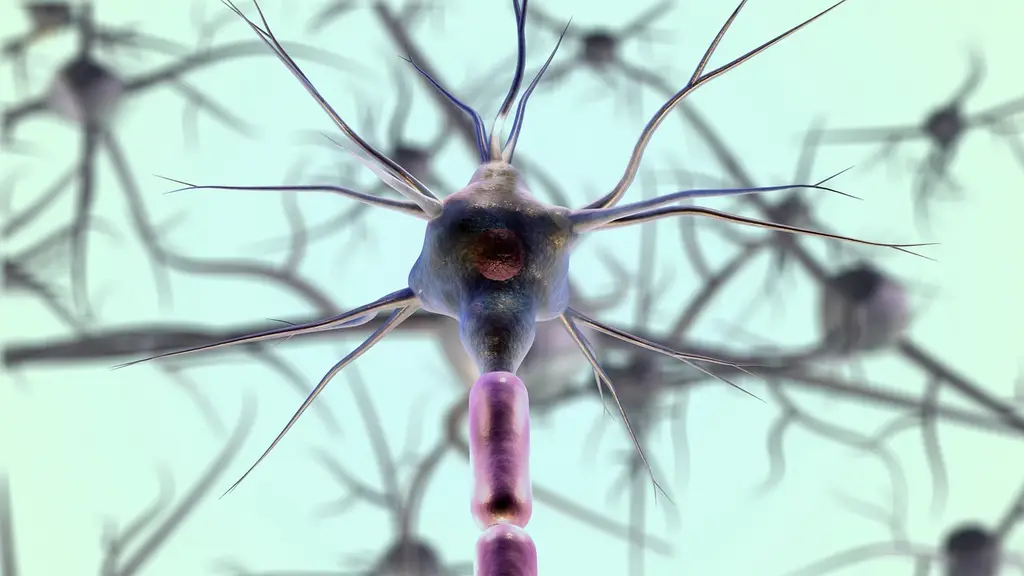
A neuron looks a bit like a tree with its roots and branches stretched out. Branching dendrites collect incoming signals. A long fiber, the axon, carries the neuron's own signal away, sometimes over long distances. When a neuron "fires," an electrical pulse races down its axon.
Neurons don't quite touch each other. At the tiny gap between one neuron and the next, the synapse, the electrical pulse triggers the release of chemical messengers called neurotransmitters. These drift across the gap and make the next neuron more (or less) likely to fire. A single neuron may form thousands of synapses, and the brain as a whole has an enormous number, commonly estimated at more than 100 trillion.
(Neurons are cells like any other in many respects, with a nucleus and the usual internal machinery; our guide to cells, the building blocks of life, covers the basics.)
Learning changes connections
In 1949 the Canadian psychologist Donald Hebb proposed an idea that still shapes neuroscience: when one neuron repeatedly helps to fire another, the connection between them grows stronger. It's often summarized as "neurons that fire together wire together."
Experiments later confirmed something very like Hebb's idea. In 1973, Timothy Bliss and Terje Lømo showed that a burst of rapid stimulation to a pathway in a rabbit's hippocampus, a brain region crucial for memory, made the connection respond more strongly for hours or even days afterward. This effect, called long-term potentiation, is now considered one of the main cellular mechanisms of learning and memory. Connections can also weaken with disuse, which matters just as much: learning is as much about pruning as about growing.
Working with the sea slug Aplysia, which has unusually large, easily studied neurons, Eric Kandel showed how short-term memories involve temporary chemical changes at synapses, while long-term memories require switching on genes and building new proteins, and even new synapses. He shared the Nobel Prize in Physiology or Medicine in 2000 for that work.
So, in a real sense, every new fact or skill you learn is stored as a change in the pattern and strength of connections among your neurons.
Practice makes faster
Many axons are wrapped in a fatty insulating layer called myelin, which lets signals travel much faster. Myelination continues through childhood and adolescence, and some brain regions, especially at the front of the brain, aren't fully myelinated until people are in their twenties.
Evidence from brain imaging suggests that experience can shape this wiring, too. Studies of adults learning a new skill, such as juggling, have found measurable changes in the brain's white matter (the myelin-rich bundles of axons) over weeks of practice. A well-known study of London taxi drivers, who must memorize the city's tangle of streets, found that part of their hippocampus was larger on average than in comparison groups. Findings like these show the brain remains changeable, or plastic, throughout life.
A brain under construction: childhood and adolescence
A baby's brain forms synapses at a tremendous rate. Through childhood, the brain then prunes many of them, keeping the connections that are used and eliminating those that aren't, much as a gardener trims a hedge into shape. This "use it or lose it" process is one reason early experiences matter.
For some abilities there are sensitive periods, windows when the brain is especially ready to be shaped by particular experiences. In classic work that earned a Nobel Prize in 1981, David Hubel and Torsten Wiesel found that if one eye of a young kitten was kept closed during a critical early window, the brain's visual system rewired to favor the open eye, with lasting effects. In humans, this is why doctors treat childhood cataracts and "lazy eye" early. Language has sensitive periods too: young children pick up the sounds of a new language more easily than adults do. But sensitive periods are not slammed doors; people continue to learn throughout life.
During adolescence, the brain undergoes another major reorganization. Regions involved in emotion and reward are highly active, while the prefrontal cortex, which helps with planning, impulse control and weighing consequences, continues to mature into the mid-twenties. That mismatch helps explain why teenagers can be brilliant learners and risk-takers at the same time.
Curiosity is a powerful engine throughout. Our article on how children develop scientific curiosity explores how adults can nurture it.
Strategies that work
Decades of research in cognitive psychology point to a handful of strategies that reliably improve long-term learning. Many feel harder in the moment than simply rereading notes, which is exactly why they work: effortful recall strengthens memories.
| Strategy | What it means | Why it helps |
|---|---|---|
| Retrieval practice | Testing yourself (flashcards, quizzes, explaining from memory) instead of rereading | Each act of recall strengthens the memory and shows what you don't yet know |
| Spacing | Spreading study over several sessions instead of cramming | Revisiting material after some forgetting makes it more durable |
| Interleaving | Mixing different types of problems in one session | Trains you to choose the right approach, not just repeat one |
| Elaboration | Asking "why?" and "how?" and connecting new ideas to old ones | Builds richer networks of related memories |
| Dual coding | Combining words with diagrams, timelines or sketches | Gives two routes back to the same idea |
| Sleep | Getting enough sleep after learning | The brain consolidates new memories during sleep |
In a well-known 2006 experiment, students who read a passage and then practiced recalling it remembered much more a week later than students who spent the same time rereading, even though the rereaders felt more confident. That gap between how learning feels and how well it lasts is one of the most important ideas in education.
Try this: the blank-page test. After reading something you want to remember, close the book and write down everything you can recall on a blank sheet. Then check what you missed and try again a day or two later. It feels harder than highlighting, and that's the point.
Emotions, stress and attention
Learning is not purely intellectual. Attention acts as a gatekeeper: the brain can only hold a few pieces of new information in mind at once, so distractions crowd out learning. Emotion matters too. Mild challenge and interest can sharpen memory, but strong, prolonged stress tends to impair thinking and recall. Anxiety about a subject can itself become a barrier, which is why approaches like those described in math anxiety and how to ease it can unlock progress.
The brain's reward system also plays a part. Neurons that release dopamine respond strongly when an outcome is better or worse than expected. That "prediction error" signal helps the brain update what it has learned, one reason feedback, and even mistakes, are valuable for learning. Classroom methods that let children ask questions and test their own ideas, described in inquiry-based learning explained, harness this natural cycle of predicting, checking and adjusting.
Three myths to retire
- "People have learning styles, and teaching should match them." Many people do have preferences, but a major 2008 review found no good evidence that matching instruction to a supposed visual, auditory or kinesthetic style improves learning. It's better to match the method to the material: maps for geography, sound for music.
- "We only use 10 percent of our brains." Brain imaging shows activity throughout the brain, and damage to almost any region has effects. There is no idle 90 percent.
- "Some people are left-brained, others right-brained." The two hemispheres do specialize to some degree, but they work together constantly, and large studies have not found people sorting into left- or right-brained types.
The takeaways
Learning is physical: it strengthens, weakens, builds and prunes connections among neurons. The brain is especially malleable in childhood but remains capable of change throughout life. And the most effective ways to learn, such as self-testing, spacing and sleep, are free, simple and available to everyone.
For parents and teachers: Swap some rereading for quick, low-stakes quizzes. Return to old topics after a gap. Encourage children to explain ideas in their own words. Protect sleep. And treat mistakes as part of how the brain learns, not as failures. To see how memories form and fade in more detail, continue with the science of memory.
Sources and further reading
- Brain Basics: Know Your Brain, National Institute of Neurological Disorders and Stroke (NIH)
- Equal numbers of neuronal and nonneuronal cells make the human brain an isometrically scaled-up primate brain (Azevedo et al., 2009), Journal of Comparative Neurology, via PubMed
- Long-lasting potentiation of synaptic transmission in the dentate area of the anaesthetized rabbit (Bliss and Lømo, 1973), Journal of Physiology, via PubMed
- Test-enhanced learning: taking memory tests improves long-term retention (Roediger and Karpicke, 2006), Psychological Science, via PubMed
- Learning Styles: Concepts and Evidence (Pashler et al., 2008), Psychological Science in the Public Interest