Math Anxiety and How to Ease It
Math anxiety is real, common and measurable in the brain. Learn what causes it, how parents and teachers pass it on, and research-backed ways to ease the fear.
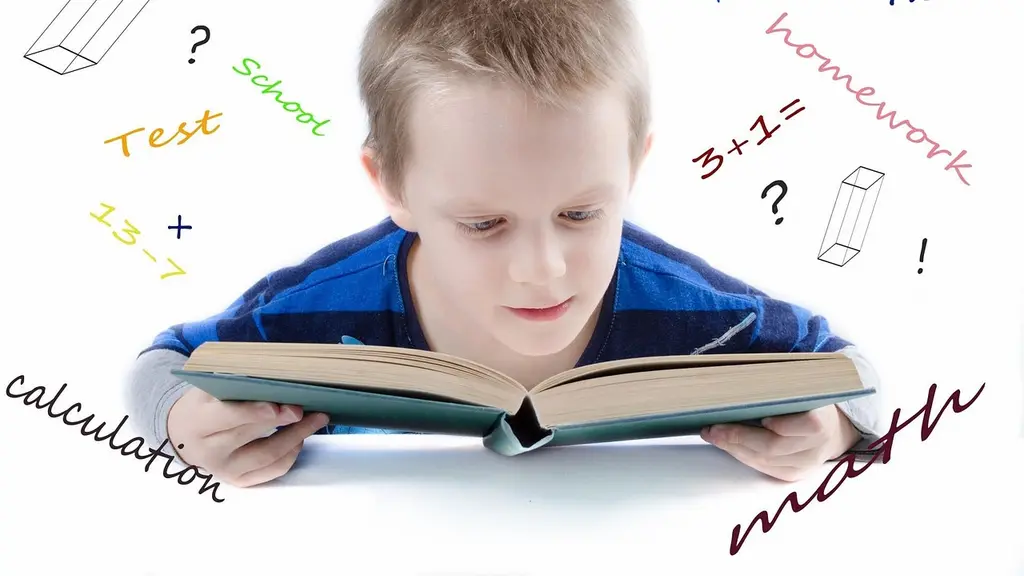
For some children, the moment a worksheet of sums appears, something changes. Their stomach tightens, their mind goes blank, and problems they could solve yesterday suddenly seem impossible. Adults often recognize the feeling from their own school days, and many still feel a jolt of dread when asked to split a restaurant bill in their heads.
This is math anxiety: a feeling of tension, apprehension or fear that interferes with doing mathematics. It is not the same as being bad at math, although the two can feed each other. It can be seen in brain scans of children as young as seven. And, importantly, it can be eased.
This guide explains what researchers have learned about where math anxiety comes from, why it hurts performance, and practical steps that parents and teachers can take.
Anxiety is not the same as ability
Many people with math anxiety are perfectly capable of doing math. The problem is that anxiety gets in the way.
Researchers explain this through working memory, the mental workspace we use to hold numbers and steps in mind while solving a problem. Worry takes up space in that workspace. A child who is thinking "I'm going to get this wrong, everyone will see" has less capacity left for carrying a digit or remembering the next step of a method. The result is slower work and more mistakes, which seem to confirm the fear.
That cycle can lead to avoidance. Children who feel anxious practice less, choose fewer math-related activities and may later steer away from courses and careers that involve numbers, even when they have the ability to succeed.
| What math anxiety can look like | What might be going on underneath |
|---|---|
| Freezing or "going blank" on tests | Worry is crowding out working memory |
| Rushing to finish, guessing randomly | Trying to escape an uncomfortable feeling quickly |
| Stomachaches before math lessons | A physical stress response |
| "I'm just not a math person" | A belief that ability is fixed |
| Avoiding math games or homework | Avoidance brings short-term relief, which reinforces it |
Inside the anxious brain
In a 2012 study at Stanford University, published in Psychological Science, Christina Young, Sarah Wu and Vinod Menon used brain imaging with second- and third-grade children, aged seven to nine. While solving arithmetic problems, children who reported high math anxiety showed greater activity in the right amygdala, a region involved in processing fear and negative emotions. They also showed reduced activity in brain regions that support working memory and numerical reasoning, and they were slower and less accurate than children with low anxiety.
The finding matters for two reasons. It shows that math anxiety is a real, measurable response, not laziness or a lack of effort. And it shows the response can begin early in schooling, so early support is worthwhile. For background on how emotion and learning interact, see how the human brain learns.
Where math anxiety comes from
Math anxiety likely has many sources, including temperament, earlier difficulties with numbers and classroom experiences. Two influences stand out in research because adults can do something about them.
Parents. In a 2015 study of nearly 450 first- and second-graders, Erin Maloney and colleagues at the University of Chicago found that children of math-anxious parents learned less math over the school year and were more likely to become anxious themselves, but only when those parents frequently helped with math homework. Parents who were anxious but rarely helped did not show the same effect. The researchers suggested that anxious parents may explain concepts less effectively or react unhelpfully to mistakes. Parental math anxiety did not predict children's reading achievement, which suggests the effect is specific to math.
Teachers. Related research by the same group has found that when early elementary teachers are anxious about math, some of their students, particularly girls in that research, may absorb both the anxiety and the stereotype that math is not for them.
None of this is about blame. Many adults developed their own anxiety through experiences they did not choose. The encouraging message is that adults who manage their own feelings about math can help break the chain.
What helps at home
Make math a normal, enjoyable part of life. In a 2015 randomized study published in Science, families of first-graders were given a tablet app with short math stories and questions to share at bedtime. Children whose families used it regularly made greater gains in math over the school year than those in a comparison group who used a reading app, and the benefit was especially notable for children whose parents were anxious about math. The study was funded by a foundation linked to the app's developer, which the researchers disclosed, but the broader point is widely supported: relaxed, playful math talk at home helps.
Watch your words. Avoid phrases such as "I was never good at math either" or "Some people just aren't math people." They give children permission to believe ability is fixed.
Help without taking over. If math homework makes you anxious, it is fine to step back. Ask your child to explain the problem to you, praise their reasoning, and encourage them to take questions to their teacher. Supportive, calm interest is more valuable than correct explanations delivered with tension.
Treat mistakes as information. "Interesting, what made you choose that? Let's see where it went differently" turns an error into a puzzle rather than a verdict. Our guide to encouraging problem-solving skills offers more strategies for keeping effort high after mistakes.
Find math in daily life. Cooking, shopping, sports scores, board games and building projects all involve numbers without the pressure of a test.
What helps in the classroom
- Reduce unnecessary time pressure. Timed drills can heighten anxiety for some children. Fluency matters, but it can be built through games and repeated low-stakes practice.
- Value multiple strategies. Asking "How did you work it out?" shows there is more than one route to an answer.
- Use low-stakes practice testing. Frequent quizzes that do not count toward grades help memory without the high stakes. Retrieval practice of this kind is explained in the science of memory.
- Name the feeling. Acknowledging that math can feel stressful, and that feelings can be managed, reduces shame.
A writing exercise before tests
In 2011 Gerardo Ramirez and Sian Beilock reported in Science that students who spent about ten minutes writing openly about their worries just before an important exam performed better than students who sat quietly. In a classroom version with high school students taking a biology final, the usual link between test anxiety and lower scores largely disappeared for those who wrote. The researchers proposed that writing helps offload worries, freeing working memory.
Later attempts to repeat the effect have produced mixed results, including at least one study in a college classroom that found no benefit. Expressive writing is low-cost and harmless to try, but it should be seen as one possible tool rather than a guaranteed fix.
A calm-math routine to try
- Before starting, breathe. Two or three slow breaths help settle the body's stress response.
- Read the whole problem aloud. Understanding comes before calculation.
- Start with what you know. Write down any numbers or facts given.
- Pick a strategy. Draw it, use objects, try a smaller number.
- Check and celebrate the process. "You stuck with it" matters as much as the answer.
If anxiety is severe, persistent, or affecting a child's wellbeing beyond math, talk with the child's teacher, school counselor or a health professional.
Key ideas
- Math anxiety is a real emotional response that interferes with working memory, not a lack of ability.
- Brain imaging shows signs of it in children as young as seven.
- Parents' and teachers' anxiety can pass to children, especially through tense homework help.
- Playful math at home, calm support and treating mistakes as information all help.
- Some interventions, such as expressive writing, show promise but have mixed evidence.
Explore more guides for families and educators in our STEM education section.
A conversation starter: Ask your child, "When does math feel easy, and when does it feel hard?" Their answer may tell you exactly where to begin.
Sources and further reading
- The neurodevelopmental basis of math anxiety (Young, Wu and Menon, 2012), PubMed, U.S. National Library of Medicine
- Intergenerational effects of parents' math anxiety on children's math achievement and anxiety (Maloney et al., 2015), PubMed, U.S. National Library of Medicine
- Writing about testing worries boosts exam performance in the classroom (Ramirez and Beilock, 2011), PubMed, U.S. National Library of Medicine
- Math story time at home bolsters achievement in school, University of Chicago News
- Imaging study reveals differences in brain function for children with math anxiety, Stanford Medicine