How Bees Make Honey
How honey bees turn flower nectar into honey, explained for children: foragers, enzymes, wing-fanning, wax caps, the waggle dance and questions to discuss.
Spread a spoonful of honey on toast and you are eating something made by thousands of insects working together. Honey is not collected ready-made from flowers. Bees make it, using a clever process that turns watery flower juice into thick, golden, long-lasting food.
This article follows a drop of nectar from a flower to a sealed honeycomb cell. It is written so children aged about 7 to 11 can follow it with an adult, and it ends with questions to talk about together.
Meet the honey bee family
There are thousands of kinds of bees in the world, but most of them do not make honey at all. The honey we eat comes mainly from honey bees, which live together in large groups called colonies. A busy colony in summer can contain tens of thousands of bees.
Each colony has three kinds of bee:
| Bee | How many | Main jobs |
|---|---|---|
| Queen | Usually just one | Lays all the eggs, up to around a thousand or more a day in busy times |
| Workers | Almost all the bees | All female. They clean, feed babies, build wax comb, guard the hive, collect food and make honey |
| Drones | A few hundred in summer | Male bees. Their job is to mate with a queen from another colony |
Worker bees change jobs as they get older. Young workers stay inside the hive as "house bees." Older workers become foragers, flying out to collect food.
Step 1: Collecting nectar
Many flowers make a sweet, watery liquid called nectar. A forager bee lands on a flower and sucks up the nectar with her proboscis, a long, straw-like tongue.
She stores the nectar in a special pouch called the honey stomach (or crop). It is separate from the stomach she uses to digest her own food. A forager may visit many flowers on a single trip to fill her honey stomach, and then fly home carrying a load that can weigh a large share of her own body weight.
While she feeds, pollen from the flower sticks to her fuzzy body. When she visits the next flower, some of that pollen rubs off. This is pollination, and it helps flowers make seeds and fruit. Many of the fruits and vegetables people eat depend on bees and other pollinators.
Step 2: Passing it on and adding enzymes
Back at the hive, the forager passes the nectar to a house bee, mouth to mouth. The house bee may pass it on to another bee, and so on.
Along the way, the bees add special substances called enzymes from glands in their heads. One important enzyme, called invertase, splits the main sugar in nectar (sucrose) into two simpler sugars: glucose and fructose. These sugars make honey easy to store and help stop it from going bad.
Step 3: Drying it out
Fresh nectar is mostly water; it can be as much as 80 percent water. Honey has only about 18 percent water. So the bees need to get rid of a lot of water.
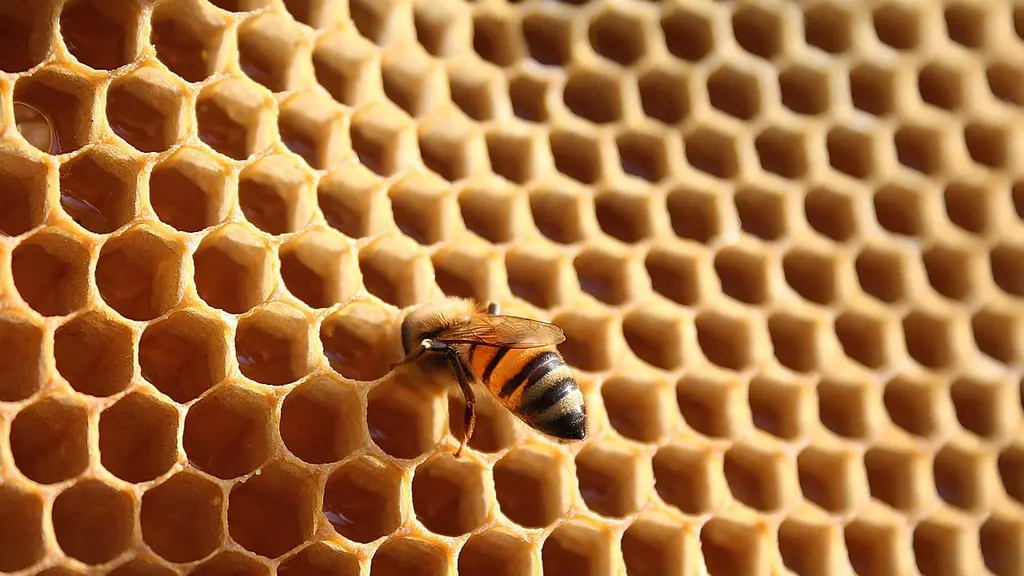
They spread the nectar thinly into the six-sided wax cells of the honeycomb. Then many bees beat their wings together to fan air across the comb. This works like a hairdryer, helping water evaporate. The warm hive helps too. Over several days, the runny nectar thickens into honey.
Step 4: Sealing the jar
When the honey is thick enough, worker bees seal each cell with a lid of beeswax. Workers make wax themselves, from special glands on the underside of their bodies. The wax comes out as tiny flakes, which bees chew and shape. A sealed cell is like a tiny jar with a lid, keeping the honey clean and dry until the bees need it.
Amazing fact: A single worker bee makes only a tiny amount of honey in her whole life, often quoted as about one-twelfth of a teaspoon. Every jar of honey is the work of a huge team.
Why do bees make honey?
Bees do not make honey for us. They make it for themselves, as food for the winter. When it is too cold for flowers to bloom, a honey bee colony stays inside its hive, huddled together, eating its stored honey. The bees shiver their flight muscles to make heat and keep the cluster warm.
Beekeepers take only the extra honey and leave enough for the colony to survive.
How do bees know where the flowers are?
When a forager finds a great patch of flowers, she flies home and performs a special dance on the honeycomb called the waggle dance. She runs in a straight line, waggling her body, then circles back and repeats it.
- The direction of the waggle run tells other bees which way to fly, compared with the direction of the Sun.
- The length of the waggle run tells them roughly how far away the flowers are.
An Austrian scientist named Karl von Frisch spent many years decoding this dance. In 1973, he shared the Nobel Prize in Physiology or Medicine with two other scientists for their discoveries about animal behavior.
Why doesn't honey go bad?
Honey can last for a very long time without spoiling. It has very little water and lots of sugar, which makes it hard for germs to grow. It is also slightly acidic. Kept sealed in a jar, honey may crystallize and go grainy, but that is just sugar forming crystals, and gently warming the jar turns it runny again.
Safety: Babies under 12 months old should never be given honey, even a taste, because it can carry tiny bacterial spores that make young babies seriously ill. Honey is fine for older children and adults. Around bees, stay calm and move slowly: bees usually sting only if they feel threatened. Anyone who is allergic to stings should follow their doctor's plan, and an adult should be told straight away if someone is stung and feels unwell.
Try this: be a bee watcher
You will need: a sunny day, a garden or park with flowers, a notebook and a pencil.
- Find a patch of flowers and stand or sit quietly a couple of meters away.
- Count how many bees visit in five minutes.
- Watch one bee closely. How long does she stay on each flower? Can you see yellow pollen on her legs?
- Try another color or kind of flower. Do bees visit some flowers more than others?
Record your results in a simple table. Repeat on a cloudy day and compare. This kind of patient counting is exactly how scientists study pollinators. For more ideas for learning outside, see our outdoor science lessons.
The honey journey at a glance
- A forager sucks up nectar from flowers.
- She carries it home in her honey stomach.
- House bees pass it along and add enzymes.
- Bees spread it in wax cells and fan it dry.
- They seal the finished honey with wax.
Questions to talk about together
- Why do you think bees need to make honey before winter arrives?
- Why is the honey stomach separate from the stomach a bee uses for her own food?
- How is the waggle dance a bit like giving someone directions?
- Which foods in your kitchen might not exist without pollinators?
- How could people help bees where you live?
To find out more about the flowers bees depend on, read our guide to how plants grow. Our article on environmental science for young learners looks at how living things depend on each other. Then test your new knowledge with the Science Quiz.
Sources and further reading
- How Is Honey Made?, Encyclopaedia Britannica
- Honey Bees and Pollinators, USDA Agricultural Research Service
- Karl von Frisch: Facts (Nobel Prize in Physiology or Medicine 1973), Nobel Prize Outreach
- Honeybee, Encyclopaedia Britannica