What Makes Volcanoes Erupt?
Why volcanoes erupt, explained for children: where magma comes from, why gas and sticky magma cause explosions, how scientists watch volcanoes and a safe model.
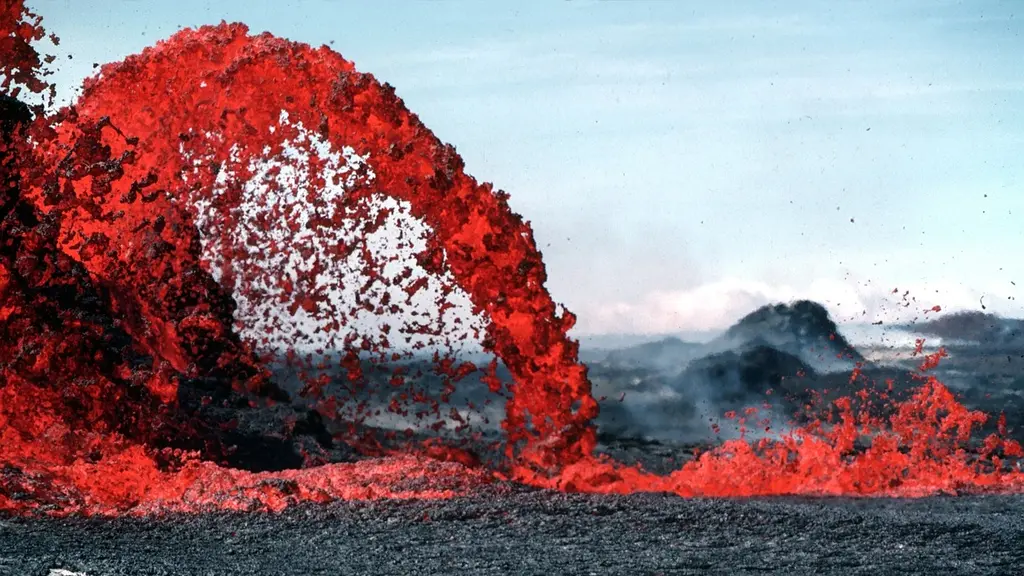
A volcano is a place where the inside of our planet breaks through to the outside. Sometimes lava oozes out gently in glowing orange rivers. Other times, a volcano explodes with a blast that can be heard hundreds of kilometers away, throwing ash high into the sky. But what makes a mountain suddenly erupt?
This article explains where the melted rock comes from, what pushes it up, and why some eruptions are gentle while others are explosive. It is written so children aged about 7 to 11 can follow it with an adult, and it finishes with a safe model to try and questions to talk about together.
What is inside the Earth?
If you could slice the Earth in half like a peach, you would see layers:
| Layer | What it is like |
|---|---|
| Crust | The thin, rocky outer skin we live on |
| Mantle | A very thick layer of hot rock. It is mostly solid, but it moves very slowly, like extremely thick putty, over millions of years |
| Outer core | Liquid metal, mostly iron |
| Inner core | A solid ball of metal, as hot as the surface of the Sun |
A common mistake is to think the Earth is full of liquid lava under the crust. In fact, the mantle is mostly solid rock. Rock melts only in certain places, and that is where volcanoes form.
Where does magma come from?
Melted rock underground is called magma. Once it reaches the surface, it is called lava.
Earth's crust is broken into giant pieces called tectonic plates, which fit together like a cracked eggshell and move a few centimeters a year, about as fast as your fingernails grow. Magma forms mainly in three kinds of places:
- Where plates pull apart. As the plates separate, hot rock from the mantle rises, and the drop in pressure lets it melt. Most of this happens on the ocean floor. Iceland sits on one of these places.
- Where one plate dives under another. The sinking plate carries water down with it. That water makes the hot rock above it melt more easily, a bit like how salt helps ice melt. Chains of volcanoes form above. This is happening all around the Pacific Ocean, in a horseshoe-shaped zone called the Ring of Fire.
- Hot spots. In a few places, a plume of unusually hot rock rises from deep in the mantle and melts through the plate above. The islands of Hawaii formed this way.
The U.S. Geological Survey counts about 1,350 potentially active volcanoes around the world, not including the long chains of volcanoes hidden along the ocean floor. Many of them are in the Ring of Fire.
Why does magma rise?
Magma is lighter (less dense) than the solid rock around it, so it slowly pushes its way upward, the way a beach ball held underwater pops up to the surface. It often collects in a pool underground called a magma chamber, a few kilometers below the volcano.
The secret ingredient: gas
Magma contains gases dissolved in it, mainly water vapor, carbon dioxide and sulfur gases. Deep underground, high pressure keeps these gases squeezed into the magma, a bit like the fizz in an unopened bottle of soda.
As magma rises toward the surface, the pressure drops. The gases form bubbles, which grow and push the magma up even faster. When the pressure becomes too great for the rock above to hold back, the volcano erupts. It is like opening a shaken bottle of soda: the bubbles rush out, carrying liquid with them.
Gentle or explosive?
Whether an eruption is gentle or violent depends mostly on how runny or sticky the magma is.
| Runny magma | Sticky magma |
|---|---|
| Flows easily, like warm syrup | Thick and stiff, like cold toothpaste |
| Gas bubbles escape easily | Gas gets trapped and builds up pressure |
| Gentle eruptions with lava flows and fountains | Explosive eruptions with ash, rock and gas |
| Builds wide, gently sloping shield volcanoes, such as Mauna Loa in Hawaii | Builds steep, cone-shaped stratovolcanoes, such as Mount Fuji in Japan |
Sticky magma contains more of a substance called silica, the same ingredient that sand and glass are mostly made of. Silica makes magma thick, so gas cannot escape and pressure builds up until it bursts out. That is what happened when Mount St. Helens, in Washington State, exploded on May 18, 1980.
How do scientists know when a volcano might erupt?
Scientists called volcanologists watch active volcanoes closely. They cannot predict an eruption to the exact minute, but they look for warning signs:
- Small earthquakes as magma cracks rock on its way up
- Swelling ground as the magma chamber fills, measured with GPS and satellites
- Changes in gases coming out of the volcano
- Heat detected from space
These signs help authorities warn people living nearby so they can leave in time. Volcanoes and earthquakes often happen in the same places; read our guide to how earthquakes happen to find out why.
Volcanoes beyond Earth: The biggest known volcano in the solar system is Olympus Mons on Mars, far taller than Mount Everest. Jupiter's moon Io is the most volcanically active world known.
Try this: a fizzing model volcano
The classic baking soda volcano does not work the same way a real volcano does. There is no melted rock! But it is a good model of one part of the story: gas building up and pushing liquid out.
You will need: a small plastic bottle, a tray, modeling clay or play dough, 2 tablespoons of baking soda, a squirt of dish soap, a few drops of red food coloring and about ½ cup of vinegar.
- Stand the bottle on the tray and build a mountain of modeling clay around it, leaving the opening clear.
- Put the baking soda, dish soap and food coloring into the bottle.
- Pour in the vinegar and step back.
What happens? Foam bubbles up and flows down the sides. The vinegar and baking soda react to make carbon dioxide gas. The soap traps the gas in bubbles, so the foam overflows, a little like gas-rich magma rising. Try runny versus sticky: add a spoonful of cornstarch to thicken the vinegar mixture and see how the "eruption" changes.
Safety: Vinegar stings if it gets in your eyes, so keep faces away from the bottle top and consider safety glasses. Do the experiment on a tray, outdoors or on a wipeable surface, and wash hands afterwards. If you ever visit a real volcano, stay on marked paths and follow all warnings from park rangers: volcanic gases and hot ground can be dangerous.
Questions to talk about together
- Why do you think runny lava is less dangerous than an explosive eruption?
- If the mantle is mostly solid, where does the melted rock come from?
- Why might people choose to live near a volcano? (Hint: volcanic soil is often very good for farming.)
- How is a volcano like a bottle of soda? How is it different?
- What signs would you watch for if you were a volcanologist?
To learn more about melting and freezing, see our guide to states of matter. For more fizzing reactions, try our kitchen chemistry experiments, and check what you have learned with the Science Quiz.
Sources and further reading
- Volcano Hazards Program, U.S. Geological Survey
- What is the Ring of Fire?, U.S. Geological Survey
- What Is a Volcano?, NASA Space Place
- Volcano, Encyclopaedia Britannica