Dinosaurs: What Fossils Tell Us
How fossils form and what bones, teeth, footprints and feathers reveal about dinosaurs, explained for children, with a make-a-fossil activity and talk prompts.
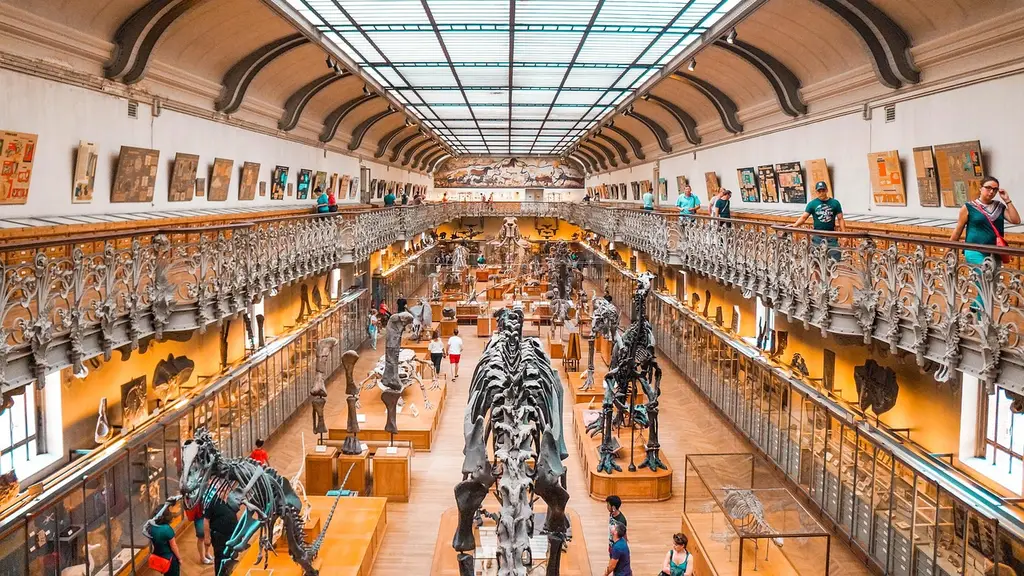
Nobody has ever seen a living Tyrannosaurus rex. No one has heard a Triceratops call or watched a long-necked Diplodocus eat. The last of these giant dinosaurs died around 66 million years ago, long before the first humans. So how do we know so much about them: how big they were, what they ate, even that some of them had feathers?
The answer is fossils. Fossils are clues left in rock, and scientists who study them, called paleontologists, are a bit like detectives. This article explains what fossils are, how they form and what they reveal, in a way that children aged about 7 to 11 can enjoy with an adult.
What is a fossil?
A fossil is any trace of ancient life preserved in rock. There are two main kinds.
Body fossils are parts of the animal or plant itself, usually the hard parts: bones, teeth, claws and shells. Soft parts like skin and muscles usually rot away, though very occasionally they leave impressions.
Trace fossils are signs of what an animal did. They include:
- Footprints and trackways, which show how an animal walked, and sometimes how fast
- Nests and eggs, which show how dinosaurs had babies
- Coprolites, the scientific name for fossilized poop (yes, really), which can show what an animal ate
- Tooth marks on bones, which show who bit whom
How does a bone become a fossil?
Most animals that ever lived did not become fossils. Their bodies were eaten, scattered or rotted away completely. Fossils form only when conditions are just right, which is why each one is precious.
Here is how it usually happens:
- An animal dies near water, such as a river, lake or sea.
- It is buried quickly by mud, sand or volcanic ash. Being buried protects it from scavengers and rotting.
- Layers build up on top over thousands and millions of years. The weight slowly presses the lower layers into rock.
- Minerals move in. Water trickling through the ground carries dissolved minerals. Over time, these minerals fill the tiny spaces in the bone, or slowly replace the bone itself, turning it into stone in the shape of the original.
- The fossil is uncovered. Millions of years later, wind, rain, rivers or moving land wear away the rock above, and the fossil is exposed, ready for someone to spot.
How do scientists know how old a fossil is?
Rocks form in layers, like a stack of pancakes. Usually, the deeper the layer, the older it is. So a fossil found deep down is generally older than one found higher up.
To get actual dates in years, scientists look for layers of volcanic ash above and below a fossil. Volcanic rock contains tiny amounts of natural radioactive elements that change into other elements at a steady, known rate, like a very slow clock. By measuring them, scientists can work out when the ash layers formed, and so how old the fossil between them must be.
Using these methods, scientists know that dinosaurs first appeared more than 230 million years ago. They lived through three long periods of time called the Triassic, Jurassic and Cretaceous. To see where they fit in the history of science and life on Earth, try our Discovery Timeline.
What fossils tell us about dinosaurs
| Clue | What it tells scientists |
|---|---|
| Size and shape of bones | How big the dinosaur was and how it stood and moved |
| Teeth | What it ate: sharp, saw-edged teeth for meat; flat or peg-like teeth for plants |
| Footprints | Whether it walked on two legs or four, how fast it moved, whether it traveled in groups |
| Eggs and nests | How dinosaurs laid eggs and, sometimes, cared for their young |
| Coprolites | What was on the menu |
| Feather impressions | That many dinosaurs had feathers or fluffy coverings |
| Growth rings inside bones | How quickly the dinosaur grew and roughly how old it was when it died |
Feathered dinosaurs
For a long time, people pictured all dinosaurs as scaly, like giant lizards. Then, starting in the 1990s, scientists in China found beautifully preserved fossils in fine-grained rock that showed dinosaurs covered in feathers and fuzz. Since then, many feathered dinosaurs have been discovered. Some scientists have even studied tiny structures inside fossil feathers to work out what colors certain dinosaurs may have been.
Birds are living dinosaurs
Here is perhaps the most amazing thing fossils have revealed: birds are dinosaurs. Fossils show a step-by-step series of features linking small meat-eating dinosaurs to birds, including feathers, wishbones and hollow bones. When the giant dinosaurs died out, some early birds survived. Every pigeon, penguin and parrot alive today is descended from them. That is why scientists often call the extinct kinds non-avian dinosaurs ("avian" means "bird"). Find out how today's dinosaurs take to the air in our guide to how birds fly.
What happened to the dinosaurs?
About 66 million years ago, a huge asteroid, probably around 10 kilometers (6 miles) wide, slammed into Earth near what is now Mexico's Yucatán Peninsula. The impact threw enormous amounts of dust and gas into the air, changing the climate around the world. Massive volcanic eruptions in what is now India were happening around the same time and may also have played a part. All the non-avian dinosaurs died out, along with many other living things.
Fossils tell this story too. In rocks around the world, there is a thin layer from that time containing a rare element called iridium, which is much more common in asteroids than in Earth's crust.
Myth-buster: Flying pterosaurs and swimming creatures such as plesiosaurs and ichthyosaurs lived at the same time as dinosaurs, but they were not dinosaurs. They were other groups of reptiles. And no humans ever lived alongside non-avian dinosaurs; the gap between them is tens of millions of years.
Try this: make your own "fossil"
You will need: a lump of play dough or salt dough, small objects with interesting shapes (a shell, a leaf, a plastic toy dinosaur's foot) and a paper plate.
- Flatten the dough into a thick disc on the plate.
- Press an object firmly into the dough, then carefully lift it out.
- Swap "fossils" with someone else. Can they work out what made each print?
- Try walking a toy animal across the dough to make a trackway. What can you tell from the prints?
This makes a mold, just like the impressions some real fossils leave in rock. Ask: what can you tell about the object just from its print? What is impossible to know?
Safety: Salt dough is not for eating, and small objects can be a choking hazard for children under 3. If you go fossil hunting on a beach or cliff, take an adult, stay away from cliff edges and bases where rocks can fall, check tide times, and follow local rules. Collecting fossils is not allowed in U.S. national parks.
Questions to talk about together
- If a scientist found your footprint in 10 million years, what could they work out about you?
- Why do you think bones and teeth become fossils more often than skin?
- Which do you think tells us more about how an animal lived: a bone or a footprint?
- Birds are dinosaurs. Which bird do you think looks most like a dinosaur?
- What questions about dinosaurs do you think fossils can never answer?
Fossils were also key evidence for the idea that living things change over time; our article on Darwin, Wallace and evolution tells that story. Explore more answers in our science for children collection, or see how much you remember with the Science Quiz.
Sources and further reading
- David H. Koch Hall of Fossils: Deep Time, Smithsonian National Museum of Natural History
- Fossils and Paleontology, U.S. National Park Service
- Dinosaur, Encyclopaedia Britannica
- Fossil, Encyclopaedia Britannica