How Batteries Store Energy
Inside a battery: how anodes, cathodes and electrolytes turn chemical reactions into current, why lithium-ion took over, and how to build a lemon battery.
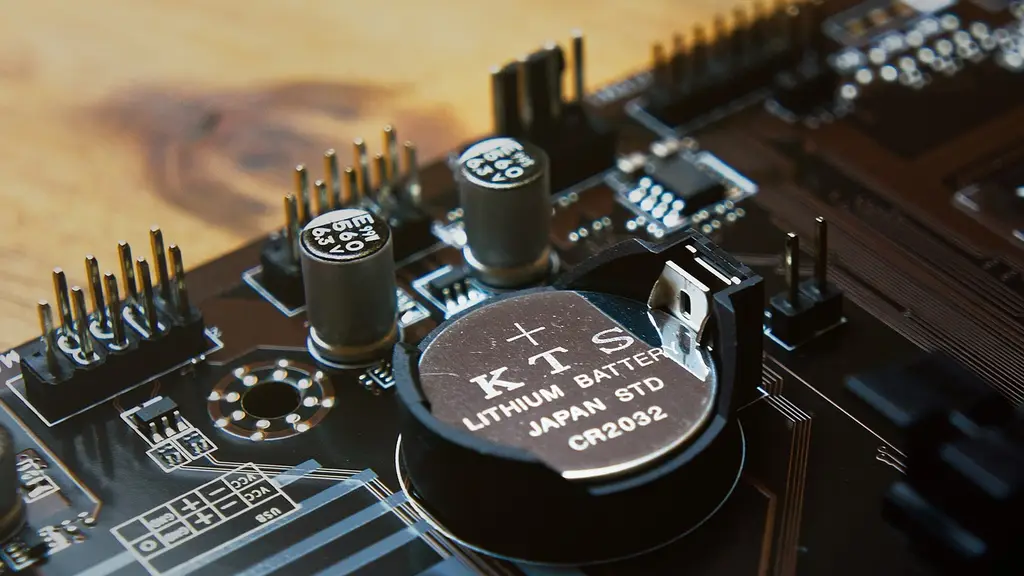
A battery looks like the least exciting object in the house: a plain cylinder or a flat slab. But inside, it is a carefully controlled chemical reaction waiting for permission to run. Connect a wire from one end to the other, through a flashlight bulb or a phone circuit, and electrons begin to flow. Disconnect it, and the reaction pauses, sometimes for years.
Batteries let us carry energy around and use it whenever and wherever we want. They power hearing aids and cars, store solar energy for the evening and keep pacemakers ticking. This article explains how a battery turns chemistry into electricity, why some batteries can be recharged and others cannot, how lithium-ion batteries came to dominate and how to build a simple, safe battery from a lemon.
What a battery actually is
Strictly speaking, a single unit is a cell; a battery is one or more cells connected together. Every electrochemical cell has the same basic parts:
- Anode: the electrode that gives up electrons during discharge (the negative terminal when the battery is in use).
- Cathode: the electrode that accepts electrons during discharge (the positive terminal).
- Electrolyte: a substance that lets charged atoms, called ions, move between the electrodes but does not let electrons through.
- Separator: a thin, porous barrier that keeps the electrodes from touching while letting ions pass.
The trick is that the chemical reaction has been split in two. The anode materials "want" to give away electrons and the cathode materials "want" to receive them, but the electrolyte blocks the electrons from taking a shortcut. The only way for electrons to get from one side to the other is through the outside wire, and that flow of electrons is the electric current that powers your device. Meanwhile, ions drift through the electrolyte inside the cell to balance the charge.
Oxidation and reduction
Chemists call the electron-giving half of the reaction oxidation and the electron-receiving half reduction. Together they are a redox reaction. Rusting iron, burning wood and digesting food are all redox reactions too, but in those cases electrons pass directly between atoms and the energy is released mostly as heat. A battery's design forces the electrons to take the long way round, so we can capture their energy as electricity. For more on everyday reactions, see chemical reactions in the kitchen.
The voltage of a cell, how hard it "pushes" electrons, depends on how strongly the two electrode materials differ in their pull on electrons. That is why different chemistries have characteristic voltages. The capacity, how long it can keep pushing, depends on how much reactive material it contains.
From frog legs to the voltaic pile
In the 1780s, the Italian physician Luigi Galvani noticed that dissected frog legs twitched when touched with two different metals. He thought the electricity came from the animal. His contemporary Alessandro Volta disagreed: he suspected the two metals were the source. In 1800, Volta proved it by stacking alternating discs of zinc and copper (or silver) separated by cloth or card soaked in salt water. This voltaic pile produced a steady electric current, the first battery. The unit of electrical potential, the volt, is named after him. The bigger story of electricity's discovery is told in The Discovery of Electricity.
A family of batteries
| Type | Introduced | Typical cell voltage | Rechargeable? | Common uses |
|---|---|---|---|---|
| Voltaic pile | 1800 | about 1 V per zinc–copper pair | No | Early experiments |
| Lead–acid | 1859 (Gaston Planté) | about 2 V | Yes | Car starter batteries (six cells make 12 V) |
| Zinc–carbon | 1860s (Georges Leclanché's wet cell; later dry cells) | 1.5 V | No | Cheap flashlights, clocks |
| Alkaline | 1950s | 1.5 V | No (standard types) | Remote controls, toys |
| Nickel–metal hydride | 1980s–1990s | 1.2 V | Yes | Rechargeable AA cells, hybrid cars |
| Lithium-ion | 1991 (commercial) | about 3.6–3.7 V | Yes | Phones, laptops, electric vehicles |
Why some batteries recharge
In a disposable battery, the reaction is hard to reverse cleanly. Pushing current back in may produce unwanted side products, gas or heat.
In a rechargeable battery, the chemistry is chosen so the reaction can run backward. A charger pushes electrons back into the anode, forcing ions to return to where they started. The battery stores energy again in chemical form, ready for the next discharge. No rechargeable chemistry is perfectly reversible, though, which is why batteries gradually lose capacity over hundreds or thousands of cycles.
The lithium-ion revolution
Lithium is the lightest metal and gives up electrons very readily, making it ideal for packing a lot of energy into a small, light battery. But lithium metal is highly reactive, and early rechargeable designs were prone to short circuits and fires.
The solution came in steps, recognized by the 2019 Nobel Prize in Chemistry:
- In the 1970s, M. Stanley Whittingham developed a cathode made of titanium disulfide, a layered material that could host lithium ions between its layers.
- In 1980, John B. Goodenough showed that a cathode of cobalt oxide could deliver about 4 volts, a big jump in energy.
- In 1985, Akira Yoshino replaced the reactive lithium metal anode with a carbon-based material that also hosts lithium ions, creating a much safer design.
Sony brought the first commercial lithium-ion batteries to market in 1991. In these cells, lithium ions shuttle back and forth between layered electrodes, slipping in between the layers like books on a shelf, a process called intercalation. No electrode is consumed, which is why they can be recharged so many times.
Why batteries wear out, and why they can be dangerous
Over time, side reactions build up a crust on the electrodes, lithium gets trapped, and materials crack as ions move in and out. Heat, deep discharges and very fast charging speed up this aging.
A damaged or defective lithium-ion cell can short-circuit internally. The heat can trigger further reactions that produce more heat, a runaway process that can lead to fire. That is why devices include protective circuits, and why swollen, punctured or overheating batteries should never be used or charged.
Safety: Keep button (coin) batteries and devices containing them well away from young children. A swallowed button battery can cause severe internal burns within hours; seek emergency medical help immediately if you suspect one has been swallowed. Never cut open, crush or heat any battery, and recycle used batteries rather than putting them in household trash.
Try this: a lemon battery
You can make a working cell from a lemon, demonstrating Volta's principle that two different metals plus an electrolyte produce a voltage.
You will need: two or more lemons, galvanized (zinc-coated) nails, copper coins or short lengths of thick copper wire, alligator-clip leads and a small red LED or a cheap digital multimeter.
- Roll each lemon on the table to break up the juice cells inside.
- Push one galvanized nail and one copper coin or wire into each lemon, about 2–3 cm apart. They must not touch.
- Connect the copper of the first lemon to the zinc nail of the second with a clip lead. Repeat for each lemon to connect them in series.
- Connect the free copper and free zinc ends to the LED's leads (the longer LED lead goes to copper) or to a multimeter.
A single lemon typically produces a little under one volt, not enough to light most LEDs, so you will usually need three or four in series. The lemon juice acts as the electrolyte; zinc is oxidized at the nail, and reduction happens at the copper. Try other fruits and vegetables, or vinegar in small cups, and compare voltages. The acid in the juice is part of what makes it work; see acids and bases explained.
Safety: An adult should push in the nails and handle sharp wire ends. Do not eat the lemons afterward, as metal will have dissolved into the juice. Never use button batteries or household batteries in place of the fruit, and never connect wires to a wall socket.
To take your circuit further, follow our step-by-step guide to building a simple electric circuit.
Key ideas
- A battery splits a redox reaction in two so electrons must travel through an outside circuit.
- Anode, cathode, electrolyte and separator are the essential parts of every cell.
- Voltage depends on the electrode materials; capacity depends on how much material there is.
- Rechargeable batteries use reactions that can be driven backward; lithium-ion cells shuttle lithium ions between layered electrodes.
Questions to discuss: Why do you think phones use lithium-ion batteries rather than lead–acid ones? What might the ideal battery of the future be like? How could large batteries help a power grid that relies on solar and wind energy?
Sources and further reading
- The Nobel Prize in Chemistry 2019: Popular information, Nobel Prize Outreach
- Battery (electronics), Encyclopaedia Britannica
- Batteries, U.S. Department of Energy, Vehicle Technologies Office
- Button Battery Ingestion: What to Do, National Capital Poison Center