Chemical Reactions in the Kitchen
Browning toast, rising bread, fizzing baking soda and cooked eggs: discover the chemical reactions behind everyday cooking, plus two safe kitchen experiments.
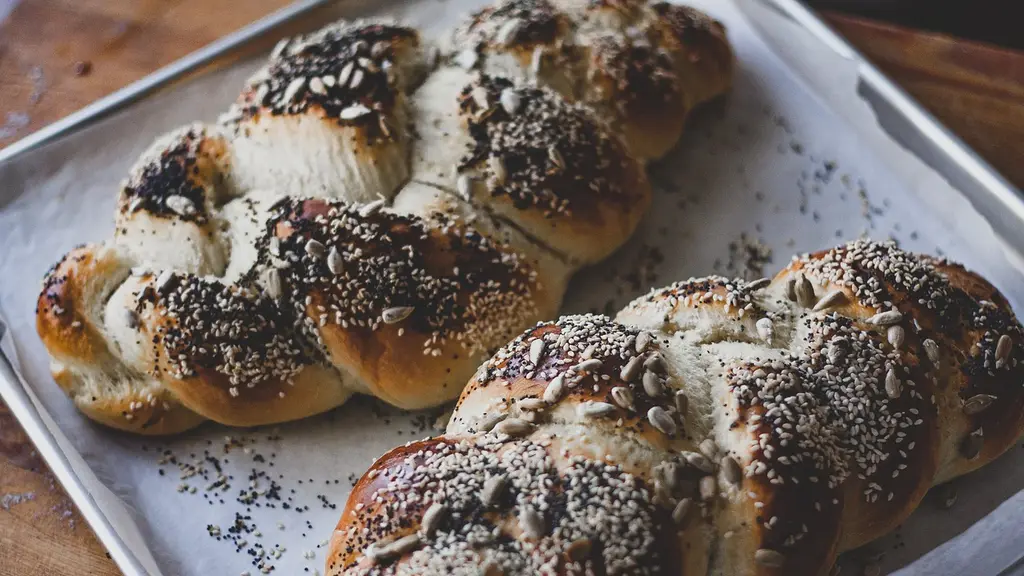
Every kitchen is a chemistry laboratory, just one with better snacks. When bread toasts, a cake rises or an egg turns from runny to firm, molecules are breaking apart and recombining into entirely new substances. Cooks have mastered these reactions by trial and error for thousands of years; chemists have only fairly recently worked out what is really going on.
Understanding the chemistry does more than satisfy curiosity. It explains why recipes work, why they sometimes fail, and how to fix them. It also turns ordinary cooking into a chance to talk with children about atoms, energy and change.
This article tours the most important reactions in the kitchen, from the fizz of baking soda to the deep flavor of a browned crust, and ends with two simple experiments you can do with things from the cupboard.
Physical change or chemical change?
Not everything that happens in a pan is a chemical reaction. It helps to sort changes into two kinds.
A physical change alters the form of a substance but not what it is made of. Melting butter, dissolving sugar in tea and freezing water into ice cubes are all physical changes. The molecules are the same before and after, and the change can often be reversed: solid butter can be melted and set again.
A chemical change, or chemical reaction, produces new substances with new properties. Atoms are rearranged as chemical bonds break and new ones form. You cannot un-toast toast.
Some useful clues that a chemical reaction has taken place:
| Clue | Kitchen example |
|---|---|
| A gas is produced (bubbles or fizzing) | Baking soda meeting lemon juice |
| A new color appears | Bread browning in a toaster |
| A new smell or flavor develops | Onions turning sweet and golden |
| Heat or light is given off or absorbed | A gas flame burning |
| A change is hard or impossible to reverse | An egg cooking |
None of these clues is proof on its own (boiling water bubbles, but that is a physical change), so chemists look for evidence that genuinely new substances have formed. For more on what changing from solid to liquid to gas involves, see Solids, Liquids, Gases and Plasma.
The fizz: acids meet bases
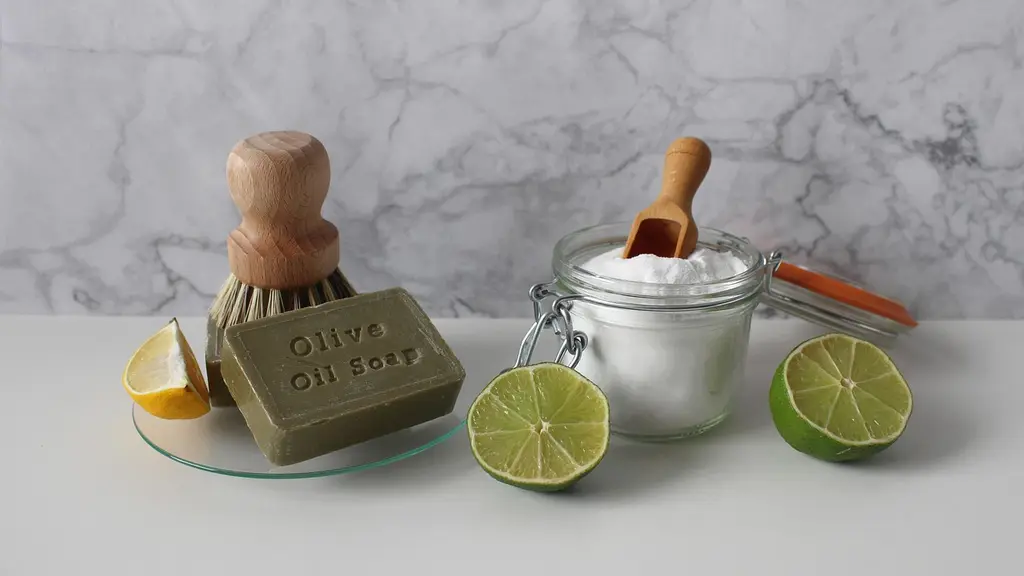
Baking soda is the common name for sodium bicarbonate. It is a base, and when it meets an acid such as vinegar, lemon juice, buttermilk or yogurt, it reacts to produce carbon dioxide gas, water and a salt. With vinegar, which contains acetic acid, the word equation is:
sodium bicarbonate + acetic acid → sodium acetate + water + carbon dioxide
In a cake batter or a batch of pancakes, the carbon dioxide forms tiny bubbles that expand in the heat of the oven and make the mixture rise. This is why recipes that use baking soda usually include an acidic ingredient, and why too much baking soda without enough acid can leave a soapy, metallic taste.
Baking powder solves the problem by packaging the base and one or more dry acids together, with starch to keep them dry. Nothing happens until the powder gets wet. Many baking powders are "double-acting": one acid reacts as soon as liquid is added, and a second reacts mainly when heated in the oven, giving a second burst of bubbles. Our guide to acids and bases explains what makes a substance acidic or basic in the first place.
The rise: yeast and fermentation
Bread relies on a living chemical factory: yeast. These single-celled fungi feed on sugars in the dough. Without much oxygen available, they carry out fermentation, breaking sugars down into carbon dioxide and ethanol (alcohol).
The carbon dioxide gets trapped in a stretchy network of proteins called gluten, which forms when flour is mixed with water and kneaded. As the gas collects, the dough swells. In the oven, the gas bubbles expand further, the yeast dies, the alcohol mostly evaporates, and the gluten and starch set into the airy structure of a loaf.
Fermentation is slow, and temperature matters. Yeast works faster in a warm kitchen than a cold one, and very hot water can kill it, which is why bread recipes often specify lukewarm water.
The browning: Maillard reactions and caramelization
The most delicious chemistry in the kitchen happens when food browns. Two different processes are involved, and they are often confused.
The Maillard reaction
When foods containing both proteins (or their building blocks, amino acids) and certain sugars are heated, they undergo a complex web of reactions known as the Maillard reaction. It is named after the French chemist Louis-Camille Maillard, who described the reaction between amino acids and sugars in 1912.
The Maillard reaction produces hundreds of different flavor and aroma compounds, along with brown pigments. It gives the characteristic color and taste to toast, bread crusts, roasted coffee, grilled meat, roasted vegetables and fried onions. It speeds up dramatically at higher temperatures, typically from around 140 °C (about 285 °F) upward, which is why food boiled in water (which cannot get much hotter than 100 °C) does not brown, while food roasted in a hot oven does. It also needs fairly dry surfaces, which is why cooks pat meat dry before searing it.
Caramelization
Caramelization is what happens when sugar itself is heated strongly, with no protein needed. As table sugar (sucrose) is heated past roughly 160 °C, its molecules break down and recombine into a mixture of new compounds that are brown, nutty and slightly bitter. That is how a pan of white sugar becomes amber caramel.
| Maillard reaction | Caramelization | |
|---|---|---|
| What reacts | Amino acids and sugars | Sugars alone |
| Typical starting temperature | Around 140 °C and above | Around 160 °C and above (for table sugar) |
| Examples | Toast, roasted coffee, seared meat | Caramel sauce, crème brûlée topping |
The setting: proteins change shape
Proteins are long chains of amino acids folded into precise shapes. Heat, acid, salt or even vigorous whisking can make those shapes unravel, a process called denaturation. Once unfolded, the protein chains tangle and bond with one another, a process called coagulation.
Eggs show this beautifully. A raw egg white is a clear, runny solution of proteins. As it heats, the proteins unfold and link together into a network that traps water, and the white turns opaque and firm. Different proteins in the white and yolk set at different temperatures, which is why it is possible to cook an egg with a firm white and a soft yolk. Whisking egg whites unfolds proteins too, letting them form a foam that holds air, the basis of meringues and soufflés.
The browning you don't want: cut fruit
Slice an apple, banana or avocado and leave it out, and the cut surfaces soon turn brown. This is enzymatic browning. Cutting the fruit breaks open its cells, allowing an enzyme called polyphenol oxidase to meet natural compounds called polyphenols in the presence of oxygen from the air. The products of the reaction link up into brown pigments.
You can slow it down by:
- Adding acid, such as lemon juice, which makes conditions less favorable for the enzyme.
- Keeping out air, by covering the cut surface with plastic wrap or submerging it in water.
- Chilling, because enzymes work more slowly at lower temperatures.
- Heating, which denatures the enzyme. Blanching vegetables before freezing works partly this way.
Try this: two kitchen experiments
Experiment 1: Inflate a balloon with chemistry. Pour about 100 milliliters of vinegar into an empty plastic bottle. Using a funnel, put two teaspoons of baking soda inside a balloon. Stretch the balloon's neck over the bottle's mouth, keeping the baking soda in the balloon, then lift the balloon so the powder drops into the vinegar. The mixture fizzes and the carbon dioxide inflates the balloon. Try different amounts of baking soda and measure the balloon's size with a piece of string.
Experiment 2: The apple browning test. Cut an apple into five slices. Leave one untreated, brush one with lemon juice, put one in a glass of water, wrap one tightly in plastic wrap and put one in the fridge. Check every 30 minutes for two hours and record the results in a table. Which method kept the apple palest, and why?
Safety: An adult should do all cutting and any cooking involving hot ovens, stovetops or pans; caramel in particular is extremely hot and sticky and can cause serious burns. Do not taste experiment mixtures. Point the bottle away from faces, and keep balloons and balloon pieces away from children under eight.
For more ideas, try our collection of kitchen chemistry experiments or search the Experiment Finder.
What to remember next time you cook
- Physical changes alter form; chemical changes make new substances.
- Baking soda and baking powder produce carbon dioxide through acid-base reactions; yeast produces it through fermentation.
- Browning comes from Maillard reactions (proteins plus sugars) and caramelization (sugars alone), both of which need high, dry heat.
- Heat makes proteins unfold and bond together, which is why eggs set.
Questions to ask at the dinner table: Why do roast potatoes brown but boiled ones stay pale? Why does a cake fail to rise if you forget the baking powder? What other foods change color when cut?
Sources and further reading
- Chemical reaction, Encyclopaedia Britannica
- K-8 Science Activities and Resources, American Chemical Society
- What Is Chemistry?, American Chemical Society
- Education in Chemistry and teaching resources, Royal Society of Chemistry