The Science of Memory
How memories are made, stored, recalled and lost: working memory limits, the hippocampus, the forgetting curve, false memories, and ways to remember more.

Read this list once, then look away and try to repeat it: 7, 3, 9, 1, 4, 8, 2, 6, 5. Most people manage around six or seven before the rest slips away. Yet the same brain that can't hold nine digits for ten seconds can remember a childhood holiday for eighty years, the lyrics of a song it hasn't heard in decades, and how to ride a bike after years without one.
That contrast hints at a central discovery of memory science: memory is not one thing. It's a collection of different systems, each with its own rules, strengths and weaknesses. This article follows a memory through its life, from the moment information enters your head to the moment you recall it (or don't), and explains why remembering is less like playing back a recording and more like rebuilding a scene from clues.
Three kinds of storage
Psychologists have long described memory in stages, a framework popularized by Richard Atkinson and Richard Shiffrin in 1968. It's a simplification, but a useful map.
| Stage | How long it lasts | How much it holds | Example |
|---|---|---|---|
| Sensory memory | A fraction of a second to a few seconds | A lot, but briefly | The fading trail when someone waves a sparkler |
| Short-term (working) memory | Seconds, unless you keep rehearsing | A handful of items | Holding a phone number in mind while you dial |
| Long-term memory | Minutes to a lifetime | No known limit | Your first school, the meaning of "photosynthesis," how to swim |
Sensory memory holds a brief, raw snapshot of what your senses take in. Most of it vanishes before you notice it. Only what you pay attention to moves on.
Working memory is the mental workspace where you hold and manipulate information right now: doing mental arithmetic, following directions, or keeping the start of this sentence in mind until you reach the end. In 1956 the psychologist George Miller famously suggested people can hold "seven, plus or minus two" items. Later research, summarized by Nelson Cowan in 2001, suggests the true limit is closer to about four meaningful chunks when people can't rehearse.
Long-term memory is the vast archive. It has no known capacity limit, but getting information into it, and back out again, is where the interesting science lies.
Chunking: hacking working memory
If working memory holds only about four chunks, how do chess masters remember whole board positions at a glance? The trick is in the word chunk. A chunk can be a single letter, or a whole meaningful pattern.
Try this: the chunking challenge. Read this string once, cover it, and write it down: N A S A D N A U S A F B I. Hard? Now read it like this: NASA DNA USA FBI. Thirteen letters become four familiar chunks. Experts in any field, from music to medicine, recognize larger, richer chunks than beginners do, which frees up working memory for thinking.
The many kinds of long-term memory
Long-term memory itself splits into types that rely on partly different brain systems:
- Episodic memory: personal experiences tied to a time and place, like your last birthday.
- Semantic memory: facts and knowledge, like the capital of France or the meaning of a word. (Building a rich web of meanings is why teaching science vocabulary carefully pays off.)
- Procedural memory: skills and habits, like typing, riding a bike or playing scales.
- Priming and conditioning: subtle, unconscious influences, such as recognizing a word faster because you saw it recently.
Episodic and semantic memories are called explicit (or declarative) because you can consciously bring them to mind and describe them. Procedural memory and priming are implicit: they show up in what you do, not what you can say.
The man who couldn't make new memories
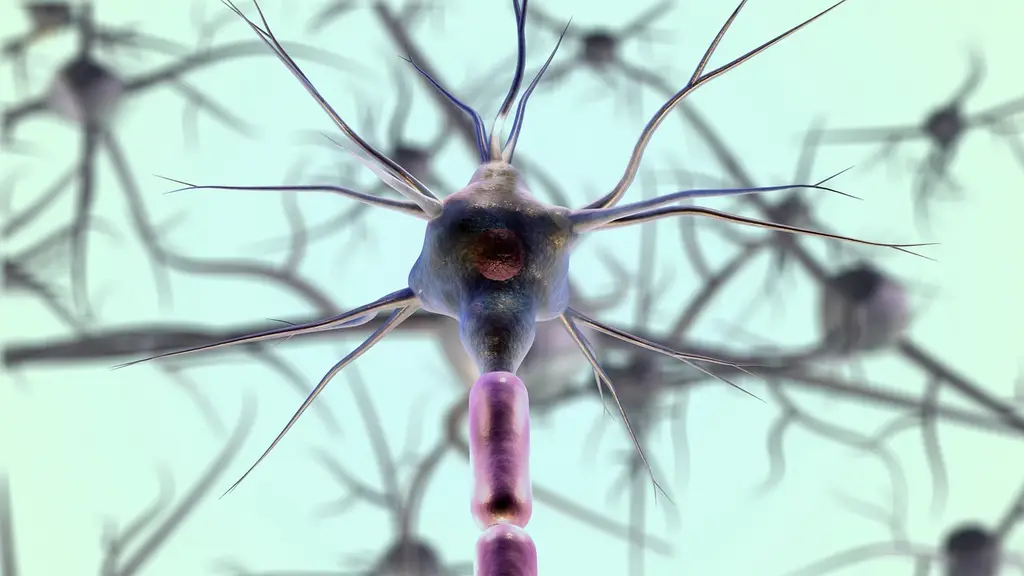
Much of what we know about memory in the brain began with one patient. In 1953, a 27-year-old man named Henry Molaison, known in the scientific literature for decades only as "H.M.," underwent brain surgery to treat severe epilepsy. Surgeons removed parts of the inner temporal lobes on both sides of his brain, including most of the hippocampus.
His seizures improved, but he was left with a profound and unexpected problem: he could no longer form new lasting memories of events or facts. He could hold a conversation, but minutes later would not remember it had happened. Older memories from well before the surgery were largely intact, and his intelligence and personality were unchanged.
The psychologist Brenda Milner studied him and made a startling discovery. When she asked him to practice tracing a star while watching his hand only in a mirror, a tricky skill, he improved steadily over several days, even though each day he had no memory of having done the task before. His procedural memory worked; his explicit memory for new experiences did not. That showed that different kinds of memory depend on different brain systems, and that the hippocampus is vital for laying down new explicit memories but not for storing old ones permanently. Henry Molaison died in 2008, having contributed to science for more than half a century.
How a memory is made and kept
Forming a lasting memory involves several steps.
- Encoding. You attend to something and process it. The more meaningfully you process it, by connecting it to what you already know or by noticing why it matters, the better it's encoded.
- Consolidation. Over hours to years, the memory is stabilized. At the cellular level this involves strengthening synapses and building new proteins (our guide to how the human brain learns covers those mechanisms). At a larger scale, the hippocampus seems to help gradually transfer and integrate memories into networks spread across the cortex. Much of this happens during sleep.
- Retrieval. When you remember, you reactivate that pattern of connections, usually prompted by a cue: a smell, a question, a place.
Emotion boosts all of this. The amygdala, a small almond-shaped structure near the hippocampus, signals that an event matters, which helps explain why emotionally charged moments tend to be remembered more vividly.
Why we forget
In the 1880s, the German psychologist Hermann Ebbinghaus became his own experimental subject. He memorized long lists of meaningless syllables and tested how much he retained after different delays. He found that forgetting is fastest soon after learning and then levels off, a pattern now called the forgetting curve. He also found that relearning forgotten material was quicker than learning it the first time, which suggests that "forgotten" memories often leave traces behind.
Forgetting happens for several reasons:
- Weak encoding: you never really processed the information in the first place (where did you put your keys?).
- Interference: similar memories get in each other's way, as when last year's locker combination keeps popping up.
- Retrieval failure: the memory is there, but you lack the right cue. The frustrating tip-of-the-tongue feeling is a classic example.
Context makes a surprising difference to retrieval. In a 1975 experiment, divers who learned word lists underwater recalled them better underwater, and lists learned on land were recalled better on land. Being back in the same setting provided extra cues.
Forgetting is not simply a flaw. A memory that kept every detail of every day would make it harder to generalize, prioritize and move on.
Memory is reconstruction, not recording
Perhaps the most important, and unsettling, finding in memory research is that remembering is an act of rebuilding. Each time you recall an event, your brain reassembles it from stored fragments, filling gaps with expectations and general knowledge.
In a classic 1974 study, Elizabeth Loftus and John Palmer showed people films of car crashes and then asked how fast the cars were going when they "hit" or "smashed into" each other. People asked with the word "smashed" gave higher speed estimates, and a week later were more likely to report seeing broken glass, though there was none in the film. A single word had altered the memory.
Later research has shown that people can come to remember entire events that never happened, with real confidence. Studies of "flashbulb" memories, vivid recollections of where people were when they heard shocking news, have found that these memories change over time much as ordinary ones do, even while people stay very sure of them. Confidence, in other words, is not proof of accuracy. This has major implications for eyewitness testimony in courtrooms.
Remembering more: practical tips
- Test yourself. Recalling information strengthens it more than rereading does. Quick quizzes, like those in our Science Quiz, are an easy way to practice.
- Space it out. Review after a day, then a few days, then a week, rather than cramming.
- Make it meaningful. Ask why something is true, link it to what you know, or explain it to someone else.
- Use pictures and stories. Images and narratives give the brain extra hooks.
- Sleep on it. Sleep after learning helps consolidate memories.
Key ideas: Memory comes in several forms: brief sensory traces, a small working memory and a vast long-term store with explicit and implicit branches. The hippocampus is crucial for forming new explicit memories. Forgetting is normal and often useful, and every recollection is a reconstruction that can shift over time.
Discussion questions: What is your earliest memory, and how sure are you that it's a genuine memory rather than something built from photos or family stories? (Most adults remember very little from before about age three or four.) Why might two people who saw the same event remember it differently? For more on how living bodies and brains work, explore our biology and life sciences articles.
Sources and further reading
- Memory (psychology), Encyclopaedia Britannica
- The legacy of patient H.M. for neuroscience (Squire, 2009), Neuron, via PubMed
- The magical number 4 in short-term memory (Cowan, 2001), Behavioral and Brain Sciences, via PubMed
- Types of memory, Queensland Brain Institute, University of Queensland