How Germ Theory Changed Medicine
How scientists from Vienna to Tokyo proved that microbes cause infectious disease, and how that idea transformed surgery, public health and medicine.
Two hundred years ago, a surgeon might operate in a coat stiff with dried blood, proud of the evidence of experience. Wounds that turned septic were seen as an unfortunate but normal part of healing. Cholera was blamed on foul-smelling air, and new mothers died of fever in hospital wards at rates that horrified the doctors who could not explain them.
Today we take for granted that many diseases are caused by microorganisms too small to see: bacteria, viruses, fungi and parasites. That idea, germ theory, was established in the second half of the nineteenth century, and it changed medicine more than almost any other single insight. This article traces how it happened, from early hunches through bitter controversies to the laboratories of Paris, Berlin and Tokyo, and explains why the change mattered so much.
Before germs: bad air and imbalanced humors
For centuries, two ideas dominated European and Middle Eastern thinking about illness.
- Humoral theory, inherited from ancient Greek medicine, held that health depended on a balance of four bodily fluids, or humors. Disease meant imbalance, treated by bloodletting, purging or diet.
- Miasma theory held that epidemics were caused by "bad air" rising from rotting matter, swamps and filth. The word malaria comes from the Italian for "bad air".
Miasma theory was wrong about causes, but it was not useless. Reformers who believed in it, such as Edwin Chadwick in Britain, pushed for sewers, clean streets and better housing, and those changes saved many lives, partly because they also reduced contact with contaminated water and waste. Florence Nightingale, too, transformed hospital sanitation while initially skeptical of germ theory.
Other thinkers suspected that disease could spread from person to person. In the fourteenth century, during the Black Death, the Andalusian scholar Ibn al-Khatib argued from observation that plague was contagious. In 1546 the Italian physician Girolamo Fracastoro proposed that diseases spread through tiny "seeds" passed by direct contact, through objects, or over distances. But nobody could see these seeds, and the idea remained one theory among many.
Seeing the invisible
In the 1670s Antonie van Leeuwenhoek, a cloth merchant in Delft, used tiny handmade lenses to observe single-celled organisms in pond water and bacteria scraped from his own teeth. He reported them to the Royal Society in London. Our article on the history of the microscope tells his remarkable story. Leeuwenhoek did not connect his "animalcules" with disease, and for nearly two centuries few others did either.
Evidence accumulates
In the first half of the nineteenth century, several investigators gathered evidence that pointed toward living causes of disease, often without being able to prove it.
Agostino Bassi (1835). An Italian entomologist showed that a disease killing silkworms, called muscardine, was caused by a microscopic fungus that could be passed from sick to healthy insects. It was one of the first demonstrations that a microorganism causes a specific disease.
Ignaz Semmelweis (1847). At Vienna General Hospital, Semmelweis noticed that mothers in a ward staffed by doctors and medical students died of childbed (puerperal) fever far more often than those in a ward staffed by midwives. The doctors often came straight from performing autopsies. After a colleague died of a similar illness following a cut during an autopsy, Semmelweis concluded that "cadaverous particles" on doctors' hands were causing the disease. In 1847 he required handwashing in a chlorinated lime solution, and deaths in the ward fell dramatically. Many colleagues rejected his conclusions, partly because he was slow to publish and partly because the idea implied that doctors themselves were carrying death to their patients. Earlier, Alexander Gordon in Scotland (1795) and Oliver Wendell Holmes in the United States (1843) had also argued that childbed fever was carried by medical attendants.
John Snow (1854). During a cholera outbreak in London's Soho district, the physician John Snow mapped the cases and found they clustered around a public water pump on Broad Street. He persuaded local officials to remove the pump's handle. The outbreak was already declining by then, so the removal itself is not the whole story, but Snow's careful investigation, together with his comparison of households supplied by two different water companies, made a powerful case that cholera spread through contaminated water rather than bad air. That same year in Florence, Filippo Pacini described the comma-shaped bacterium in the intestines of cholera victims, though his work was largely overlooked.
Pasteur: microbes everywhere
The French chemist Louis Pasteur did more than anyone to convince the scientific world that microbes matter. His path ran through wine, beer and silkworms rather than hospitals.
In the 1850s Pasteur showed that fermentation, the process that turns sugar into alcohol or milk sour, is caused by living microorganisms. Different microbes produced different results, and unwanted ones spoiled the product. He found that gently heating wine killed spoilage organisms without ruining the taste, a process now called pasteurization and later applied to milk.
Pasteur also tackled spontaneous generation, the old belief that life could arise from non-living matter. In experiments in the early 1860s he boiled nutrient broth in flasks with long, curved "swan necks" that let air in but trapped dust. The broth stayed clear. When he broke the neck, allowing dust to fall in, microbes soon grew. Life came from life, carried on particles in the air.
From the late 1870s Pasteur's laboratory turned to disease, developing vaccines against chicken cholera and anthrax, and in 1885 a rabies vaccine. The Institut Pasteur in Paris, opened in 1888, became a world center for research into infectious disease. Our article on how vaccines were developed follows that story further.
Lister brings germs into the operating room
Joseph Lister, a surgeon in Glasgow, read Pasteur's work and reasoned that if microbes in the air caused putrefaction, they might also cause wounds to fester. In 1865 he began treating wounds, dressings and instruments with carbolic acid (phenol), and in 1867 he published his results in The Lancet, reporting far fewer infections among his patients. Antiseptic surgery, and later aseptic surgery, in which microbes are kept out altogether through sterilization, made operations dramatically safer.
Koch and the rules of proof
Pasteur showed that microbes were everywhere. The German physician Robert Koch showed how to prove that a particular microbe caused a particular disease.
Working as a country doctor in Wollstein (now Wolsztyn in Poland), Koch traced the life cycle of the anthrax bacterium in 1876, including the hardy spores that let it survive in soil. In 1882 he announced in Berlin that he had identified the bacterium that causes tuberculosis, one of the deadliest diseases of the era. The date of his announcement, 24 March, is now marked as World Tuberculosis Day. In 1883–1884, working in Egypt and India, he identified the cholera bacterium, confirming Pacini's earlier observation.
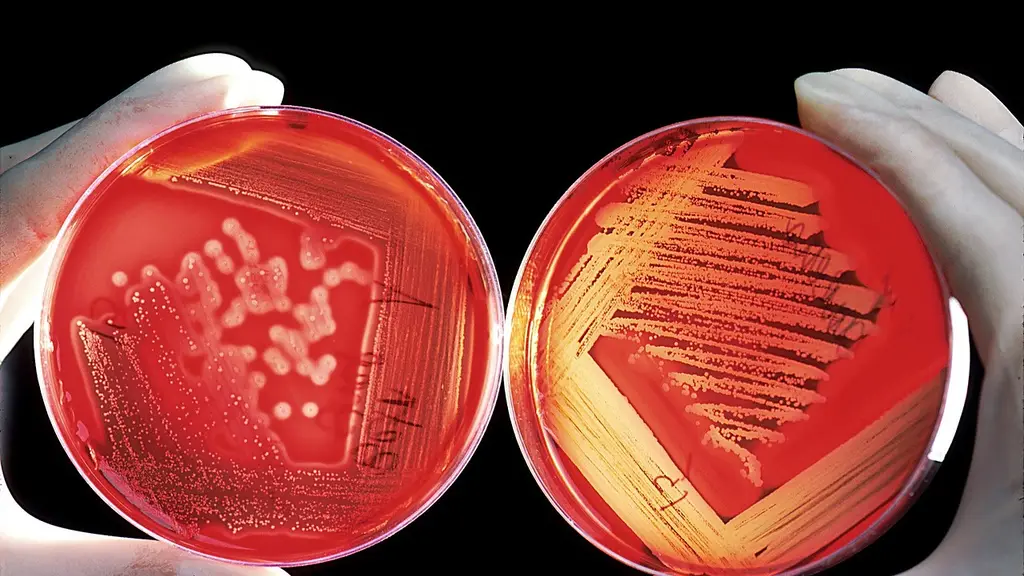
Koch's laboratory also developed techniques that microbiology still uses. Fanny Hesse, who worked alongside her husband Walther Hesse in Koch's circle, suggested using agar, a seaweed-derived jelly she used in cooking, as a solid growth medium. Koch's assistant Julius Richard Petri designed the shallow covered dish that bears his name.
Koch's work is summarized in a set of criteria known as Koch's postulates:
- The microbe must be found in every case of the disease.
- It must be isolated from the sick host and grown in pure culture.
- The cultured microbe must cause the disease when introduced into a healthy, susceptible host.
- The same microbe must be recovered from that newly infected host.
Scientists now know that not every disease fits these rules neatly. Some people carry microbes without becoming ill, and some microbes cannot be grown in the laboratory. But the postulates set a standard of evidence that transformed medicine. Koch received the Nobel Prize in Physiology or Medicine in 1905 for his work on tuberculosis.
A global golden age of discovery
Once the methods existed, discoveries came quickly, and researchers far beyond Paris and Berlin made major contributions.
- Kitasato Shibasaburō, a Japanese bacteriologist trained in Koch's laboratory, grew the tetanus bacterium in pure culture in 1889 and, with Emil von Behring, showed in 1890 that blood serum from immunized animals could neutralize its toxin, the basis of antitoxin treatments.
- In 1894, during a plague epidemic in Hong Kong, both Kitasato and the Swiss-French bacteriologist Alexandre Yersin investigated the cause. The plague bacterium is now named Yersinia pestis after Yersin.
- In 1897 Kiyoshi Shiga in Japan identified a bacterium that causes dysentery; the genus Shigella bears his name.
- In 1897 the British physician Ronald Ross, working in India, showed that malaria parasites develop in mosquitoes, revealing how the disease is transmitted. He received the 1902 Nobel Prize.
- In 1892 the Russian botanist Dmitri Ivanovsky found that the agent of tobacco mosaic disease passed through filters fine enough to stop bacteria. In 1898 the Dutch microbiologist Martinus Beijerinck concluded it was a new kind of infectious agent, later called a virus.
You can place these breakthroughs in context on our interactive Discovery Timeline.
How germ theory changed everyday life
| Change | What it replaced |
|---|---|
| Handwashing and hospital hygiene | Unwashed hands and reused, unsterilized instruments |
| Antiseptic and aseptic surgery | Operations with high rates of fatal infection |
| Filtered, chlorinated drinking water | Water drawn from contaminated rivers and wells |
| Pasteurized milk | Raw milk that could spread tuberculosis and other diseases |
| Vaccines and antitoxins | Few defenses beyond isolation and quarantine |
| Antibiotics (from the 1940s) | No effective treatment for most bacterial infections |
The idea that specific microbes cause specific diseases also made it possible to search for specific cures. That search led eventually to the discovery of penicillin and the antibiotic era.
What to take away
- Germ theory replaced the ideas that disease came from bad air or imbalanced humors.
- It was built by many people over decades, including Bassi, Semmelweis, Snow, Pacini, Pasteur, Lister, Koch, Fanny Hesse, Kitasato, Shiga and many others.
- Strong evidence was not enough on its own; ideas like Semmelweis's were resisted for years.
- Its practical results, from clean water to sterile surgery, are among the greatest public health achievements in history.
Try this: Simple soap and water remain one of the most powerful tools germ theory gave us. Find out why in our article on how soap works, and learn how your body fights back in our explainer on the immune system.
Sources and further reading
- Germ theory, Encyclopaedia Britannica
- Louis Pasteur, Science History Institute
- Robert Koch, Nobel Prize in Physiology or Medicine 1905: Facts, Nobel Prize Outreach
- Institut Pasteur, Institut Pasteur
- History of Medicine Division, US National Library of Medicine