The Discovery of Insulin
How a Toronto team turned a hunch about the pancreas into the first effective diabetes treatment in 1922, and how insulin has changed in the century since.
A hundred years ago, a child diagnosed with what we now call type 1 diabetes faced a grim future. The body could not use the sugar in food, so it burned its own fat and muscle instead. Children grew thin and weak, and most died within months or a few years. The best available treatment was a near-starvation diet that bought a little time at a terrible cost.
Then, in January 1922, a fourteen-year-old boy in a Toronto hospital received injections of an extract from animal pancreases, and his blood sugar fell toward normal. Within a year, insulin was being manufactured in North America and reaching patients who had been close to death.
This is the story of how that happened: the clues that pointed to the pancreas, the small and sometimes quarrelsome team that cracked the problem, and what insulin actually does in the body.
Diabetes before insulin
Diabetes had been described since ancient times. Physicians noticed that patients produced large amounts of sweet-tasting urine, felt constant thirst, and wasted away. By the early twentieth century doctors could measure sugar in blood and urine, but they still could not stop the disease.
In the 1910s, the American physician Frederick Allen championed strict, very low-calorie diets. They reduced the sugar in patients' blood and extended some lives, but patients, many of them children, became painfully thin. It was a holding pattern, not a cure.
Clues from the pancreas
Two nineteenth-century observations set the stage:
- 1869: The German medical student Paul Langerhans described small clusters of unusual cells scattered through the pancreas. Their purpose was unknown, but they were later named the islets of Langerhans.
- 1889: Oskar Minkowski and Joseph von Mering, working in Strasbourg, removed the pancreas from a dog. The animal developed severe diabetes. Something made by the pancreas was clearly essential for handling sugar.
Researchers came to suspect that the islets released an internal secretion, a hormone, into the blood. Many tried to extract it. The problem was that the pancreas also makes powerful digestive enzymes, which seemed to destroy the hormone during extraction. Several scientists came close, but none produced a reliable, safe treatment.
A hunch, a summer and a team
Frederick Banting was a young Canadian surgeon with little research experience. In late 1920, after reading an article about blocked pancreatic ducts, he jotted down an idea: if the ducts were tied off, the enzyme-producing tissue might wither while the islets survived, making it easier to extract their secretion.
He took the idea to John Macleod, a professor of physiology at the University of Toronto and an expert on carbohydrate metabolism. Macleod was skeptical but gave Banting laboratory space, experimental dogs and a student assistant, Charles Best, for the summer of 1921.
Working through the hot months, Banting and Best removed the pancreases of some dogs to make them diabetic, then injected them with extracts from other pancreases. The extracts lowered blood sugar and improved the dogs' condition. The results were promising but inconsistent, and the extracts were crude.
Late in 1921 the biochemist James Collip joined the team. His task was purification: producing an extract clean and consistent enough to inject into people.
January 1922: Leonard Thompson
On January 11, 1922, Leonard Thompson, a fourteen-year-old with severe diabetes at Toronto General Hospital, received the first injection. The extract, prepared by Banting and Best, produced only a modest drop in blood sugar and caused an abscess at the injection site.
Collip refined his method, and on January 23 Thompson received the new, purer extract. This time his blood sugar fell substantially, sugar largely disappeared from his urine, and his strength began to return. Other patients soon followed with similar results. The team named the substance insulin, from the Latin insula, island, after the islets that produce it.
A detail worth knowing: one well-documented early patient was Elizabeth Hughes, the daughter of the U.S. Secretary of State Charles Evans Hughes. She had survived on a starvation diet, began insulin treatment in Toronto in 1922, and lived until 1981. Her story shows how quickly insulin went from experiment to lifesaving routine.
Prize, quarrel and a one-dollar patent
The team's success was clouded by rivalry. Banting resented Macleod, whom he felt took too much credit, and tensions also ran between Banting and Collip.
In 1923 the Nobel Prize in Physiology or Medicine went to Banting and Macleod. Banting was angry that Best had been left out and announced he would share his prize money with him. Macleod then shared his with Collip. Historians today generally credit all four men with essential contributions.
The discoverers wanted insulin to be widely available. Banting, Best and Collip assigned their patent rights to the University of Toronto for a token payment of one dollar each, so that the university could control quality and license manufacturers. The drug company Eli Lilly and Company, working with Toronto, developed large-scale production from cattle and pig pancreases, and insulin became commercially available in 1923.
What insulin does in the body
Insulin is a hormone made by beta cells in the islets of the pancreas. When you eat, glucose from food enters the bloodstream. Insulin acts like a signal that tells cells in muscle, fat and the liver to take up that glucose and either use it for energy or store it.
| Without enough insulin | With insulin working normally |
|---|---|
| Glucose builds up in the blood | Cells absorb glucose after meals |
| Cells are starved of fuel and break down fat and muscle | The liver stores extra glucose for later |
| Kidneys flush sugar out in the urine, causing thirst | Blood sugar stays within a healthy range |
In type 1 diabetes, the immune system destroys the beta cells, so the body makes little or no insulin, and people need insulin from outside the body to survive. In type 2 diabetes, which is far more common, the body becomes less responsive to insulin and may not make enough. It is often managed first with lifestyle changes and other medicines, though some people also need insulin. The NIH's diabetes institute offers clear guidance on both types.
A century of better insulin
Insulin's story did not end in 1923. It became a training ground for some of the biggest advances in biochemistry:
- 1950s: Frederick Sanger worked out the complete sequence of amino acids in insulin, the first protein ever sequenced. He received the 1958 Nobel Prize in Chemistry.
- 1969: Dorothy Crowfoot Hodgkin's team determined insulin's three-dimensional structure using X-ray crystallography, a project she had pursued for more than three decades.
- 1982: Human insulin made by genetically engineered bacteria was approved in the United States, one of the first medicines produced with recombinant DNA technology. It replaced most animal insulin.
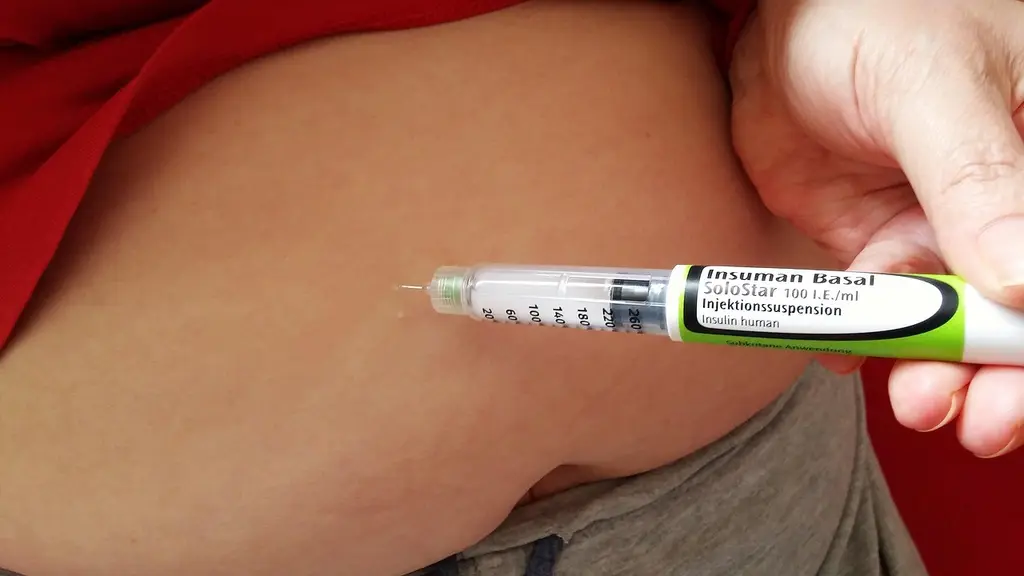
- 1990s onward: Modified "analog" insulins were designed to act faster or last longer, and devices such as insulin pens, pumps and continuous glucose monitors made treatment more flexible.
Genetic engineering of this kind traces directly back to the work described in the discovery of DNA's double helix.
Why the story still matters
Insulin is not a cure for diabetes, but it turned a fatal childhood disease into a manageable condition. The discovery is also a reminder that breakthroughs often come from combining different skills: a surgeon's idea, a student's persistence, a physiologist's laboratory and a biochemist's purification methods. The pattern echoes another great medical story of the same era, penicillin's journey from mold to medicine, where an initial observation also needed a team to make it useful.
World Diabetes Day is held each year on November 14, Frederick Banting's birthday.
Summary of key ideas:
- Diabetes was usually fatal for children before 1922.
- Experiments in 1889 linked the pancreas to blood sugar control; the islets were the key.
- Banting, Best, Macleod and Collip produced the first effective insulin in Toronto in 1921–22.
- Insulin helps cells absorb glucose; type 1 diabetes means the body cannot make it.
- Later work on insulin led to the first protein sequence and early genetic engineering.
Explore more breakthroughs like this in our scientific discoveries collection or meet other key figures in famous scientists and their discoveries.
Questions to think about: Why was it so hard to extract insulin from the pancreas? Who do you think deserved the Nobel Prize, and why? How did insulin research help launch modern biotechnology?
Sources and further reading
- The Nobel Prize in Physiology or Medicine 1923, The Nobel Prize
- The Discovery and Early Development of Insulin, University of Toronto Libraries
- The Discovery of Insulin, The Canadian Encyclopedia
- What Is Diabetes?, National Institute of Diabetes and Digestive and Kidney Diseases
- The Nobel Prize in Chemistry 1958, The Nobel Prize